ONE OF THE BEST DAYS

Not that I was ever in need, for I have learned how to be content with whatever I have. I know how to live on almost nothing or with everything. I have learned the secret of living in every situation, whether it is with a full stomach or empty, with plenty or little. For I can do everything through Christ, who gives me strength. [Philippians 4:11-13 (NLT)]
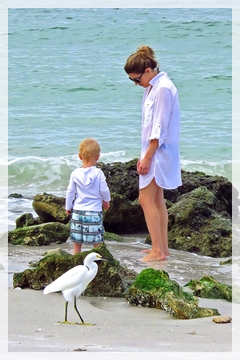
clam pass - naplesThe weatherman declared it to be “one of the ten best days of summer” and I thought of his words throughout the day. How many of those ten days have we already had this summer? What if, not knowing it was one of the ten best days, I missed it? Could I have been blinded to its beauty by the routine obligations, boring chores, petty annoyances, and minor frustrations of everyday life?

When reading the list of his ordeals in 2 Corinthians, is would seem that the Apostle Paul probably missed enjoying most of the best days of every season. He faced death many times and endured several imprisonments, countless beatings (three times with rods), and numerous whippings (five times with 39 lashes which was the maximum punishment allowed). The victim of stoning once, Paul also was adrift at sea for a day and night and shipwrecked three times. Not only was Paul weighted down with his concern for the early church but he also had a “thorn” in his flesh, quite likely a chronic ailment, that had tormented him for fourteen years. Since he lived another nine to twelve years after writing the Corinthians, that thorn probably continued to plague him and more trials and troubles certainly followed. All in all, Paul travelled about 15,000 miles on land and sea and endured sleepless nights, hunger, thirst and cold, faced hazards from bandits and even his own people, and spent between five and six years of his life imprisoned before being beheaded by the Romans between 64 and 67 AD. He endured all of this to proclaim the gospel and yet Paul never complained about missing out on any of the “best” days because he knew the secret of living in every situation—of making every day his best day.

We shouldn’t need a weatherman to tell us it’s one of the ten best days and we certainly don’t need good weather for the day to qualify. In fact, every day should qualify as one of the ten best days of whatever season it happens to be. Paul, a man who endured horrible ordeals both physically and emotionally for the church, knew that best days had nothing to do with circumstances but everything to do with attitude. He tells us to be joyful, to pray, and to give thanks to God in all circumstances (and not just on the good days). With an attitude like his, in spite of his sufferings, every day Paul experienced must have been one of his best. I’d venture to say that most of us suffer far less than did the Apostle and yet, instead of starting the day cheerfully saying, “Good morning, Lord!” many of us grumble, “Good Lord, it’s morning!” Let this day be one of your ten best; after all, you don’t know how many more remain!

Always be full of joy in the Lord. I say it again—rejoice! [Philippians 4:4 (NLT)]

Always be joyful. Never stop praying. Be thankful in all circumstances, for this is God’s will for you who belong to Christ Jesus. [1 Thessalonians 5:16-18 (NLT)]

Copyright ©2018 jsjdevotions. All rights reserved.

IT HURTS

I was given the gift of a handicap to keep me in constant touch with my limitations. Satan’s angel did his best to get me down; what he in fact did was push me to my knees. No danger then of walking around high and mighty! At first I didn’t think of it as a gift, and begged God to remove it. Three times I did that, and then he told me, “My grace is enough; it’s all you need. My strength comes into its own in your weakness.” [2 Corinthians 12:7-9 (MSG)]

oleander - rocky mt. bee plant

I recently read about a man who can’t feel pain because of a rare neurological condition called “congenital insensitivity to pain.” As someone who often reaches for the Ibuprofen because of assorted aches and pains, this sounded like a true blessing. In actuality, as nice as never having a headache, sciatica, or feeling the sting of fire ants initially sounds, it is life-threatening. Although this man can identify whether something is warm or cool, he can’t know that the coffee is burning his tongue, the stovetop is blistering his fingers, or the subzero temperatures have given him frostbite. He won’t feel the pain in his abdomen before his appendix bursts or the tightening in his heart signaling a heart attack. He chewed off part of his tongue when just a baby and has broken over seventy bones simply because he doesn’t know how to avoid injury. With no pain to restrain them, children with this condition tend to be daredevils. Pain is what teaches us to use our bodies correctly and safely. It warns of danger by telling us when something is too hot, cold, heavy, tight, hard or sharp and alerts us when something is wrong—a muscle is torn, a bone is broken, or an infection has set in.

Not only does pain protect and correct us, it certainly gets our attention, knocks us to our knees and turns us toward God. Moreover, it offers an opportunity both for our church family to draw near and comfort us and for us to witness to others in our pain.  As much as we don’t appreciate pain, it is a blessing rather than a burden. In reality, along with thanking God for the Ibuprofen, we should be thanking Him for the pain.

Pain insists upon being attended to. God whispers to us in our pleasures, speaks in our conscience, but shouts in our pain: it is His megaphone to rouse a deaf world. [C.S. Lewis]

Once I heard that, I was glad to let it happen. I quit focusing on the handicap and began appreciating the gift. It was a case of Christ’s strength moving in on my weakness. Now I take limitations in stride, and with good cheer, these limitations that cut me down to size—abuse, accidents, opposition, bad breaks. I just let Christ take over! And so the weaker I get, the stronger I become. [2 Corinthians 12:8-10 (MSG)]

Be cheerful no matter what; pray all the time; thank God no matter what happens. This is the way God wants you who belong to Christ Jesus to live. [1 Thessalonians 5:16-18 (MSG)]

Copyright ©2018 jsjdevotions. All rights reserved.

ALL THINGS BRIGHT AND BEAUTIFUL

Absarokas - Cody WyomingFor ever since the world was created, people have seen the earth and sky. Through everything God made, they can clearly see his invisible qualities—his eternal power and divine nature. So they have no excuse for not knowing God. [Romans 1:20 (NLT)]

All things bright and beautiful, All creatures great and small,
All things wise and wonderful: The Lord God made them all.
[“All Things Bright and Beautiful” by Cecil F. Alexander]

“When in doubt, trust your horse!” was the sign I’d seen earlier in the corral and so, as we slowly wended our way through the pinyon-juniper forest and up the mountain trail, I trusted my mount. After all, he didn’t want to fall down the ravine any more than did I. When we reached the ridge, I gasped—somewhat out of relief but more so out of wonder. The scenery was breathtaking! As I looked across the Wapiti Valley, I saw the incredible volcanic rock formations of the Absaroka Mountain Range and, when I looked down into the valley, I saw some of what Teddy Roosevelt called “The fifty most beautiful miles in America”. Surrounding us in the sage meadow on the ridge was an incredible array of wildflowers. An abundance of color, there were red Wyoming paintbrush, bright yellow mule’s ears and sunflowers, purple lupine, white snowbells, low pink bitterroot, tall green gentians, delicate bluebells, and a few pale yellow prickly pear cactus. Fritillaries and a white admiral red clover - beebutterfly flitted among the blossoms and a marmot peeked out from behind a rock. So as to not spook the horses or spoil the day for my fellow riders, I silently sang the chorus to All Things Bright and Beautiful.

Only able to remember the hymn’s chorus, I looked up the lyrics when I got home. The author is Cecil F. Alexander. An Irish woman known as Fanny to her friends and family, she lived in the mid-19th century and was married to a clergyman. It is said that she based her hymn on the words of the Apostles’ Creed: “I believe in God the Father, Maker of heaven and earth.” She easily could have been inspired by Psalms 19 or 104. I doubt she ever visited a ranch in Wyoming so she wasn’t thinking of the Absarokas and a colorful mountain meadow. Nevertheless, I imagine the Irish countryside can be just as extraordinary; perhaps Fanny’s inspiration came from visiting some place like Ireland’s Cliffs of Moher where she stood in awe of God’s handiwork.

I couldn’t help but think of the Apostle Paul’s words in the first chapter of Romans; we see evidence of God everywhere in His amazing creation and there is no excuse for denying His existence or not knowing Him. It doesn’t have to be majestic mountains and spectacular scenery; God’s workmanship is just as evident in our backyards in the exquisiteness of things like red clover and the wings of a bumblebee. Indeed, “How great is God Almighty, who has made all things well!”

Each little flow’r that opens, Each little bird that sings,
He made their glowing colors, He made their tiny wings.
The purple-headed mountains, The river running by,
The sunset and the morning That brightens up the sky. …
He gave us eyes to see them, And lips that we might tell
How great is God Almighty, Who has made all things well.
[“All Things Bright and Beautiful” by Cecil F. Alexander]

The heavens proclaim the glory of God. The skies display his craftsmanship. Day after day they continue to speak; night after night they make him known. They speak without a sound or word; their voice is never heard. Yet their message has gone throughout the earth, and their words to all the world. [Psalm 19:1-4 (NLT)]

O Lord, what a variety of things you have made! In wisdom you have made them all. The earth is full of your creatures. [Psalm 104:24 (NLT)]

Copyright ©2018 jsjdevotions. All rights reserved.

SACRIFICES

I want you to show love, not offer sacrifices. I want you to know me more than I want burnt offerings. [Hosea 6:6 (NLT)]

And the King will say, “I tell you the truth, when you did it to one of the least of these my brothers and sisters, you were doing it to me!” [Matthew 25:40 (NLT)]

little blue heronA 2013 United Healthcare Group study found that volunteering is linked to better physical, mental and emotional health. Apparently it reduces stress, brings people together, promotes personal growth and self-esteem, strengthens our sense of community, and helps us learn new skills. Something their study did not mention is that volunteering is an act of worship and sacrifice. A sacrifice is an offering to God and every time we sacrifice time, talents, or resources by doing for His Kingdom, we are worshipping Him.
Because Jesus was the perfect and final sacrifice when He died for our sins, we no longer bring pigeons or sheep to God’s altar. Rather than dead animal sacrifices, we offer ourselves as living sacrifices, not to atone for sins but to worship our Lord. When we drop that envelope in the offering plate, give a dollar to a street person, write a check to a charity, or bring groceries to the food pantry, we’re really not giving to the church, homeless, Red Cross, or the hungry; we’re giving to God. When we lift a hammer at a Habitat home, sort clothes at the charity resale shop, pack lunches for the migrant workers, give someone a ride to church, visit the ill or assist at Sunday school, we are worshipping God with our service. Our sacrifice of resources, time, and talent is as much an act of worship as singing hymns or offering prayers of praise and thanksgiving.

The Old Testament often spoke of God being pleased with the aroma of a sacrifice. While our New Testament sacrifices are not burned on an altar and have no aroma, I think God finds them just as pleasing to His senses. When those ancient sacrifices were not the first and best or were accompanied by a bad attitude, God found a stench to them. It would seem to follow that when our Christian sacrifices are offered begrudgingly or we fail to give the best we can, our hypocrisy will cause them to stink, as well.

Let us worship the Lord with our hearts and hands as well as our voices! Let us joyfully worship Him with service as well as with song!

And so, dear brothers and sisters, I plead with you to give your bodies to God because of all he has done for you. Let them be a living and holy sacrifice—the kind he will find acceptable. This is truly the way to worship him. [Romans 12:1 (NLT)]

Therefore, let us offer through Jesus a continual sacrifice of praise to God, proclaiming our allegiance to his name. And don’t forget to do good and to share with those in need. These are the sacrifices that please God. [Hebrews 13:15-16 (NLT)]

Copyright ©2018 jsjdevotions. All rights reserved.

THE PRICE IS RIGHT (Naaman – Part 2)

And there were many lepers in Israel in the time of the prophet Elisha, but the only one healed was Naaman, a Syrian. [Luke 4:27 (NCV)]

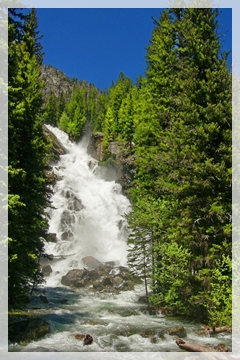
Fish Creek Falls - SteamboatA friend of ours has several jewelry stores in Colorado. When he opened a store in a posh resort town, he priced his goods as he always has: reasonably. To his chagrin, plenty of wealthy shoppers came into his shop but no purchases were made. After three days of disappointment, he re-tagged everything with higher prices. The following day, instead of leaving empty-handed, most shoppers left carrying pricy purchases (and they continue to do so today). Apparently, his rich customers believe affordable means second-rate or shoddy and that quality only comes with an exorbitant price tag.

When Naaman, the commander of the king of Aram’s army, was afflicted with leprosy, he was told that a prophet in Samaria could heal him. Rather than go to the prophet, he went to Israel’s king and offered 750 pounds of silver, 150 pounds of gold, and ten sets of clothing for a cure. The king, of course, could do nothing for the man but Elisha sent a message requesting the leper be sent to him. Rather than the prophet, it was Elisha’s messenger who greeted him with instructions to wash in the Jordan River seven times. A celebrated warrior, Naaman expected an impressive cure, if not from the king, at least from the prophet himself—not a servant’s directions to bathe in a dirty little river. Failing to understand how washing in the Jordan would heal him when the great rivers of Damascus couldn’t, Naaman left in indignation. When his officers convinced him to give the simple solution a try, he was miraculously healed and Naaman returned to Elisha. Convinced in the power of Israel’s God, he offered the prophet the lavish gifts brought from Aram. Elisha politely refused; God’s grace was not for sale!

Are we a little like those wealthy Colorado shoppers or Naaman? Do we tend to associate an item’s worth with its price tag, rarity, or the complexity of getting it? Let’s not make that mistake with God’s gift of grace; it’s free and incredibly simple to receive! Jesus has already paid for our salvation; it’s ours just for the asking and washing in the water of the Spirit is even easier than washing in the Jordan. Nevertheless, while grace is free, as Dietrich Bonhoeffer points out, grace is never cheap!

Cheap grace is the grace we bestow on ourselves. Cheap grace is the preaching of forgiveness without requiring repentance, baptism without church discipline, Communion without confession…. Cheap grace is grace without discipleship, grace without the cross, grace without Jesus Christ, living and incarnate. … Costly grace is the gospel which must be sought again and again…It is costly because it costs a man his life, and it is grace because it gives a man the only true life…what has cost God much cannot be cheap for us. [ Dietrich Bonhoeffer]

God saved you by his grace when you believed. And you can’t take credit for this; it is a gift from God. Salvation is not a reward for the good things we have done, so none of us can boast about it. [Ephesians 2:8-9 (NLT)]

Copyright ©2018 jsjdevotions. All rights reserved.

LEAVING THE NEST

anhinga chicksMy child, pay attention to what I say. … Guard your heart above all else, for it determines the course of your life. … Look straight ahead, and fix your eyes on what lies before you. Mark out a straight path for your feet; stay on the safe path. Don’t get sidetracked; keep your feet from following evil. [Proverbs 4:20a,23, 25-27 (NLT)]

This past spring we watched an anhinga family who’d nested near the swamp boardwalk. At first, mom and dad provided around the clock nest service for their brood of blind and helpless chicks. When the chicks were about three weeks old, rather than returning to the nest with food, the parents would perch nearby. If the youngsters wanted dinner, they had climb out of the nest and hop along a branch to get it. As the babies grew, mom and dad perched further and further from the nest until, at about six weeks, their chicks had to fly for their supper. Within two months of hatching, the youngsters were flying across the pond and the nest was abandoned. Mom and dad, however, were never too far away; perched nearby, they watched their brood learn to fend for themselves around the swamp. I wonder if they worried about their youngsters becoming dinner for an alligator while they fished or sunned on a log. Nevertheless, mom and dad knew their young ones had outgrown the nest; it was time to let them lead their own lives.

Today, my eldest grand receives her high school diploma. An honor student, she’s a delightful young woman and I know her parents are immensely proud of her many accomplishments. That pride, however, is combined with a fair amount of apprehension on their part. Later this summer, this young woman will leave the nest and move 5,500 miles to London where she’ll spend her freshman year of college. Although her parents won’t be worried about alligators, there will be plenty of other concerns that might keep them awake at night.

Our children: we love them, teach them, correct them, encourage them, support them, lead them, and guide them in an effort to prepare them for adulthood. As a mama, I know how difficult it is to let our children go, but let them go we must. After all, parenthood is a job that is supposed to become obsolete; it’s when our children are confident enough to leave home that we know we’ve done our job well. Let us praise God when we see them spread their wings and fly. No matter how far away they go, however, we still have the job of acting as prayer warriors for our children and we’ll do that for the rest of our lives.

Heavenly Father, we thank you for the gift of children and the privilege of leading them into adulthood. Reassure those parents who are struggling with letting go; may their tears of sadness become ones of joy as they watch their children take their next steps. As we release our children to your tender care, we ask you to wrap your loving arms around them and protect them from the dangers of the world. May they always walk in your ways and grow in courage, strength and wisdom. Let your Holy Spirit fill them with faith, hope, and love. Teach them, guard them, lead them and lift them so that they soar!

A wise woman once said to me that there are only two lasting bequests we can hope to give our children. One of these she said is roots, the other, wings. And they can only be grown, these roots and these wings, in the home. We want our sons’ roots to go deep into the soil beneath them and into the past, not in arrogance but in confidence. [Hodding Carter]

My child, never forget the things I have taught you. Store my commands in your heart. … Trust in the Lord with all your heart; do not depend on your own understanding. Seek his will in all you do, and he will show you which path to take. Don’t be impressed with your own wisdom. Instead, fear the Lord and turn away from evil. [Proverbs 3:1,5-7 (NLT)]

May the Lord bless you and protect you. May the Lord smile on you and be gracious to you. May the Lord show you his favor and give you his peace. [Numbers 6:24-26]

Copyright ©2018 jsjdevotions. All rights reserved.