
Don’t store up treasures here on earth, where moths eat them and rust destroys them, and where thieves break in and steal. Store your treasures in heaven, where moths and rust cannot destroy, and thieves do not break in and steal. Wherever your treasure is, there the desires of your heart will also be. [Matthew 6:20-21 (NLT)]
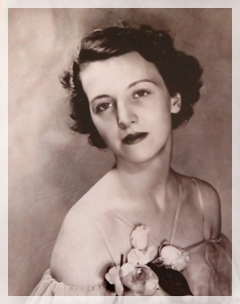 We’re selling our northern home and, with limited space in Florida, I must winnow out our 52 years of accumulated possessions. “How can I give them away?” I wondered while looking at the beautiful hand-painted Bavarian dinner and dessert plates that belonged to my mother and her mother before that. My fondness for the plates, however, has less to do with their beauty than with their provenance.
When my mother died, I was only fifteen. I remember sitting with my older brother and sister as my father read her hand-written note to us. He tried to hold back his tears as he spoke her words of farewell that passed along various family heirlooms to each of us children. Mentioning her joy at never having broken a plate in the 23 years she’d used them, my mother gave her mother’s china to me. When I look at what is little more than clay, bone ash, flint, feldspar, glaze, paint, and gold gilding, I don’t see plates—I see my mother’s exquisitely set table, the two of us setting it, our family gathering together for a holiday dinner, and my father reading her farewell words to me.
Later, when sorting through books, I came to some that had been my mother’s. Inside the front covers, she’d carefully written her name and home address. “How can I give away these books that meant so much to her?” I thought. Many of them were written by C.S. Lewis and I suspect my affinity for the author comes from her. She belonged to a women’s guild at our church—sort of the 1950’s version of a small group. The women gathered twice a month for fellowship and service and often met at our house. They would sit around the dining room table and sew something called “cancer pads.” My mother couldn’t even thread a needle and her poor eyesight and clumsiness with a needle probably made her more of a hazard than a help in the women’s work. What she excelled at, however, was reading aloud, analyzing the written word and leading discussions. When the women realized that busy hands didn’t keep their mouths from minding other people’s business, my mother suggested that she read to them while they worked.
As I ran my finger over her name, I decided to save just one of her books. The rest of them will go to the church’s library so they can bring someone else pleasure and knowledge. Then, realizing that I don’t need the china to remember the beautiful woman who gave me life, I decided to keep just one of the dessert plates and give away the rest. Rather than hold onto things, I will hold on to my memory of a woman who, recognizing her limitations, wisely used the gifts God gave her.
While the Old Testament speaks of material inheritance and even gives guidelines to ensure the financial welfare of the family, the New Testament speaks of a spiritual inheritance. Rather than worrying about amassing things here on earth, Jesus told us to store up treasures in heaven. Granted, we want our families cared for once we’re gone but more crucial than passing along possessions is the passing along of good character, love, and faith in God.
The important thing is not to hold on to material possessions but to remember the people we associate with them, the love they offered, and the lessons they taught us. I think of the words of Morrie Schwartz (in Mitch Albom’s Tuesdays with Morrie) who said we continue to live on in the hearts of everyone we’ve touched and nurtured while we were here. “Death ends a life, not a relationship,” said the wise old professor. My children don’t need old china or books to know my mother; they know her through me!
 It’s easy to have misconceptions about Scripture. If you were to ask someone the identity of the forbidden fruit, chances are the answer would be an apple. Scripture, however, never names the fruit. The Hebrew word used was peri which is a generic term for “produce,” “results,” or “reward.” We probably got the idea that it was an apple from later translations of Scripture into Latin since the Latin word “evil” is mălum, a word quite similar to the Latin word for “apple,” which is mālum. Renaissance painters continued to perpetuate the myth with their depiction of an apple at the temptation. Scripture, however, never identifies the fruit because its identity is not important; the evil wasn’t in the fruit but rather in Adam and Eve’s disobedience.
 The king of Aram was at war with Israel, Samaria was under siege, and there was a great famine in the city. Even food that wouldn’t normally be eaten was prized. For example, the head of a donkey, considered an unclean animal, sold for about two pounds of silver. The situation was so dire that some people had even resorted to cannibalism. Without the intervention of God, there was no hope in sight.
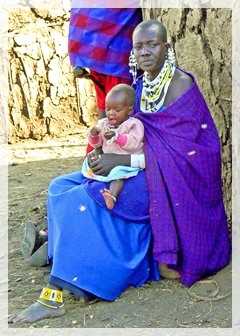 Yesterday’s devotion made me do some hard thinking about my commitment to Christian missions. Unfortunately, there are large segments of the world’s population that have never heard of Jesus. According to the Joshua Project (an organization that gathers, integrates and shares information to facilitate the implementation of the Great Commission), 41.6 % of the world’s population is considered “unreached,” meaning they have little or no history of Christianity and the number of native Christians and available resources are so minimal that outside assistance is necessary if the Gospel is going to be heard.
 Last week, in That Was God, I wrote these words: “For those who do not believe in Jesus Christ as their Savior, death means punishment and eternal separation from God,” but reminded readers that the exclusive truths of Christianity don’t mean that we are exclusive in our love; everyone is our neighbor and a person to be loved! Finding the devotion thought provoking, a friend forwarded it to the members of his small group. One man found the message contradictory and responded this way: “In other words, if you weren’t lucky enough to be born a Christian, you’re screwed. But, we still love you, neighbor!”
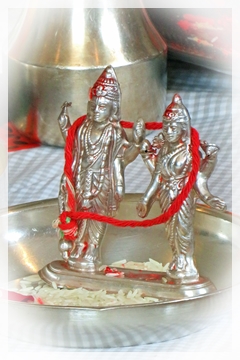 When writing about the prayers of Malala Yousafzai’s mother yesterday, I don’t want there to be any misunderstanding. Although she was praying to Allah, it was the one true God—our Triune God of the Father, Son and Holy Spirit—who heard and answered her prayers. While God is not a fan of Islam, He loves all of His children, whether Muslims, Hindus, Christians or others. Just because the Yousafzais don’t believe in Him doesn’t mean He doesn’t believe in them and their efforts to make our world a place where every girl can learn and lead.
 Devotions of the Heart