
Do not add to or subtract from these commands I am giving you. Just obey the commands of the Lord your God that I am giving you. [Deuteronomy 4:2 (NLT)]
 It’s easy to have misconceptions about Scripture. If you were to ask someone the identity of the forbidden fruit, chances are the answer would be an apple. Scripture, however, never names the fruit. The Hebrew word used was peri which is a generic term for “produce,” “results,” or “reward.” We probably got the idea that it was an apple from later translations of Scripture into Latin since the Latin word “evil” is mălum, a word quite similar to the Latin word for “apple,” which is mālum. Renaissance painters continued to perpetuate the myth with their depiction of an apple at the temptation. Scripture, however, never identifies the fruit because its identity is not important; the evil wasn’t in the fruit but rather in Adam and Eve’s disobedience.
The three kings were neither three nor kings. Rather than kings, they were magi or wise men, perhaps philosophers, astronomers, or counselors of kings. Familiar with Hebrew Scripture, they knew and understood the various Messianic prophecies. It is merely tradition that their names were Gaspar, Balthazar, and Melchior. While we know there were at least three gifts, we don’t know how many magi there were.
If asked about Mary Magdalene, most people would say she was a repentant prostitute and probably the sinful woman who anointed Jesus’s feet but there is no evidence to support this. All four gospels do mention this Jewish woman from Magdala who helped support Jesus and the disciples, witnessed the crucifixion and Jesus’s burial, and saw the risen Christ at the empty tomb. Although Luke tells us tells us that Jesus healed her of seven demons, we have absolutely no reason to think of this once mentally ill woman as immoral or wanton; she was no more a sinner than were any of the disciples.
If you were to ask most Protestants about the “Immaculate Conception,” they would probably say it refers the conception of Jesus in a virgin’s womb, but it doesn’t. While Jesus was, indeed, born without sin, this Roman Catholic doctrine refers to the conception of Mary, the mother of Jesus, and states that, unlike the rest of mankind, Mary had no original sin and remained sinless throughout her life. Scripture, however, never describes Mary as anything but an ordinary, although godly, woman: a woman who needed a savior as much as the rest of us.
We often quote scripture that isn’t Scripture. Money isn’t the root of all evil; in fact, it can do all sorts of wonderful things. The Apostle Paul, however, warns us that it’s the love of money that is the root of all kinds of evil, which is not quite the same. While “it came to pass” occurs about 400 times in the King James Version of the Bible, “This too shall pass,” never does. God does work in mysterious ways but that sentiment comes from a 1774 hymn by William Cowper. “God helps those who help themselves,” is nowhere in the Bible and probably came from one of Aesop’s fables and, while the Old Testament has lots of rules about cleanliness, “Cleanliness is next to godliness,” is not one of them. In fact, Jesus tells us to worry more about the sin in our hearts than the dirt on our hands!
The Bible is the written testimony of God’s word. When we quote the Bible, we want to be sure that what we’re quoting actually is in the Bible and, when we’re telling Bible stories, we want to tell the story correctly. God told the Israelites to neither add nor subtract from His commands; neither should we. We are to seek what Scripture actually means, not what we’d like it to mean. “I have hidden your word in my heart, that I might not sin against you,” said the Psalmist. [119:11] Let’s make sure the words we’ve put in our hearts actually are God’s!
 The king of Aram was at war with Israel, Samaria was under siege, and there was a great famine in the city. Even food that wouldn’t normally be eaten was prized. For example, the head of a donkey, considered an unclean animal, sold for about two pounds of silver. The situation was so dire that some people had even resorted to cannibalism. Without the intervention of God, there was no hope in sight.
 Yesterday’s devotion made me do some hard thinking about my commitment to Christian missions. Unfortunately, there are large segments of the world’s population that have never heard of Jesus. According to the Joshua Project (an organization that gathers, integrates and shares information to facilitate the implementation of the Great Commission), 41.6 % of the world’s population is considered “unreached,” meaning they have little or no history of Christianity and the number of native Christians and available resources are so minimal that outside assistance is necessary if the Gospel is going to be heard.
 Last week, in That Was God, I wrote these words: “For those who do not believe in Jesus Christ as their Savior, death means punishment and eternal separation from God,” but reminded readers that the exclusive truths of Christianity don’t mean that we are exclusive in our love; everyone is our neighbor and a person to be loved! Finding the devotion thought provoking, a friend forwarded it to the members of his small group. One man found the message contradictory and responded this way: “In other words, if you weren’t lucky enough to be born a Christian, you’re screwed. But, we still love you, neighbor!”
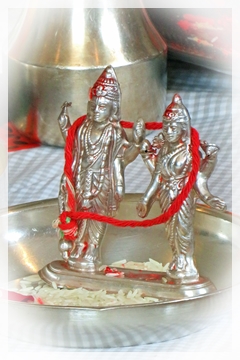 When writing about the prayers of Malala Yousafzai’s mother yesterday, I don’t want there to be any misunderstanding. Although she was praying to Allah, it was the one true God—our Triune God of the Father, Son and Holy Spirit—who heard and answered her prayers. While God is not a fan of Islam, He loves all of His children, whether Muslims, Hindus, Christians or others. Just because the Yousafzais don’t believe in Him doesn’t mean He doesn’t believe in them and their efforts to make our world a place where every girl can learn and lead.
 Yesterday, when writing about discontent, I realized there is one area in our lives about which Christians are too content. It appears that we’re quite content to keep our salvation and God’s grace to ourselves and allow others to miss that grace and experience eternity in Hell.
 Devotions of the Heart