THEY SENT HIM AWAY (Mark 5:1-18 – Part 2)

If you refuse to take up your cross and follow me, you are not worthy of being mine. If you cling to your life, you will lose it; but if you give up your life for me, you will find it. [Matthew 10:38-39 NLT]

pansyThere’s probably no end of sermons and commentary on the swine that went plunging into the lake after Jesus saved the demoniac. “Why pigs?” some ask while others focus on the death of the animals rather than the salvation of a man. Non-believers criticize Jesus for his “wanton destruction” of other people’s property without realizing their criticism implies their belief in the miracle. Theologians respond that since Jesus is God, those pigs actually belonged to Him. I don’t know what the demons wanted when they asked to be sent into the pigs, why they plunged down the hillside to their death, or what happened to the demons after that. What I do know is that the value of 2,000 pigs does not exceed the value of one human soul.

Rather than the pigs, I’d rather consider the townspeople and their reaction to the demoniac’s miraculous healing. A crowd soon gathered around Jesus and the now obviously sane man. Rather than joy over his miraculous restoration, the people only saw their loss and they told Jesus to go away. Since much of their wealth had just perished in the lake, their initial reaction is understandable. Moreover, with the Gerasenes being a Gentile region, the people had no messianic expectations. Understandably, encountering a man so powerful that he could banish demons and send pigs over a cliff frightened them. Yet, there is no record of anyone asking Jesus who He was, why He’d come, what He wanted, or from where His power came. They just pled with Him to leave them alone!

Unfortunately, the people closed their minds and chose wealth and fear over the miraculous healing brought by Jesus. What Jesus could have given them far outweighed the loss of a herd of pigs. Surely, the demoniac wasn’t the only one in the region needing healing and yet no one else approached this amazing healer who’d arrived on their shores. Sadly, the people were so afraid of how Jesus would impact their lives that they rejected Him. I wonder if we, like the people of the Gerasenes, allow fear and materialism to keep us from welcoming Jesus into our lives. As theologian D.A. Carson says of the Gerasenes’ people, “They preferred pigs to persons, swine to Savior.” We must never do the same!

When Jesus steps into our lives, He radically changes us. He will restore us as He did for the demoniac but it will come at a cost, as it did for the townspeople. Jesus doesn’t want just a portion of us and what’s ours—He wants all of us and everything we possess. That means giving up a whole lot more than a herd of pigs. Rather than being afraid of Him and His power, as were the townspeople, we must trust Him and welcome Him with open arms. After all, is anything worth more than a soul?

Then Jesus said to his disciples, “If any of you wants to be my follower, you must give up your own way, take up your cross, and follow me. If you try to hang on to your life, you will lose it. But if you give up your life for my sake, you will save it. And what do you benefit if you gain the whole world but lose your own soul? Is anything worth more than your soul? [Matthew 16:24-26 (NLT)]

Copyright ©2018 jsjdevotions. All rights reserved.

SENIOR MOMENTS

plumaria - frangiapaniBut that is the time to be careful! Beware that in your plenty you do not forget the Lord your God and disobey his commands, regulations, and decrees that I am giving you today. [Deuteronomy 8:11 (NLT)]
But the people soon forgot about the Lord their God, so he handed them over to Sisera, the commander of Hazor’s army, and also to the Philistines and to the king of Moab, who fought against them. [1 Samuel 12:9 (NT)]

“Are you looking for something?” asked Earl in Brian Crane’s Pickles comic strip. When his wife, Opal, replied, “My glasses,” he suggested looking in her purse. “No,” she said, “I can’t find it. That’s why I’m looking for my glasses, so I can find my purse. I’m hoping that’s where I left my car keys.” Looking down at his grandson, Earl explained, “That’s why it’s a good thing women Gramma’s age don’t have babies.”

Being around Opal’s age, and having had more than my share of “senior moments,” I understand perfectly. Forgetting the Lord, however, is not like misplacing keys, forgetting where the car is parked, or failing to remember the grocery list. It’s way more than absentmindedness, an appointment slipping one’s mind, or drawing a blank at someone’s name.

Forgetting the Lord is a conscious choice to turn our backs to Him and overlook His presence in all things. It is failing to remember His past mercies and how much He loves each and every one of us. It is disregarding His commands and ignoring our responsibilities both to Him and to our fellow man. When we forget God, we rebel, grow impatient, act rashly or imprudently, or begin to think we are self-sufficient and all-powerful. As the Israelites discovered, forgetting God can have serious, even tragic, consequences. Throughout Deuteronomy, Moses warned them not to forget the Lord and yet, from Joshua through Malachi, we continually read of their unfaithfulness, God’s anger, and the consequences of their deliberate amnesia.

As happened with the Israelites, it’s easy to let challenges overwhelm us, wealth and power deceive us, busyness distract us, temptation mislead us, disappointment frustrate us, grief blind us, impatience goad us, and complaint to harden us. Before we know it, we’ve forgotten the Lord. Moses’s many warnings to the Israelites apply to us today. God accepts senior moments—but He will never tolerate our forgetting Him. God never forgot the Israelites and He will never forget us. Why do we find it so easy to forget Him?

God is mindful of man, and it grieves Him that man is not mindful of Him. [Charles Spurgeon]

Pay attention, O Jacob, for you are my servant, O Israel. I, the Lord, made you, and I will not forget you. [Isaiah 44:21 (NLT)]

Let all that I am praise the Lord; may I never forget the good things he does for me. [Psalm 103:2 (NLT)]

Copyright ©2018 jsjdevotions. All rights reserved.

MEH

When the master of the house has locked the door, it will be too late. You will stand outside knocking and pleading, “Lord, open the door for us!” But he will reply, “I don’t know you or where you come from.” [Luke 13:25 (NLT)]

Not to decide is to decide. [Woodrow Kroll]

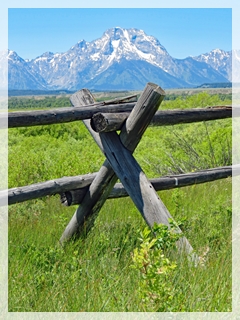
Tetons - Wyoming“Meh,” the verbal equivalent of a shoulder shrug, was added to the dictionary in 2008. Popularized by The Simpsons, it is a decisive assertion of non-commitment (or as decisive as having no opinion about something can be.) The New York Times used to run a list with the tagline, “Not hot. Not not. Just meh.” The list has included assorted celebrities and such things as Harrison Ford’s earring, petting zoos, Febreze, stocking stuffers, Tufts University, pumpkin ale, mugs with slogans, and the Golden State Warriors. The magazine’s culture editor, Adam Sternbergh, said the list was meant “to celebrate all those things in life that [are]…neither adored nor reviled, but, simply, meh.”
Whether we say “meh,” or dismissively use words and phrases like “whatever, it is what it is, I don’t care, not my problem, booooring, who cares” and “so what” we’re expressing indifference and an unwillingness to think about something. Apathy and disinterest are insulting: we don’t care enough to muster up any sort of approval, support, or regard for something but we also don’t care enough to dislike, oppose, or reject it.

Some in the media call Millennials “The Meh Generation,” but I fear that indifference, cynicism, disillusionment and jadedness are not limited to those born between 1982 and 2002. They’re not the only ones who find it easier to live together than commit to marriage or to walk away from a marriage than fight to save a family. They’re not the only ones who find it simpler to go along with the crowd than to stand up and speak or to accept what’s wrong rather than try to make it right. They’re certainly not the only ones who’ve decided the concept of sin is out of date, right and wrong is relative, or that anything goes as long as they aren’t the ones who get hurt. An ostrich puts its head in the sand to turn eggs but we put our heads there to avoid seeing what we don’t want to see. And, sadly, way too many in this world would put Jesus on “The Meh List” because He is “neither adored nor reviled, but, simply, meh.”

Jesus spoke of going through the gate to God’s Kingdom. At some point, we can’t ignore the gate’s presence or fail to form an opinion about the gatekeeper. We can no longer remain impartial, dispassionate or wishy-washy; a decision about following the shepherd has to be made. While neither death nor taxes can be avoided, remember that only the IRS grants extensions! Adore Jesus or revile Him but don’t simply shrug your shoulders and say, “Meh!”

I believe in my soul that there are more at this day being lost for want of decision than for any other thing. [Dwight L. Moody]

You can enter God’s Kingdom only through the narrow gate. The highway to hell is broad, and its gate is wide for the many who choose that way. But the gateway to life is very narrow and the road is difficult, and only a few ever find it. [Matthew 7:13-14 (NLT)]

Copyright ©2018 jsjdevotions. All rights reserved.

HEARING THE SHEPHERD

I myself will be the shepherd of my sheep, and I will make them lie down, says the Lord God. I will seek the lost, and I will bring back the strayed, and I will bind up the crippled, and I will strengthen the weak, and the fat and the strong I will watch over; I will feed them in justice. [Ezekiel 34:15-16 (RSV)]

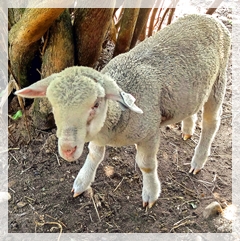
lambThroughout the Bible, there are many references to the Lord as our shepherd and mankind as His sheep. Sheep are not the brightest bulbs in the pasture and, considering the state of the world, it seems a fitting comparison! I came upon a true story that illustrates the need sheep have for a shepherd. In 2005, more than 400 sheep in Turkey died when they followed the lead sheep off a cliff and fell 15 meters. The death toll would have been greater except those first 400 cushioned the fall of the next 1,100 sheep that were stupid enough to follow them! Clearly, that herd of sheep needed someone to tell them when to stop. Unfortunately, mankind seems as willing to blindly follow the lead sheep wherever he leads us, only we call it belonging, accepting, keeping up, staying current, maintaining the status quo, or not rocking the boat, making waves or causing trouble.
I happened upon a cartoon by Mike Waters in which a sun-glassed sheep is relaxing in a lounge chair and wearing ear phones connected to the iPod at his side. The TV is on, a computer rests on his lap, the radio is blaring, and he’s got a copy of Sheep Digest in his hands. Hidden under the stack of magazines at his side is a Bible. In the background, a shepherd is calling. The sheep says, “I wonder why I don’t hear from the shepherd anymore!” The words in the caption beneath the comic are from John 10:27: “My sheep listen to my voice; I know them, and they follow me.” Of course, the sheep need to hear the shepherd to know his voice and nowadays we seem to be listening to everything but our shepherd’s voice (and reading everything but His word)! Worldly distractions, concerns, desires and possessions have drowned out His voice.

In the case of the unfortunate demise of the Turkish sheep, the problem wasn’t that they weren’t listening to the shepherd. The village’s shepherds had briefly abandoned the flock while they enjoyed breakfast. Unlike the Turkish shepherds, our Shepherd never takes a coffee break or goes off duty! He’s more like the shepherd in the cartoon—on the job and calling his flock. Like those suicidal sheep in Turkey, however, we rarely know enough to stop on our own. Fortunately, our Shepherd will step in and lead us. Of course, for that to happen, we have to be listening for His voice.

I am the good shepherd; I know my own and my own know me, as the Father knows me and I know the Father; and I lay down my life for the sheep. … My sheep hear my voice, and I know them, and they follow me; and I give them eternal life, and they shall never perish, and no one shall snatch them out of my hand. [John 10:14-15,27-28 (RSV)]

 Copyright ©2018 jsjdevotions. All rights reserved.

ALL THINGS BRIGHT AND BEAUTIFUL

Absarokas - Cody WyomingFor ever since the world was created, people have seen the earth and sky. Through everything God made, they can clearly see his invisible qualities—his eternal power and divine nature. So they have no excuse for not knowing God. [Romans 1:20 (NLT)]
All things bright and beautiful, All creatures great and small,
All things wise and wonderful: The Lord God made them all.
[“All Things Bright and Beautiful” by Cecil F. Alexander]

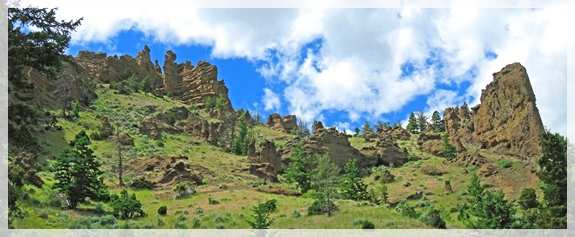
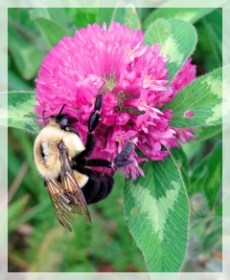
“When in doubt, trust your horse!” was the sign I’d seen earlier in the corral and so, as we slowly wended our way through the pinyon-juniper forest and up the mountain trail, I trusted my mount. After all, he didn’t want to fall down the ravine any more than did I. When we reached the ridge, I gasped—somewhat out of relief but more so out of wonder. The scenery was breathtaking! As I looked across the Wapiti Valley, I saw the incredible volcanic rock formations of the Absaroka Mountain Range and, when I looked down into the valley, I saw some of what Teddy Roosevelt called “The fifty most beautiful miles in America”. Surrounding us in the sage meadow on the ridge was an incredible array of wildflowers. An abundance of color, there were red Wyoming paintbrush, bright yellow mule’s ears and sunflowers, purple lupine, white snowbells, low pink bitterroot, tall green gentians, delicate bluebells, and a few pale yellow prickly pear cactus. Fritillaries and a white admiral red clover - beebutterfly flitted among the blossoms and a marmot peeked out from behind a rock. So as to not spook the horses or spoil the day for my fellow riders, I silently sang the chorus to All Things Bright and Beautiful.
Only able to remember the hymn’s chorus, I looked up the lyrics when I got home. The author is Cecil F. Alexander. An Irish woman known as Fanny to her friends and family, she lived in the mid-19th century and was married to a clergyman. It is said that she based her hymn on the words of the Apostles’ Creed: “I believe in God the Father, Maker of heaven and earth.” She easily could have been inspired by Psalms 19 or 104. I doubt she ever visited a ranch in Wyoming so she wasn’t thinking of the Absarokas and a colorful mountain meadow. Nevertheless, I imagine the Irish countryside can be just as extraordinary; perhaps Fanny’s inspiration came from visiting some place like Ireland’s Cliffs of Moher where she stood in awe of God’s handiwork.

I couldn’t help but think of the Apostle Paul’s words in the first chapter of Romans; we see evidence of God everywhere in His amazing creation and there is no excuse for denying His existence or not knowing Him. It doesn’t have to be majestic mountains and spectacular scenery; God’s workmanship is just as evident in our backyards in the exquisiteness of things like red clover and the wings of a bumblebee. Indeed, “How great is God Almighty, who has made all things well!”

Each little flow’r that opens, Each little bird that sings,
He made their glowing colors, He made their tiny wings.
The purple-headed mountains, The river running by,
The sunset and the morning That brightens up the sky. …
He gave us eyes to see them, And lips that we might tell
How great is God Almighty, Who has made all things well.
[“All Things Bright and Beautiful” by Cecil F. Alexander]

The heavens proclaim the glory of God. The skies display his craftsmanship. Day after day they continue to speak; night after night they make him known. They speak without a sound or word; their voice is never heard. Yet their message has gone throughout the earth, and their words to all the world. [Psalm 19:1-4 (NLT)]

O Lord, what a variety of things you have made! In wisdom you have made them all. The earth is full of your creatures. [Psalm 104:24 (NLT)]

Copyright ©2018 jsjdevotions. All rights reserved.

UNCHANGING

Look up at the skies, ponder the earth under your feet. The skies will fade out like smoke, the earth will wear out like work pants, and the people will die off like flies. But my salvation will last forever, my setting-things-right will never be obsolete. [Isaiah 51:6 (MSG)]

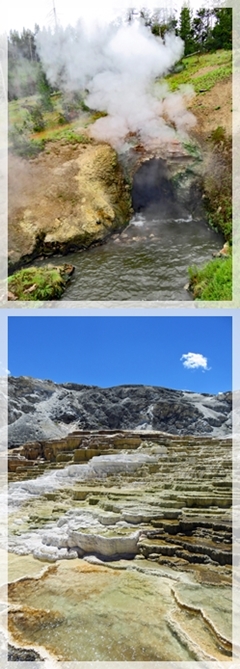
Dragon's mouth springs - Mammoth Hot springs - yellowstone

The unstable, ever-changing, and even violent nature of this world in which we live is evident throughout Yellowstone Park. It’s disconcerting to see hot mud shoot out of a cavern, to smell sulphur and feel the hot spray as a geyser erupts, and to stand in the steam and hear the booming belch as water surges out of a hot spring. Yellowstone is actually a super-volcano that last erupted some 640,000 years ago and smaller eruptions of lava have occurred as recently (geologically speaking) as 70,000 years ago. The park is what geologist Robert Smith calls “a living, breathing, shaking, baking, caldera,” and those geothermal wonders that attract visitors are fueled by magma as hot as 1,500 degrees that lies just a few miles beneath the earth’s surface.

The abundant geothermal activity and the 1,000 to 3,000 small earthquakes that occur there every year mean that the park is always changing. For example, when my husband visited the park as a boy, there was no Quake Lake west of Yellowstone and the Steamboat Geyser had been dormant for nearly fifty years. A massive earthquake in 1959 created the lake and the geyser awoke in 1961. Since then, it’s been erratic in its activity but, after four years of dormancy, it began erupting again in March of this year. Shooting nearly boiling water up 345 feet, it has erupted ten times since then. The travertine terraces of Yellowstone’s Mammoth Hot Springs are like living sculptures and continually change shape as over 500 gallons of hot water are discharged every minute and two tons of calcium carbonate are deposited there every day. Even the beautiful Yellowstone canyon, the result of wind, water and earthquakes, speaks of change as the Yellowstone River continues to erode the bedrock. Fire also has changed the landscape; over 70,000 acres of lush forest that existed when we visited there a few years ago became nothing but charred remains in 2016.

In Yellowstone’s dynamic and unsettled landscape, even the ground around the thermal features is unstable and can collapse. Then again, you don’t need to be in Yellowstone to realize how nature is an unpredictable, ever-changing, and often dangerous force. That Thai soccer team discovered how quickly a dry cave can fill with water in a flash flood, residents on the island of Hawaii saw their lives change in May when Kilauea began erupting and sent lava over the streets and through their neighborhoods. Texans, Floridians, and Puerto Ricans certainly can attest to the power of last year’s hurricanes. Hurricanes, tornadoes, tsunamis, floods, drought, earthquakes, hail, thunderstorms, volcanic eruptions, blizzards, avalanches, sinkholes, lightning and fire: we all are vulnerable to disaster from the changing and volatile nature of this world in which we live.

Yellowstone is a vivid reminder of how the forces of nature can change the world as we know it: rock erodes, mountains crumble, geysers appear and disappear, volcanoes erupt, forests burn and ground can collapse. I take comfort in the knowledge that, while nothing in this world is constant and forever, God remains our everlasting and unchanging bedrock. The same yesterday, today, and forever, He is our firm foundation.

Consider what you owe to His immutability. Though you have changed a thousand times, He has not changed once. [Charles Spurgeon]

I love you, God—you make me strong. God is bedrock under my feet, the castle in which I live, my rescuing knight. My God—the high crag where I run for dear life, hiding behind the boulders, safe in the granite hideout. I sing to God, the Praise-Lofty, and find myself safe and saved. [Psalm 18:1-3 (MSG)]

Copyright ©2018 jsjdevotions. All rights reserved.