
If we say we have no sin, we deceive ourselves, and the truth is not in us. If we confess our sins, he is faithful and just to forgive us our sins and to cleanse us from all unrighteousness. [1 John 1:8-9 (ESV)]
 While “Don’t cry over spilled milk,” isn’t one of Solomon’s proverbs, that wise advice is several centuries old. “No weeping for shed milk,” appeared in a book of English proverbs back in 1659 and some historians believe the saying dates back to medieval days. Superstitious, people left spilled food for the fairies or elves to eat and drink. If someone cried over spilled milk, it was feared that the fairies might think the offering was begrudged and bad luck would visit the house.
For some unknown reason, today (February 11) is designated as “Don’t Cry Over Spilled Milk Day” and is a day dedicated to not letting the little things get us down. We all have a long list of past mistakes, large and small, over which we’ve shed a few tears. While a dog or cat might lap up spilled milk, no elves or fairies are going to come along to correct our mistakes and our tears accomplish nothing! Rather than lamenting over our blunders and missteps, our job is to clean up the mess we’ve made before it starts to stink! Before we get out our mops and pails, however, we’ve got to forgive ourselves. If God can forgive us, we should be able to forgive ourselves!
In actuality, for most of us, spilled milk is the least of our problems. We all make mistakes; sadly, we’ll continue to make them. There’s no point beating ourselves up and reliving past errors. The milk can’t go back in the bottle, the words can’t return to our mouths, the money can’t get unspent, the email can’t be retrieved, and the expletive can’t be deleted! When possible, we make right what we can, as soon as we can, and then forge on ahead, hopefully more prudently. Learning from our mistakes makes more sense than crying over them!
Just as we mustn’t let the little things get us down, we can’t let the big ones take us down either. Perhaps every day should be dedicated to not crying over milk that has spilled as we take a positive attitude, forgive ourselves (and others), fix what we can, accept what can’t be changed, and move forward.
Finish each day and be done with it. You have done what you could. Some blunders and absurdities no doubt crept in; forget them as soon as you can. Tomorrow is a new day. You shall begin it serenely and with too high a spirit to be encumbered with your old nonsense. [Ralph Waldo Emerson]
 You may have celebrated the Feast of the Presentation of Christ in the Temple (or Purification of Mary) at church yesterday. Also known as Candlemas, this day commemorates an incident found in Luke 2 when, forty days after the birth of Jesus, three important events occurred: the ceremonial purification of Mary, Joseph and Mary’s dedication of their firstborn son to God, and Jesus’ first entrance into the Temple. It was then that Simeon and Anna recognized Jesus as the Messiah for whom they’d patiently waited. The association of candles with this event in Jesus’ life is understandable; upon seeing Jesus, Simeon declared him to be the light that would reveal God to the nations. Traditionally, a candle-lit procession preceded the Mass and all of the candles that would be used in the church that year were blessed. Candlemas night, people would place lit candles in their windows.
 A few weeks ago, in Charles Schultz’s classic comic Peanuts, Snoopy sat on his doghouse and decided not to tell his little bird friend Woodstock about Santa Claus. “He’ll never get any presents anyway. Santa Claus never brings presents to tiny, nondescript, nobody birds,” he thought before concluding, “It’s kind of sad at Christmastime to be a nobody bird.” I wasn’t so sure about Santa ignoring the “nobody birds.” The previous day, several from our church had participated in a project that demonstrated just how much “Santa” really does care.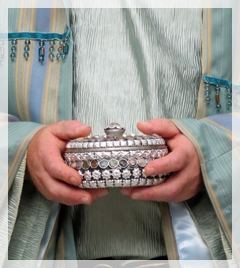
 John Wesley had an excellent alternative to making a New Year’s resolution that’s unlikely to be kept. Believing that Christians should reaffirm their covenant with God, in 1755, he introduced a covenant service to the Methodist Societies. By 1775, this service was usually held on New Year’s Eve (and called a Watch Night Service) or New Year’s Day. This was a service of renewal in which believers would gather for self-examination and reflection and then renew their covenant with God by dedicating themselves wholly to Him. The practice of a covenant renewal service held on the Sunday nearest January 1st continues in some Methodist churches today and is a practice that has crossed denominational lines.
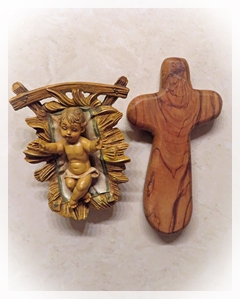 Pew Research reports that while 90% of Americans celebrate Christmas, more than half of them celebrate it only as a cultural holiday! While they’ll decorate their house with lights and wreaths, trim a tree, send cards, and exchange gifts, Christmas is just an excuse for good food, parties, family gatherings, and presents. While they’re not indifferent to Santa, gifts, merriment, or decorations, like the people of 1st century Palestine, they are indifferent to the Christ child. The shepherds saw the star and sought the babe in the manger and a caravan from the East brought Him gifts, but we don’t read of any townspeople visiting Joseph and Mary. What of the priests and scribes who told Herod where the Messiah would be born? They knew the prophecies but didn’t join the Magi in their quest to find the One who would fulfill those prophecies. Lowly shepherds and men from a faraway land recognized Jesus as the Messiah but most of God’s chosen people ignored the greatest event in all of history.
 Devotions of the Heart