A FATHER’S LOVE

For this is how God loved the world: He gave his one and only Son, so that everyone who believes in him will not perish but have eternal life. God sent his Son into the world not to judge the world, but to save the world through him. [John 3:16-17 (NLT)]
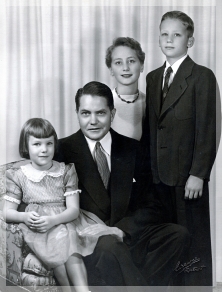
Although he was a man of faith, my father was not a man of laughter, tenderness, affection, or patience. When I was a child, my understanding of fear of the Lord was much like the fear I had of my father—fear that I never could be pretty, smart, talented, or good enough to earn either his or God’s love. Try as I might, I always seemed to fall short.

I couldn’t have been more than seven when I decided to run away. While I can’t recall what prompted me to take such drastic action, I must have disappointed my father in some way. After emptying my piggy bank of a handful of quarters, I left a note telling my parents I was leaving and walked two blocks to the city bus stop. While waiting for the bus, I sat on the steps of a storefront and, sure they wouldn’t even notice I was gone, cried.

I’m not sure how he found me but, like the shepherd who left the ninety-nine sheep to search for the missing lamb, he did! My tears were interrupted when my father rode around the corner on my brother’s bike. Without the harsh words I expected, he wiped my tears, picked me up, sat me on the handle-bars, and we returned home. The two of us must have been quite a sight as this six-foot man balanced me on the front of a boy’s bike and peddled me down the street. While I don’t remember what caused me to leave, I clearly remember my joy at being pursued by my father, picked up, and welcomed back home. Perhaps my running away simply was a test to see if my father loved me enough to seek me even when I erred and strayed.

Just as I mistakenly thought my father’s love was conditional and something to be earned, many of us think we need to earn God’s love. Fortunately, we don’t because, as flawed and fallible as we are, we could never deserve all that God has done for us. Mankind’s abysmal history makes that abundantly clear. From the first sin in Eden, we’ve disappointed God with everything from murder, golden calves, and idol worship to hypocrisy, immorality, rebellion, pride, greed, and wickedness.

Nevertheless, rather than withdrawing His love, God seeks us (as my father did with me). God sought Adam and Eve when they sinned, Jonah when he disobeyed, Hagar when she ran, Gideon when he was hiding, Paul when he persecuted Him, and Peter when he denied Him. Despite our selfishness, greed, defiance, failures, complaints, stubbornness, and other transgressions, God sought us and gave us Jesus. We didn’t deserve such a sacrifice nor did we do anything to earn our salvation—that was God’s grace.

While my accomplishments pleased my father, I eventually learned that I didn’t have to earn his love. He loved me (at both my best and worst) because I was his child. In the same way, God loves His children unconditionally and nothing we can do will ever change that! While He wants us to live righteous lives, God won’t stop loving us when we fail. We have a Father in Heaven who loves us unreservedly, forgives our offenses, disciplines us when we’re wrong, pursues us when we stray, and brings us home when we’re found.

God’s unconditional love is a very difficult concept for people to accept because, in the world, there’s always payment for everything we receive. It’s just how things work here. But God is not like people! [Joyce Meyer]

God saved you by his grace when you believed. And you can’t take credit for this; it is a gift from God. Salvation is not a reward for the good things we have done, so none of us can boast about it. [Ephesians 2:8-9 (NLT)]

See how very much our Father loves us, for he calls us his children, and that is what we are! [1 John 3:1 (NLT)]

Copyright ©2024 jsjdevotions. All rights reserved.

PERSISTENCE

Now He was telling them a parable to show that at all times they ought to pray and not become discouraged. [Luke 18:1 (NASB)]

pileated woodpeckerJesus told two parables about persistence. In the first, a man went to his neighbor’s home at midnight. Waking him, he asked for three loaves of bread because a traveler just arrived and he had no food for his hungry guest. Initially, the neighbor refused to open the door but, after tiring of the man’s persistent knocking, he finally gave him the bread. In the second parable, a widow kept badgering a corrupt judge with her appeals for justice against a man who has harmed her. Finally, worn down by her persistent pleas, the exasperated judge granted her request.

When we focus on the two people’s annoying doggedness rather than their just causes, it’s easy to misinterpret these parables. Hospitality for a traveler was more than good manners; it was required and a matter of honor for the host and his village. The man had a legitimate need that he couldn’t fulfill. With an empty larder and no quick-marts, he had to depend on his neighbor’s generosity.

Although the law commanded that widows be protected, they often were exploited. The judge (who “neither feared God nor cared about people”) expected a bribe that she couldn’t pay. Wanting the fairness, protection, and justice the law promised, persistence was the widow’s only weapon against the corrupt man. Having just causes, both people persisted in their pleas because they were powerless on their own.

We also misinterpret these parables when, rather than contrasting God to the reluctant neighbor and vexed judge, we compare Him to those men. Neither man was responsive and both had to be hounded before they’d even listen. Neither man cared about friendship or justice; rather than granting the requests out of love or concern, their motives were self-serving. The heartless neighbor and the godless judge just wanted the bothersome pleas to stop so they could get back to their own lives.

In contrast, God is neither a sleepy, grouchy, uncaring neighbor nor an unresponsive, greedy, corrupt judge. Jesus’ point was this: if an unwilling man can be convinced to meet the needs of a troubled neighbor and a dishonest judge can be induced to give justice to a poor widow, consider how much more willing our loving Father is to meet the needs of his children! He always has time for us and He hears us the moment we speak to Him. While others may fail us, God never will.

Although several Bible translations use “persistence” in describing these people’s pleas, the original Greek words were egkakeó, meaning not to lose heart or grow weary, in the parable of the widow, and anaideia, meaning shamelessness, in that of the neighbor. Rather than telling us we must pester God until He acts, these parables tell us that pestering God is unnecessary. It’s not because we haven’t gotten God’s attention that we pray steadfastly; it’s because we have! These parables tell us to pray with the tenacity and shamelessness of a believer who refuses to be deterred or discouraged by fear, disappointment, or dissuasion.

There is a difference between a fleshly stubbornness and a godly perseverance. The former insists on getting one’s will done in heaven, and the latter determines to get God’s will done on earth. [William Thrasher]

Do not be anxious about anything, but in everything by prayer and pleading with thanksgiving let your requests be made known to God. [Philippians 4:6 (NASB)]

Therefore let’s approach the throne of grace with confidence, so that we may receive mercy and find grace for help at the time of our need. [Hebrews 4:16 (NASB)]

Copyright ©2024 jsjdevotions. All rights reserved.

OUT OF LOVE, NOT FEAR

But if you refuse to listen to the Lord your God and do not obey all the commands and decrees I am giving you today, all these curses will come and overwhelm you… The Lord himself will send on you curses, confusion, and frustration in everything you do, until at last you are completely destroyed for doing evil and abandoning me. [Deuteronomy 28:15,20 (NLT)]

Moses - Michaelkirsche - MeiringenThere are 613 commandments in the Torah/Pentateuch (the first five books of the Bible). But, as seen in Jesus’ interaction with the lawyer who wanted “neighbor” defined, there was room for interpretation. For example, what exactly does it mean to “honor” one’s parents? When Deuteronomy 11:18-20 says to bind “these words” to one’s hands and forehead and place them on doorposts and gates, exactly what words and how was it to be done? Work on the Sabbath is prohibited in twelve places but is the command limited to the few types of work mentioned? For that matter, what defines work?

Jesus criticized the Pharisees over their pettiness regarding the law but it’s easy to see how the system of laws governing Jewish life became so complex. After listing the blessings for obedience to God in Deuteronomy, Moses laid out the many curses for disobedience. Those curses include everything from wasting diseases, plagues, drought, boils, military defeat, and scorching heat to becoming food for scavenging birds, madness, swarms of insects, starvation, oppression, and exile. Moses painted a graphic and gruesome picture when warning the people to obey all the words of the law.

Since people will use any possible excuse to break a rule, it’s easy to see how fear of punishment led to Jewish legalism—especially in the Second Temple period when the Jews returned to Judah from Babylon. Having seen Jerusalem’s rubble and the Temple’s ruins, religious leaders knew firsthand the steep price Israel paid for their disobedience. Fearful of punishment and striving for absolute obedience, they wanted to cover every eventuality by putting a “fence around the Torah” with the Oral Law.

To clarify honoring and reverencing one’s parents, the oral law obligated children to care for their parents’ needs and prohibited things like sitting or standing in their place, contradicting them, or calling them by their first names. As for the binding and posting of words, the oral law specified tefillin (phylacteries), mezuzahs, and the verses that were to be placed in them. Rather than simplifying obedience, however, they complicated it with several thousand laws governing everything from the text, writer, pen, and ink to letter shape, parchment, and placement.

Based on the work required in building the tabernacle, 39 classes of prohibited work were specified in the Oral Law. Then, lest someone unintentionally work on the Sabbath, more rules were added. Tools used in prohibited work couldn’t be handled on the Sabbath which meant that touching things like scissors or needles was forbidden. Any action resembling prohibited work also was prohibited on the Sabbath so things like braiding hair (weaving) or separating good fruit from spoiled (winnowing/sifting) were banned. When the disciples were criticized for breaking the Sabbath by plucking off and eating some heads of grain, it was because the Pharisees considered their action the work of harvesting.

Jesus’ grievance wasn’t with the Law; it was with the Pharisees who had allowed the minutiae of the law to become more important than a relationship with the One who gave them the Law. Although the law pointed out sin, they didn’t understand that no matter how intricately it was interpreted or followed, the law never could keep people from sin. People are sinful and, try as they may, they always will fall short of perfect obedience.

As Christians, we must never make the mistake of thinking we can reach a level of perfection good enough for God; in spite of all their laws, the people of Judah couldn’t and neither can we. Jesus didn’t abolish the law—He fulfilled it! Our righteousness is attained only through faith in Him. We can’t obey God’s law on our own but, by the grace of God and the power of the Holy Spirit, we can begin to be the people He created us to be. Christians don’t obey God’s law to work our way into His good graces, to earn our way into heaven, or to avoid captivity or pestilence. We obey God out of love! If we genuinely love Him with all our being, obedience isn’t a burden because we want to do only what pleases Him.

The law tells me how crooked I am. Grace comes along and straightens me out. [D.L. Moody]

And he said to him, “You shall love the Lord your God with all your heart and with all your soul and with all your mind. This is the great and first commandment. And a second is like it: You shall love your neighbor as yourself. On these two commandments depend all the Law and the Prophets.” [Matthew 22:37-40 (ESV)]

Copyright ©2024 jsjdevotions. All rights reserved.

THANK YOU, JESUS!

For even the Son of Man came not to be served but to serve others and to give his life as a ransom for many. [Matthew 20:28 (NLT)]

During Lent, I journeyed toward Jesus’ death and resurrection with a Lenten devotional. For each of the season’s forty days, there was a Scripture reading from John, a short devotional, an inspiring quote, interesting facts about Lent’s history, and a unique fast for the day. Each day’s reading also provided journaling space for the reader. For the fortieth day’s journal entry, readers were asked to write a brief letter of thanks to Jesus for all He endured to lead them into eternal life.

More than a week after Good Friday, however, the journal page was blank. Using Christianese words like expiation, redemption, propitiation, and reconciliation, along with born again, forgiveness, salvation, and everlasting life, I easily could have filled that page with a list of what His sacrifice provided. But my mother, who insisted I write a personal note of thanks before enjoying any gift, wouldn’t have approved of such a cursory, let alone tardy, “thank you” note! Jesus certainly deserved better!

Since then, I have pondered all He did for me—not for the world—but for me personally. He provided joy, peace, purpose, and meaning to my life but He did so much more! Jesus loved me! He loved me enough to fast for me—and not just for those forty days in the wilderness. He loved me enough to fast from being God for more than thirty years. Humbling and emptying Himself, the second member of the Trinity traded His Godness for mortal flesh. The One who was there before the world began fasted from the worship of angels, omnipotence, omnipresence, omniscience, sovereignty, and self-existence. He fasted from being God to suffer pain, hunger, thirst, betrayal, discomfort, insults, accusations, humiliation, and the excruciating death of a criminal. That was done for me! Thank you, Jesus!

Because He gave me the gift of His Holy Spirit, Jesus remains with me and continues to lead, guide, guard, comfort, and provide for me. His Spirit helps me understand Scripture, hear His voice, and feel His presence. He guides my prayers—and when I have no words, He prays for me! He gave me a spiritual gift and enables me to bear spiritual fruit. Although He convicts me of my sin, rather than shame me, Jesus forgives me. Thank you, Jesus!

Jesus has been my good shepherd. When I strayed, He found me and brought me home. When I was hurt, he comforted me and dressed my wounds. When danger threatened, He protected me; when I was running on empty, He filled me; and, when I ran myself ragged, He brought me to a place of rest. Because He put people in my life who acted as His hands and voice, I received help, guidance, counseling, encouragement, love, and “sharpening” from His earthly angels. Thank you, Jesus!

As my shepherd, Jesus has been at my side in my darkest moments (as well as my best). He loved me when I was at my worst, when I hated myself, or considered ending my life. When I was angry with Him and turned away, He never abandoned me. He held me when I lost those I loved or was hurt by those who should have protected me. He encouraged me when I was sure I could go no further, lifted me when I fell, and carried me when I couldn’t take another step. He safely brought me through every dark valley into His light. There are times I don’t even like myself, but Jesus loved me enough to die so that I could live!  He did that for me! Thank you, Jesus!

Your story is different from mine. Nevertheless, Jesus loves you as much as He loves me! Just as He lived, suffered, died, and rose for me, He lived, suffered, died, and rose for you. What would you write in your letter?

Now, most people would not be willing to die for an upright person, though someone might perhaps be willing to die for a person who is especially good. But God showed his great love for us by sending Christ to die for us while we were still sinners. [Romans 5:7-8 (NLT)]

Copyright ©2024 jsjdevotions. All rights reserved.

THE NEW COVENANT (MAUNDY THURSDAY)

And he took bread, and when he had given thanks, he broke it and gave it to them, saying, “This is my body, which is given for you. Do this in remembrance of me.”  And likewise the cup after they had eaten, saying, “This cup that is poured out for you is the new covenant in my blood.” [Luke 22:19-12 (ESV)]

holy communionToday is Maundy (or Holy) Thursday—the day many Christians throughout the world will observe the institution of the Lord’s Supper/Eucharist/Holy Communion by coming to the Lord’s table. Regardless of what you call this sacrament, Jesus’ mention of a “new covenant” probably will be part of your service. Not a word commonly used today, what is a covenant and how does it differ from a contract?

Both covenants and contracts are binding agreements but, in a contract, the parties negotiate from fairly equal bargaining positions and are free not to sign. Although both parties are expected to abide by its terms, a contract has contingencies. If either party fails to hold up their end of the bargain, the contract is null and void and the relationship ends.

A covenant, however, is not between equals. With no negotiation, it is more like an agreement between the conquering king and the conquered people! While contracts can be amended, covenants are unalterable. In a covenant, the parties agree to hold up their end of the deal even if the other party doesn’t. While a failure on one side or the other will yield consequences, it will not negate the relationship. In Scripture we find covenants between God and Adam, Abraham, Moses, Noah, and David. In them, God promised to provide, protect, and bless his people while they promised to trust and obey him and repent when they didn’t.

God’s standard is perfection but, regardless of how hard we try, we can’t be perfect. As we know from the Old Testament, the people repeatedly failed to keep their promises. In a contractual relationship, that failure would have ended their relationship with God. Fortunately, it was a covenant relationship and, while the Israelites incurred God’s judgment for their disobedience, they never were abandoned. The Hebrew Scriptures promised a new covenant in God’s words to Jeremiah—a covenant uniting God with His people—a covenant of grace in which God fulfilled both sides of the agreement.

When Jesus blessed the bread and wine in that upper room in Jerusalem some 2,000 years ago, a new covenant with God began. Jesus did not negate the law. There was nothing wrong with the law; the problem was with the people who couldn’t abide by it. In the old covenant, people were told what to do (and not to do) to get right with God but, in the new covenant, the getting right with God was done for us by Jesus.

The old covenant required the blood of animals and yearly atonement; the new covenant is for eternity and was satisfied with the sacrifice of God’s only Son. The old covenant was one of the law and works but the new one is one of grace and faith. Instead of the law being written on tablets, it is written on our hearts. The old covenant was signified by circumcision but the new covenant is shown by a change of heart. The old covenant found God in the Temple in Jerusalem but the new finds Him in the temple of the Spirit. The old covenant was one of bondage and the new is one of liberty. The old covenant was established on Mt. Sinai for Israel alone; the new was established on the cross and is for all mankind. It was with Jesus that the old covenant ended and it was with Him that the new covenant began. What was the Last Supper of the old covenant became the First Supper of the new one!

Behold, the days are coming, declares the Lord, when I will make a new covenant with the house of Israel and the house of Judah, not like the covenant that I made with their fathers on the day when I took them by the hand to bring them out of the land of Egypt, my covenant that they broke, though I was their husband, declares the Lord. For this is the covenant that I will make with the house of Israel after those days, declares the Lord: I will put my law within them, and I will write it on their hearts. And I will be their God, and they shall be my people. And no longer shall each one teach his neighbor and each his brother, saying, ‘Know the Lord,’ for they shall all know me, from the least of them to the greatest, declares the Lord. For I will forgive their iniquity, and I will remember their sin no more.” [Jeremiah 31:31-34 (ESV)]

Copyright ©2023 jsjdevotions. All rights reserved.

SHED THE SHROUD

Then Jesus shouted, “Lazarus, come out!” And the dead man came out, his hands and feet bound in graveclothes, his face wrapped in a headcloth. Jesus told them, “Unwrap him and let him go!” [John 11:43-44 (NLT)]

roseUnlike Lazarus, we haven’t had a four-day encounter with death. Our family didn’t wash us with warm water, anoint us with myrrh and aloe, wrap us in a shroud with herbs and spices, lay us in a tomb, and mourn our passing. Most of us haven’t even endured a months-long coma, flatlined, or been brought back to life with an AED. How does such an experience affect someone? Without a doubt, the man who emerged from the tomb differed from the man who died four days earlier. Did Lazarus return to life with the 1st century equivalent of a “bucket list” of things to accomplish, places to go, things to do, and adventures to have?

When Jesus called Lazarus out of the tomb, the once dead man emerged from the tomb with his face wrapped in a head cloth and his body bound in burial garments. Jesus told the people to unbind him and free him from the trappings of the grave. Something tells me that, after four days in a tomb, Lazarus left behind more than some linen cloth soiled with the detritus of the tomb and death. While we don’t know what he experienced during those four days, He must have returned to life with a new perspective. As he walked into the sunlight he never expected seeing again and inhaled the air he never anticipated breathing again, can you imagine how much he appreciated his new lease on life? Given a second chance, Lazarus probably wasn’t about to bring any regrets, resentment, anger, or guilt with him. Raised from the dead, he probably shed much of his past along with that shroud as he stepped from the tomb’s gloom.

Unlike Lazarus, we haven’t physically died. Nevertheless, we were spiritually dead until we responded to Christ’s call. Now, born again into a new spiritual life, our grave clothes are no longer necessary. Lazarus shed his; have we? Even through we’re reborn in Christ, we tend to carry the detritus and debris of our yesterdays into our new life. After putting on the new clothes of salvation and righteousness, rather than leave our graveclothes behind, we drag along the shroud of the past—a shroud stained with betrayals, anger, disappointment, loss, or hurt and embellished with things like remorse and disgrace. Even when we think we’ve donned the fresh clothes of a new life in Christ, we often tuck a pang of guilt or shame into a pocket. We have trouble believing that we’re forgiven, but we are; that change is possible, but it is; that we have a relationship with the Creator of the Universe, but we do; or that He could possibly love us, but He does! Lazarus shed his shroud; so should we.

As for bucket lists—they seem more a way of denying death than living life to the fullest. I don’t think Lazarus emerged from his tomb with a to-do list of things to accomplish before his next trip to that tomb. I suspect he emerged with a new appreciation for the everyday things of life—his family, the sound of laughter, the embrace of a friend, a sip of cool water, morning dew glistening in the sunlight, sunsets and sunrises, the chirp of a sparrow, worship at the Temple, the taste of a rip fig, a beautiful rose, a buzzing bee, the aroma of fresh baked bread, the earthy smell of rain, and a relationship with Jesus. Death taught Lazarus that he didn’t need more; he just needed to fully appreciate what he already had—Jesus and life!

Lazarus heeded Jesus’ call. When he stepped into the light from that dark tomb, he shed his shroud and embraced his new lease on physical life. When we responded to Jesus’s call, we were given a new spiritual life. Let us leave the despair, doubt, shame, sorrow, and sin behind as we clothe ourselves with the joy of life in Jesus Christ.

And all who have been united with Christ in baptism have put on Christ, like putting on new clothes. [Galatians 3:27 (NLT)]

You have turned my mourning into joyful dancing. You have taken away my clothes of mourning and clothed me with joy. [Psalm 30:11 (NLT)]

Copyright ©2024 jsjdevotions. All rights reserved.