THE LAMB OF GOD – ASH WEDNESDAY

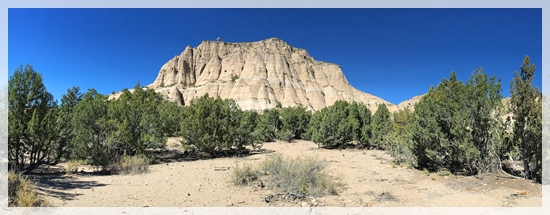
New mexicoThe next day John saw Jesus coming toward him and said, “Look! The Lamb of God who takes away the sin of the world! [John 1:29 (NLT)]

Today is the first day of Lent, a season in which we remember the time Jesus went into the wilderness and fasted for forty days and nights. Because Lent occurs in the weeks leading up to Good Friday and Easter, we tend to associate this period of Jesus’s life with the end of his ministry. It actually occurred early in His ministry, shortly after his baptism by John and his empowerment by the Holy Spirit.

During Jesus’s time in the wilderness, Satan visited and tempted Him. Jesus first was tempted to serve Himself—to alleviate his hunger by turning stones into bread. In the second temptation, Satan urged Jesus to jump off the Temple and reveal Himself in a spectacular display. This action would also test God’s love by coercing Him into saving Jesus. In the third test, Satan tempted Jesus to skip the cross altogether; all the kingdoms of the world would be His if only He’d worship the evil one.

Just because Jesus was divine doesn’t mean He couldn’t have fallen; He also was human and, like us all, susceptible to Satan’s wiles. He could have sinned as easily as Adam and Eve, but He didn’t! Resisting temptation was as essential to His mission as was suffering on the cross. Just as sin came into the world through one man, God would redeem the world through one man, but Jesus had to remain sinless for that to happen. If He hadn’t, there would have been no point to the cross; only a perfect sinless sacrifice could atone for mankind’s sins.

Because Jesus countered all of Satan’s temptations with Scripture, we tend to think of the temptation of Christ as sort of a “how to” manual on overpowering temptation. While it is that, it is so much more. Jesus didn’t go into the wilderness to teach us a lesson—He went into the wilderness to save us. He wasn’t just battling for His soul—He was fighting Satan for ours! He was defeating Satan by deliberating choosing to suffer for us as a man when He was God! He endured hunger when he could have spoken food into existence. He humbly chose to remain an obscure rabbi from Nazareth rather than use His power to win a following. Refusing to compromise with Satan, He chose obedience to God: to live, suffer and die as a man. Jesus, the spotless Lamb of God, chose to endure the cross for sinful selfish mankind: the very people who would put Him there!

For God made Christ, who never sinned, to be the offering for our sin, so that we could be made right with God through Christ. [2 Corinthians 5:21 (NLT)]

This High Priest of ours understands our weaknesses, for he faced all of the same testings we do, yet he did not sin. So let us come boldly to the throne of our gracious God. There we will receive his mercy, and we will find grace to help us when we need it most. [Hebrews 4:15-16 (NLT)]

Copyright ©2019 jsjdevotions. All rights reserved.

STARS

who would you be for a day?Call to me and I will answer you, and will tell you great and hidden things that you have not known. [Jeremiah 33:3 (ESV)]

The bulletin board outside the auditorium posed this question: “If you could be someone famous for a day, who would you be?” People had written their answers on paper stars and pinned them to the board. Including both living and dead, the answers ranged from entertainment, royalty and sports to technology, government, and the arts. They included Thomas Edison, Beyoncé, Georgia O’Keefe, Chrissie Evert, Isaac Newton, Thomas Jefferson, Maya Angelou, and Coco Chanel. Oprah received several stars as did Alexander Hamilton, Audrey Hepburn, and Michele Obama. Warren Buffet was the only entrepreneur listed but someone else was satisfied to be “any rich person;” one man wished to be Penélope Cruz’s husband.

I looked at the stars and pondered my answer. Although God had one star, He certainly wouldn’t be my choice. I have enough trouble running my life; running the universe, even for just a day, would be way too much responsibility for me. In the end, I had to agree with the one star that said “Me;” being me is all I can manage. This exercise, however, reminded me of a similar question asked in our small group: “If you could have a conversation with someone famous, who would it be?”

Even though I wouldn’t have much in common with sport stars like Joe DiMaggio or Bobby Orr and probably wouldn’t understand Giacomo Puccini or Leonardo DaVinci, I would enjoy being in the presence of nearly everyone whose star appeared on the board (with the exceptions of Christopher Hitchens, Hugh Hefner and whoever is Penelope Cruz’s husband). If I actually did have an opportunity to meet with one of those people, you can be sure I wouldn’t waste my time talking about me, my background, ambitions, needs and desires. A conversation with Bishop Desmond Tutu, Florence Nightingale, or even Lucille Ball would have no point if I never let them get a word in edgewise. I’d want to hear what they had to say: to ask about them, to know what was important to them, what made them tick, and what advice they’d pass on to me.

Alas, with one notable exception, most of us will never have the opportunity to converse with any of the people whose names were on that bulletin board. The exception, of course, is God, the greatest one of them all. Unlike all of those stars we’ll never meet, we can talk with God in prayer any time we want. Prayer gives us the opportunity not just to know about God but to actually know Him—to have a relationship with Him—and not just for a day, but forever!

I wonder why I’m so willing to jabber on when talking with God—the one who knows all things—when I’d quietly listen intently to a celebrity. The creator of the universe doesn’t require my guidance on world management any more than Ina Garten needs my cooking advice or Billie Jean King needs my tennis pointers. God doesn’t need me to tell Him what it is I need or want and He certainly doesn’t need me to list my concerns or register my complaints; He already knows all there is to know about me! In fact, He knows what I need before I know I even need it!

It is when we quiet our voices that we can hear the voice of God. Thomas Merton describes this listening or contemplative prayer as “not so much a way to find God as a way of resting in him whom we have found, who loves us, who is near to us, who comes to us to draw us to himself.” Let us bask in His presence; let us pray.

Prayer is not asking. Prayer is putting oneself in the hands of God, at His disposition, and listening to His voice in the depth of our hearts. [Mother Teresa]

Be still, and know that I am God. [Psalm 46:10a (ESV)]

And when you pray, do not heap up empty phrases as the Gentiles do, for they think that they will be heard for their many words. Do not be like them, for your Father knows what you need before you ask him [Matthew 6:7-8 (ESV)]

Copyright ©2019 jsjdevotions. All rights reserved. 

CELEBRATING VALENTINE’S DAY

When the Lord your God goes ahead of you and destroys the nations and you drive them out and live in their land, do not fall into the trap of following their customs and worshiping their gods. Do not inquire about their gods, saying, “How do these nations worship their gods? I want to follow their example.” You must not worship the Lord your God the way the other nations worship their gods, for they perform for their gods every detestable act that the Lord hates. [Deuteronomy 12:29-31 (NLT)]

just engagedSt. Valentine may (or may not) have been the Catholic bishop of Terni, a priest who helped persecuted Christians during the reign of Claudius II, one who suffered in Africa, one who secretly married couples when marriage was forbidden, or one who converted the family of a jailer named Asterius and restored sight to his blind daughter. It was a common name and whether there was only priest named Valentine who did all of these things or as many as three, supposedly he or they were beheaded by the Emperor Claudius II on February 14 around the end of the third century. The confusion about Valentine’s identity led the Roman Catholic Church to drop his saint day from their official calendar of feasts in 1969.

Today’s romantic traditions, however, have pagan roots. On February 14, the Romans celebrated a day dedicated to the goddess Juno. Included in the revelry was a matchmaking lottery that paired up couples for the duration of the festival. On the 15th, they continued the merriment with Lupercalia, a fertility festival that involved sacrificing goats and a dog and whipping women with thongs made from the skins of the sacrificed animals. Understandably, the early Christian church was displeased by such behavior and, around 496, Pope Gelasius I recast the pagan festival as a feast day in honor of St. Valentine. Instead of men drawing names of women who’d become sex partners, children drew names of saints whose lives they would emulate for the year.

Although there was a common belief that birds began to mate for the season on February 14, it wasn’t until the late 14th century that Valentine’s Day became associated with romance, thanks to the publication of Geoffrey Chaucer’s poem, The Parliament of Fowls. Probably about the wooing of Anne of Bohemia by King Richard II, the poem depicts a dream of a pagan heaven where all of the birds have come before Dame Nature to choose their mates. “For this was on Saint Valentine’s day,” wrote Chaucer, “When every fowl comes there his mate to take.” The birds have a debate while three eagles unsuccessfully try to seduce a female eagle.

Written valentines began to appear in the early 15th century and, by the middle of the 18th century, it became common for friends and lovers to exchange notes and tokens of affection. By the early 20th century, ready-made cards replaced the personal notes. Nowadays, over one billion valentines are sent each year.

With its pagan beginnings and the murky history of a man or men named Valentine, what does Valentine’s Day mean to Christians? At first thought, the day seems harmless enough. Some churches, however, prohibit celebrating this holiday because it, like certain other popular holidays, Christianizes or “whitewashes” pagan customs and traditions. We know from the Old Testament that God detests anything pagan. The Israelites were warned not to worship other gods but also not to adopt any pagan customs. The Apostle Paul warns us about not copying the behavior and customs of the world. [Romans 12:2] I wonder what God thinks about Valentine’s Day. What does He think of our spending nearly $20 billion to celebrate a day that began as pagan wantonness?

Although God is love, He is nothing like Cupid (the Roman god of erotic love). His love for us is immeasurable, consummate, unconditional, and sacrificial and has nothing to do with chemistry, sexuality, romance or even likability. We are called to love one another as He loves us—with a love that is generous, compassionate, forgiving, unqualified and expects nothing in return. We are to love the undeserving, unlikeable and adversarial as well as family, friend, and ally. How we celebrate this day is between us and God. There is no question, however, as to how we are to love one another every day of the year.

This is my commandment: Love each other in the same way I have loved you. [John 15:12 (NLT)]

Copyright ©2019 jsjdevotions. All rights reserved.

NO APPOINTMENT NECESSARY

sanderlingsFor I am the Lord, your healer. [Exodus 15:26b (RSV)]

In that hour he cured many of diseases and plagues and evil spirits, and on many that were blind he bestowed sight. And he answered them, “Go and tell John what you have seen and heard: the blind receive their sight, the lame walk, lepers are cleansed, and the deaf hear, the dead are raised up, the poor have good news preached to them. [Luke 7:21-22 (RSV)]

Here in southwest Florida it’s “season,” which means that flocks of snowbirds have arrived (and I don’t mean the kind with wings). While they boost the economy, locals groan at the busy traffic, the difficulty of getting into their favorite restaurants or hair salons, and the scarcity of parking places. One of the biggest problems is seeing a doctor! If we can find a doctor (or dentist) who is taking new patients (a challenge in itself) and takes our insurance, we’ll find a two month or longer wait before getting an appointment. Then, if we’re referred to a specialist, the whole routine begins again. As for urgent care clinics; unless the situation is life threatening, there is nothing urgent about the care one eventually receives. My best advice during season is not to get sick!

Our God truly is the Great Physician but, unlike the doctors in our town, He’ll take new patients. He won’t make us fill out detailed medical history forms; rather than past illnesses, He’s concerned about our wellness in the present and future. Insured or uninsured, Medicare or Medicaid, co-pay or no pay, it makes no difference; Jesus already paid our fee. God will never turn us away as incurable or hopeless because there are no lost causes in His office and He’ll never refer us to someone else because He specializes in whatever is ailing us. Best of all: no appointment is ever needed. God operates a walk-in clinic where the waiting room aways is empty and the doctor always is in!

At first, God being available 24/7 and taking His time during an appointment sounds like the concierge medicine that has become so popular in our area. God, however, doesn’t limit the number of patients in His practice nor does He require a hefty retainer fee before He gives you His number or listens to your complaint. God never takes a vacation and always has enough time and energy to deal with everyone who calls Him. Like a concierge physician, however, God is strong on preventative medicine: regular prayer, Bible study, Christian fellowship, and eating frequently at His table.

Of course, as with any physician, if we don’t recognize our sickness and the need for healing, we won’t call Him. We must have faith in our doctor’s wisdom and skill and follow his directions completely and we must do the same with our Great Physician. While He won’t be prescribing Lipitor, a flu shot, or more exercise, He’ll probably prescribe a healthy dose of repentance, forgiveness, love and prayer. Instead of giving us medical brochures about our condition, He’s already provided us with something better than the Merck Manual: Holy Scripture. As for any sort of long-term therapy—among other things, God is sure to recommend Christian community and service.

Our Great Physician hears our painful cries and heals our troubled souls. Thank you, God.

And when Jesus heard it, he said to them, “Those who are well have no need of a physician, but those who are sick; I came not to call the righteous, but sinners.” [Mark 2:17 (RSV)]

As for me, I said, “O Lord, be gracious to me; heal me, for I have sinned against thee!” [Psalm 41:4 (RSV)]

Copyright ©2019 jsjdevotions. All rights reserved.

NO WHINE ZONE

Lake Maligne - CanadaNot that I was ever in need, for I have learned how to be content with whatever I have. [Philippians 4:11 (NLT)]
Perhaps it was because of the dreary weather, but I started my litany of complaints as soon as I got out of bed. It was chilly and damp (by Florida standards) and my arthritic knees ached. As I gingerly walked across the cold tile floor, I remembered a friend whose rheumatoid arthritis has left her unable to walk even moderate distances. In spite of a few creaky joints, I still manage to get in my 10,000 steps every day. As dreary as the day was, the only reason I didn’t complain about the weather is that, even at my grouchiest, I know that a bad winter day in southwest Florida is better than a good one just about anywhere else!

Nevertheless, my moaning and groaning continued as I faced the mirror and saw those pesky gray roots peeking out from my colored hair. I grumbled about those until I recalled my many friends who lost their tresses to chemo-therapy and radiation. I scrutinized the age spots on my face and the wrinkles around my eyes and then remembered my elderly friend whose skin cancer left him without an eye. While I was on a roll, though, I looked with disdain at my old lady neck and remembered Nora Ephron’s words: “You have to cut open a redwood tree to see how old it is, but you wouldn’t if it had a neck.” Truer words were never said but, before I could even voice that grievance, I thought of a friend’s wife who lost both her jaw and life to cancer; had she lived into her 70s, I don’t think she’d be complaining about a crepey neck.

Not yet done with negativity, though, I grumbled because the sundress I’d planned on wearing wouldn’t be warm enough. As I browsed through my over-full closet to pick a warmer outfit, I thought of all those people who have no closet stuffed with clothing, pantry filled with food, or furnace running to keep them warm. “Shame on me!” I thought, but I wasn’t done yet with my litany of complaint.

Later that morning, I became annoyed that my limping husband can no longer keep up with me. Before I could bemoan the fact that we can no longer ski together, I remembered the man who pushes his wife’s wheelchair along the boardwalk every morning. I’m sure they both would be thrilled if she could walk, even with a limp! I then thought about the neurosurgeon without whose skill my spouse couldn’t walk at all. There are many places in the world where the speedy and expert treatment my husband received would be unavailable and, like that woman, he would need a wheelchair.

“Count your blessings!” my mother used to say, but I’d wasted a fair amount of the morning counting petty complaints instead. How easy it is to gripe about stupid little things and forget how fortunate we really are. When I need an attitude adjustment, as I so desperately did that morning, I find reading Psalm 100 an excellent antidote to a case of the grumbles. My spirits improved once I’d stopped whining, taken stock of the many blessings of my life, and thanked God for them. While some of us are “glass half full!” kind of people, others are more of the “glass half empty!” sort. What we need to remember is to be thankful that we have a glass at all! Indeed, “Give thanks to him and praise his name.” 

The Lord afflicts us at times; but it is always a thousand times less than we deserve, and much less than many of our fellow-creatures are suffering around us. Let us therefore pray for grace to be humble, thankful, and patient. [John Newton]

Shout with joy to the Lord, all the earth!
Worship the Lord with gladness.
Come before him, singing with joy.
Acknowledge that the Lord is God!
He made us, and we are his.
We are his people, the sheep of his pasture.
Enter his gates with thanksgiving;
go into his courts with praise.
Give thanks to him and praise his name.
For the Lord is good.
His unfailing love continues forever,
and his faithfulness continues to each generation. [Psalm 100 (NLT)]

Copyright ©2018 jsjdevotions. All rights reserved.

WHERE WAS HE? (Daniel – part 3)

Don’t be afraid, for I am with you. Don’t be discouraged, for I am your God. I will strengthen you and help you. I will hold you up with my victorious right hand. [Isaiah 41:10 (NLT)]

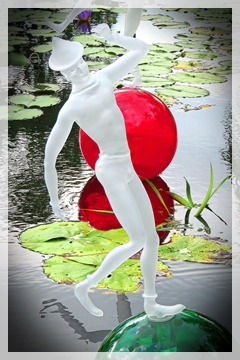
Frabel - Naples Botanic GardenSomeone was missing from yesterday’s story of Shadrach, Meshach, and Abednego and the fiery furnace: their good friend Daniel. When Nebuchadnezzar’s giant statue was erected on the plain of Dura, word was sent to all of his officials to assemble there for the statue’s dedication. We know Shadrach, Meshach, and Abednego were there because Daniel reported that they got tossed in a fiery furnace for refusing to bow to an idol. But what of Daniel? He’s the one who chronicled the event: the one who wrote that all of the high officers, officials, governors, advisers, treasurers, judges, magistrates, and provincial officials were present. Daniel gives no explanation for his absence at the dedication of the king’s golden statue.

We’d like to think that Daniel remained back in Babylon for some important task at the palace, was elsewhere on a vital mission, or even sick in bed. We want to think Daniel wasn’t there because, if he’d been in Dura that day, he should have joined his friends in the furnace. Four men would have been sent to certain death unless, unlike his friends, Daniel had bowed to the idol! Daniel, however, is our hero: the wise prophet who later braved a king’s wrath to pray and survived being thrown into a den of lions. We never want to think that our heroes are real people, with feet of clay, just like us. When we look at the Bible’s heroes, however, they really are every bit as flawed as are we! Among others, we have drunken Noah, lying Abraham, impatient Sarah, deceitful Jacob, thieving Rachel, temperamental Moses, jealous Miriam, weak Aaron, immoral Rahab, psychotic Saul, adulterous David, sex-addicted Solomon, bad dads Eli and Samuel, the thieving publican Matthew, and Peter, the disciple who denied Jesus. They all disappointed God and sinned at one time or another.

We’ll never know if Daniel was in that fiery furnace with his friends, far from Dura that day, or if he bowed to the idol. Oddly, the remote possibility that he might have bowed his head to an idol doesn’t bother me. It doesn’t disturb me because we have a great God of second (third, fourth, and more) chances. If Daniel sinned that day, along with prophecy and history, his story is one of forgiveness and redemption.

What we do know is that that God continued to give Daniel wisdom and revelations during the more than seventy years he served the four rulers of Babylon. We know that, when another opportunity arose to honor his God by rejecting idolatry, Daniel did the right thing. Perhaps he was inspired by his friends’ faith. In spite of knowing that he’d face certain death in a lions’ den, Daniel remained faithful and continued to openly pray to God rather than to the king. “May your God, whom you serve so faithfully rescue you,” said the king, and God did. Daniel, at the end of his story, was as faithful to God as were his three friends that day on the plain of Dura.

For he is the living God, and he will endure forever. His kingdom will never be destroyed, and his rule will never end. He rescues and saves his people; he performs miraculous signs and wonders in the heavens and on earth. He has rescued Daniel from the power of the lions. [Daniel 6: 26-27 (NLT)]

Copyright ©2019 jsjdevotions. All rights reserved.