THE BURDEN

My guilt overwhelms me—it is a burden too heavy to bear. [Psalm 38:4 (NLT)]
First published in 1678, John Bunyan’s The Pilgrim’s Progress is the second best-selling book of all time (the first being the Bible). In this religious allegory, the reader follows the adventures and trials of Christian (Part I) and his wife Christiana and their children (Part II) as they journey from the City of Destruction toward the Celestial City.

The iconic picture of the pilgrim Christian is that of a man bent over with a heavy pack strapped to his back. From that illustration, many assume that means Christians must carry a heavy burden, which is anything but the truth. Although Bunyan’s allegory opens with the man saddled with that pack on his back, he is free of its enormous weight for most of the story.

At the book’s start, the burdened man is crying while reading the Bible. Realizing that death is followed by judgment, he fears that his heavy load of sin will condemn him to Hell. The troubled man asks, “What must I do to be saved?” When the Evangelist tells him to follow the light to the Narrow Gate, Christian leaves on his pilgrim’s journey. He still carries that pack laden with the weight and shame of his sins; it is a burden that he can’t remove by himself.

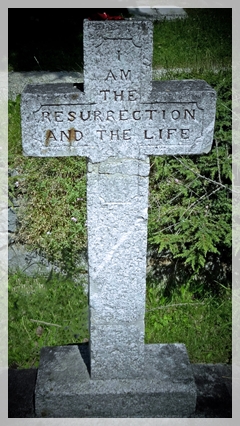
Even after Christian enters the Gate, that heavy load remains. Goodwill tells him to be content carrying it until he comes to the Place of Deliverance.  Upon getting there, Christian sees a cross at the top of the hill and a tomb at the bottom. As he approaches the Cross, the straps on his pack loosen from his shoulders. The burden drops to the ground, tumbles down the hill, and disappears into the mouth of the sepulcher. Christian’s burden has been transferred to Jesus who, while on that cross, atoned for all of his sins. When the empty tomb receives his sins, they are gone forever.

It’s no surprise that Charles Spurgeon’s favorite book (after the Bible) was The Pilgrim’s Progress, that this man known as the “Prince of Preachers” read it at least one hundred times, or that Bunyan’s allegory has been used by Christian missionaries for centuries. As with the parables of Jesus, the book’s powerful visual images skillfully illuminate gospel truths. Christian’s burden falling at the cross is what Good Friday was all about. We are rid of the weight of sin and the burden of trying to earn our way into God’s good graces. Released from guilt and condemnation, we are free of sin’s penalty because Jesus paid that price for us. That Christian will eventually reach the Celestial City is what Easter was about!

We know that our old sinful selves were crucified with Christ so that sin might lose its power in our lives. We are no longer slaves to sin. For when we died with Christ we were set free from the power of sin. And since we died with Christ, we know we will also live with him. [Romans 6:6-8 (NLT)]

Then Jesus said, “Come to me, all of you who are weary and carry heavy burdens, and I will give you rest. [Matthew 11:28 (NLT)]

Copyright ©2019 jsjdevotions. All rights reserved.
 

GOOD FRIDAY: ON THIS HOLY DAY

Simeon…took the child [Jesus] in his arms and praised God, saying, “I have seen your salvation, which you have prepared for all people. He is a light to reveal God to the nations, and he is the glory of your people Israel!” Jesus’s parents were amazed at what was being said about him. Then Simeon blessed them, and he said to Mary, the baby’s mother, “This child is destined to cause many in Israel to fall, but he will be a joy to many others. He has been sent as a sign from God, but many will oppose him. As a result, the deepest thoughts of many hearts will be revealed. And a sword will pierce your very soul.” [Luke 2:28,31-35 (NLT)]

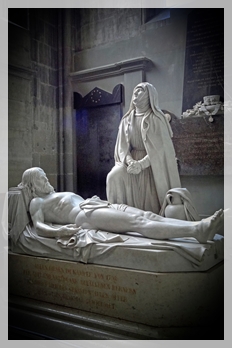
Munster - Bern CathedralAs Mary stood in the shadow of the cross, did she recall Simeon’s words when he held the infant Jesus in his arms? His prophecy came true that day at Calvary; as she watched her son endure such torture, it truly must have felt as if a sword had pierced her very soul. Jesus was supposed to be the glory of His nation but there He was—dying the death of a criminal. Mary didn’t understand why her beloved boy had to perish and she certainly didn’t know that He’d be back in three days. Imagine her sorrow and the emptiness in her heart as she witnessed her son’s agony.

Mary knew she loved her son but I wonder if that day she questioned God’s love for Him. She didn’t know that from the moment Jesus was planted in her womb her boy was headed to Calvary or that His death on the cross was all part of God’s perfect plan. How could she understand that her Son’s death was a deliberate choice: that He was dying for the very people who had placed Him on that cross? How could she know that His death proved the enormity of God’s love for all of humanity?

Like Mary, we don’t know the reason why our loved ones suffer or what will result from their suffering. Unlike Mary, however, we do know the rest of the story. Without the crucifixion, there would have been no resurrection. But, because of Jesus’s death and resurrection, there is another life waiting for us in God’s heavenly kingdom. Jesus’s resurrection means that hope overpowered desperation, love claimed victory over hate, forgiveness prevailed over condemnation, joy conquered despair, and life triumphed over death.

Jesus, the Son of God, was ignored, denied, betrayed, falsely accused, demeaned, scorned and scourged, and finally crucified on a cross. He suffered and died like a common criminal and was buried in a borrowed tomb like a vagrant. The sinless One paid the sinners’ debts. He didn’t have to, but he did. Thank you, God, for your loving redemption.

…death was not Jesus’ penalty; it was His destiny. It was not His lot in life; it was His mission. It was not His unavoidable fate; it was His purpose statement for coming to earth that first Christmas: “Born to die.” [Bill Crowder, from“The Path of His Passion”]

But he was pierced for our rebellion, crushed for our sins. He was beaten so we could be whole. He was whipped so we could be healed. All of us, like sheep, have strayed away. We have left God’s paths to follow our own. Yet the Lord laid on him the sins of us all. [Isaiah 53:5-6 (NLT)]

Copyright ©2019 jsjdevotions. All rights reserved.

THE SA MEETING

The saying is sure and worthy of full acceptance, that Christ Jesus came into the world to save sinners. And I am the foremost of sinners; but I received mercy for this reason, that in me, as the foremost, Jesus Christ might display his perfect patience for an example to those who were to believe in him for eternal life. [1 Timothy 1:15-16 (RSV)]

Canada geeseReading Paul’s words acknowledging his sinfulness makes me picture a meeting of the Pearly Gates chapter of a 12-step support program called Sinners Anonymous (SA for short). The meeting would be well attended simply because sinfulness is an undisputed characteristic of all mankind and we are all guilty before God.

Paul would get the meeting started by introducing himself and claiming to be the worst sinner of them all: “I’m the sinner once known as Saul. I persecuted Christians and stood by while people stoned Stephen.” The hymn writer might disagree. “I’m the wretched sinner John Newton. Blind and lost, an ‘infidel and libertine,’ I was a slave trader.” Then the disciple would rise and introduce himself: “Hello, my name is Thomas and I’m a sinner. I abandoned the Lord when he was arrested and then doubted his resurrection.” A nameless man from the back of the room might speak: “I was there at His crucifixion but I, too, am a sinner. My life was spent in crime.” Perhaps the gospel writer would speak next: “I’m the sinner Matthew; as a greedy tax-collector, I was both traitor and thief.” The priest would introduce himself: “I’m Augustine: a sinner who once abandoned the faith for paganism, used and abandoned women, and lived a life of debauchery.”  A matronly woman would announce, “I’m Martha and a sinner who often became so busy with life’s mundane details that I failed to put our Lord first.” Peter would jump up and say, “I’m worse! I’m such a sinner that I denied our Lord, not once, but three times!”

If there were a heavenly SA group, however, it wouldn’t be called Sinners Anonymous; it would be Saints Anonymous! The same people would be there and the same sins would have been committed but the introductions would be quite different from the ones I presented. While all those at that SA gathering were sinners, their sins were forgiven and their faith in Jesus would have made them saints. Instead of identifying themselves as sinners and listing their sordid transgressions, the attendees would introduce themselves as the redeemed children of God whose sins had been forgiven and forgotten. As members of the body of Christ, they’d introduce themselves as saints, not sinners!

Like Paul, we’re all sinners but, like Paul, through our faith in Jesus Christ, we’ve been reborn. We may be sinners but we’re also saints. Thank you, God!

There is no saint without a past, no sinner without a future. [Augustine of Hippo]

May you be strengthened with all power, according to his glorious might, for all endurance and patience with joy, giving thanks to the Father, who has qualified us to share in the inheritance of the saints in light. He has delivered us from the dominion of darkness and transferred us to the kingdom of his beloved Son, in whom we have redemption, the forgiveness of sins. [Colossians 1:11-14 (RSV)]

Copyright ©2019 jsjdevotions. All rights reserved.

DOING IT RIGHT OR DOING THE RIGHT THING?

This means that anyone who belongs to Christ has become a new person. The old life is gone; a new life has begun! [2 Corinthians 5:17 (NLT)]

For I have come to call not those who think they are righteous, but those who know they are sinners. [Matthew 9:13b (NLT)]

grey catbirdWe recently saw a stage production of Les Miserables (“Les Miz”), a musical based on Victor Hugo’s novel. Set in France in the early 1800s, it tells the story of Jean Valjean, a man who spent 19 years in prison for stealing a loaf of bread to feed his starving family. When Valjean, known as “Prisoner 24601,” is released, he is issued a “yellow passport” which he’s required to present to the police in any village he passes through. Stating he has been released from prison but listing his crimes, this yellow piece of paper marks him as a criminal forever.

Almost immediately upon his release, Valjean steals from the Bishop of Digne, the only person who shows him any kindness by offering him food and shelter. When the ex-convict is caught by the police, the bishop refuses to accuse him and even gives him more silver. The astonished Valjean then commits his life to virtue and service. Realizing he can’t start life anew as a convict, he breaks parole by tearing up his yellow passport and changing his name.

Valjean becomes a model citizen but, to an unrelenting policeman named Javert, Valjean remains Prisoner 24601 and a criminal. Even after Valjean saves his life, Javert remains wholly dedicated to enforcing the law by arresting Valjean and punishing him for breaking parole. He sings these words about Valjean: “Once a thief, forever a thief. What you want you always steal.”

While hardly a Christian story, Victor Hugo’s tale depicts the way Christian love can transform a person. We see how the bishop’s love and forgiveness affects Vajean and how his new personality positively impacts the lives of others. When we accept Jesus, like Valjean, we become new people and the old is gone. The “yellow passport” identifying us as sinners is torn and tossed and we are new people with a new purpose.

While we identify with Valjean, we also can resemble the unrelenting Javert or the merciful Bishop of Digne. Like Javert, do we ever act as judge and jury and insist that “a man like that can never change”? Are we people who can’t forgive: people who believe justice is more about retribution than mercy? Like Javert, are we more interested in being right or, like the bishop, is our concern doing what’s right? As did the bishop, do we truly believe in redemption, forgiveness, love and mercy? To give someone a new lease on life, would we lie to the police or give even more to a thief? Would we follow the letter of the law or the word of God? When I ponder this question, I think of the advice given to a young man by his minister father: “Don’t just do what is legally right, do what is morally right!” Let us remember that, as Christians, we are not called just to do things right; we are called always to do the right thing!

You have heard the law that says the punishment must match the injury: “An eye for an eye, and a tooth for a tooth.” But I say, do not resist an evil person! If someone slaps you on the right cheek, offer the other cheek also. If you are sued in court and your shirt is taken from you, give your coat, too. If a soldier demands that you carry his gear for a mile, carry it two miles. Give to those who ask, and don’t turn away from those who want to borrow. [Matthew 5:38-42 (NLT)]

Copyright ©2019 jsjdevotions. All rights reserved.

YOU ARE FORGIVEN

So anyone who eats this bread or drinks this cup of the Lord unworthily is guilty of sinning against the body and blood of the Lord. That is why you should examine yourself before eating the bread and drinking the cup. For if you eat the bread or drink the cup without honoring the body of Christ, you are eating and drinking God’s judgment upon yourself. [1 Corinthians 11:28 (NLT)]

Christ our Lord invites to his table all who love him, who earnestly repent of their sin and seek to live in peace with one another. [United Methodist Book of Worship]

ospreyIn the denominational church we attend Saturday nights, we celebrate Communion every week. As part of the liturgy, the congregation is invited to join in a corporate general confession. The pastor then tells the congregation that, in the name of Jesus Christ, they are forgiven. The congregation responds with the words, “In the name of Jesus Christ, you are forgiven!” New to this denomination, at first I wondered, “Does the pastor need the entire congregation’s forgiveness?”

With just a little thought I realized we weren’t forgiving the pastor (unless, of course, she’s harmed us in some way); we were forgiving all who have wronged us. Sinning and being sinned against are part of the human condition. If we need God’s forgiveness (and we always do), it’s a sure thing that someone out there needs our forgiveness as much as we need theirs.

Our Lord’s words were “forgive us our sins, as we have forgiven those who sin against us,” [Matthew 6:12] which seems to mean that the way we give forgiveness is the way we’ll receive it. But does that mean we’ll not be forgiven if we don’t forgive? That seems to run contrary to the concept of God’s grace. I’ve read assorted and contradictory commentaries on this and still don’t know the answer to that one. What I do know is that the power to forgive doesn’t come from me; it comes from the Holy Spirit. Perhaps our inability to forgive others has more to do with our relationship with God than with anyone else.

The Apostle Paul tells us to examine ourselves before partaking of the bread and wine which would seem to mean that we should examine our relationship with Christ to determine whether it is sincere and genuine. Harboring condemnation, ire, bitterness, or resentment indicates there’s a problem in our relationship with Jesus as well as with someone else. The message of the gospel, however, is one of reconciliation and forgiveness.

When I say those words of forgiveness during Saturday worship, I am reminded that Jesus placed the burden of forgiveness and reconciliation on me. It doesn’t matter who is at fault, who should be the one to apologize, or whether the person who offended us is repentant or not. We can’t ask for the blessings found in the Lord’s Supper if we’re unwilling to share those blessings with friend and enemy alike. There is no room for anger and unforgiveness at the Lord’s table; His table is one of love and forgiveness.

‘Forgive our sins as we forgive,’ you taught us, Lord, to pray,
but you alone can grant us grace to live the words we say…
In blazing light your cross reveals the truth we dimly knew:
what trivial debts are owed to us, how great our debt to you!
[“Forgive Our Sins as We Forgive” by Rosamond E. Herklots]

Make allowance for each other’s faults, and forgive anyone who offends you. Remember, the Lord forgave you, so you must forgive others. [Colossians 3:13 (NLT)]

Copyright ©2019 jsjdevotions. All rights reserved.

DAY ONE

DawnThe faithful love of the Lord never ends! His mercies never cease. Great is his faithfulness; his mercies begin afresh each morning. I say to myself, “The Lord is my inheritance; therefore, I will hope in him!” [Lamentations 3:22-24 (NLT)

For God, who said, “Let there be light in the darkness,” has made this light shine in our hearts so we could know the glory of God that is seen in the face of Jesus Christ. [2 Corinthians 4:6 (NLT)]

I’m an early riser anyway but the three hour time difference between the east and west coasts had me up well before dawn. While sipping my morning latte, I looked out the window and watched the morning appear. As the sun began to rise, God got out his paints to color the sky and the horizon took shape. I slipped on my shoes and went out to greet the new day. While a rooster in the distance crowed his welcome to the sun, I silently shouted my good morning to God and thought of Matthew West’s song Day One of the Rest of My Life. “It’s day one and here comes the sun!” I sang to myself. Indeed, each morning brings day one of the rest of our lives—day one of the best of our lives! Thank you, God.

Seeing the sunrise shouldn’t just be saved for Easter morning services and I feel sorry for those who sleep through the day’s awakening. They miss experiencing that perfect moment when dawn breaks through: when today becomes yesterday and tomorrow becomes today. Although saying, “Today is the first day of the rest of your life!” is a cliché, that doesn’t mean it isn’t true. Telling us that yesterday does not have to repeat itself today, each dawn brings a new beginning.

Of course, we don’t have to arise while it’s still dark to enjoy a dawn in our lives. Our faith in Jesus takes us from the darkness of unbelief into a new beginning. Moreover, because of God’s grace, we’re assured that even when we mess up (and we surely will), there is another new beginning and plenty more after that. Nevertheless, seeing a sunrise reminds us both of God’s forgiveness and the new life in Christ we’ve been given. It tells us that this is the day we should live life to the fullest, honor and serve God the most, and be the best we can be. This is the day we can get back on the right path, realize our dreams, fulfill His will, and be wiser, better, and more forgiving. But, just as we don’t have the power to make the sun rise, we don’t have the power to become the person God wants us to be by ourselves. That power comes from the Holy Spirit within us. It is He who fills us with the peace, love, joy, patience, kindness, goodness, faithfulness, gentleness and self-control to meet each day.

The Psalmist said, “This is the day the Lord has made. We will rejoice and be glad in it.” [118:24] Indeed, each new day brings reason to rejoice. Yet, since every dawn inevitably ends in a sunset, the sunrise also serves as a subtle reminder of the brevity of life. Not a moment should be wasted in regret, anger, resentment, worry or fear. Lord, whether today is the first or the last day of the rest of our lives, fill us with your Spirit so that it is the best day of our lives!

Well, I wish I had a short term memory,
Wish the only thing my eyes could see
Was the future burning bright right in front of me;
But I can’t stop looking back.
Yeah, I wish I was a perfect picture of
Somebody who’s never not good enough.
I try to measure up but I mess it up
And I wish I wasn’t like that. …
Well, every single day Your grace reminds me
That my best days are not behind me.
Wherever my yesterday may find me
Well, I don’t have to stay there.
It’s day one of the rest of my life!
It’s day one of the best of my life! [Matthew West, Peter Kipley]

This means that anyone who belongs to Christ has become a new person. The old life is gone; a new life has begun! [2 Corinthians 5:17 (NLT)]

Copyright ©2019 jsjdevotions. All rights reserved.