MARA

He has filled me with bitterness and given me a bitter cup of sorrow to drink. [Lamentations 3:5 (NLT)]

tiger swallowtailTo explain her sisters’ bitterness and sour outlook on life, my mother-in-law would say, “Well, their lives didn’t turn out the way they’d hoped.” Those women had no reason to complain when comparing their lives to Naomi (the mother-in-law in the book of Ruth).

Talk about things not turning out the way you’d hoped! Naomi endured famine, a move to an enemy nation, pagan daughters-in-law, no grandchildren, the death of her husband and then the death of her two sons. Poverty stricken, with no relatives to help her in Moab, Naomi decided to return to Israel. When her two daughters-in-law started back with her, she tried to deter them, telling them to go back to their parents where there may be another marriage in their future. While one woman returned home, Ruth stayed with her mother-in-law.

Widowed and childless, neither woman’s life seemed headed for a “happily ever after.” When the bereaved Naomi arrived back in Bethlehem, she told her old friends to call her Mara, meaning “bitter.” She explained that, “The Almighty has made life very bitter for me. I went away full, but the Lord brought me home empty.” Like my husband’s aunts, Naomi was resentful that life hadn’t turned out as she’d expected. What she didn’t understand was that God was busy at work behind the scenes. Her bitterness even blinded her to fact that she didn’t come home empty—she’d come home with Ruth, a woman described by Naomi’s friends as “better to you than seven sons!”  Embittered, Naomi didn’t see her blessing in a daughter-in-law who loved and honored her and would labor in the fields for her.

You know the rest of the story. Ruth gleaned grain in the fields of Boaz. He took on the role of “kinsman redeemer,” purchased land that had belonged to Naomi’s husband, and married Ruth. The couple had a son, Naomi became a grandmother, and that little boy would be grandfather to the future King David.

We all have been given reason to call ourselves bitter. But, as followers of Jesus, we can become better rather than bitter and not because a kinsman redeemer buys our land, marries us, pays our bills, solves our problems, and takes us away from our troubles. We don’t become bitter because we have a Redeemer God who walks with us through our trouble and enables us to find joy in our new normal. We don’t become bitter because we know our life is better than we ever dared hope. We don’t become bitter because we know life, in the world yet to come, can only be better!

We are ignored, even though we are well known. We live close to death, but we are still alive. We have been beaten, but we have not been killed. Our hearts ache, but we always have joy. We are poor, but we give spiritual riches to others. We own nothing, and yet we have everything. [2 Corinthians 6:9-10 (NLT)]

The faithful love of the Lord never ends! His mercies never cease. Great is his faithfulness; his mercies begin afresh each morning. I say to myself, “The Lord is my inheritance; therefore, I will hope in him!” [Lamentations 3:22-24 (NLT)]

RETRIBUTION THEOLOGY CONTINUED

The Lord curses the house of the wicked, but he blesses the home of the upright. [Proverbs 3:33 (NLT)]

The godly eat to their hearts’ content, but the belly of the wicked goes hungry. [Proverbs 13:25 (NLT)]

Backsliders get what they deserve; good people receive their reward. [Proverbs 14:14 (NLT)]

blue flag irisWhen writing about the faulty theology of Job and his friends, I thought of when Jesus’s disciples questioned why a man had been born blind. Showing their belief in retribution theology and never considering that sin might have nothing to do with it, they asked whether the man’s blindness was because of his sins or those of his parents. Jesus’s answer, however, makes it clear that no one’s sins were the cause: “This happened so the power of God could be seen in him.” [John 9:3] After Jesus restored his sight, the man testified before the Pharisees that, “If this man were not from God, he couldn’t have done it.” [John 9:33] Disliking that answer, retribution theology reared its ugly head again when the Pharisees accused the once blind man of being born a sinner and threw him out of the synagogue.

People made wrong assumptions about the Apostle Paul’s troubles when he was shipwrecked on the island of Malta. A snake bit him as he gathered sticks and laid them on the fire. Seeing the viper hanging from his hand, the islanders automatically assumed he was an escaped murderer and that dying from a snake bite would be exactly what he deserved. Paul shook the snake into the fire and, when the snake’s venom didn’t kill the Apostle, he proved their first assumption wrong. Then, because Paul survived unscathed, they assumed he was a god! Wrong on both counts: neither snake bite nor miraculous recovery indicate sinner or saint!

A quick reading of the blessings and curses in Proverbs can make us think that retribution theology is correct. Rather than God’s promises, however, Solomon’s proverbs give us wide-ranging wisdom on life. Generally speaking, godly living usually results in a good life and what goes around often comes around when it comes to wickedness, but there’s no guarantee of either on this side of the grass. That sightless man didn’t deserve to be born blind any more than Job deserved his suffering, Joseph deserved being sold into slavery, Jeremiah deserved getting thrown into a mud-filled cistern, Naomi and Ruth deserved widowhood, James deserved beheading, Stephen deserved stoning, or Paul deserved the snake bite, imprisonment, beatings, or the “thorn in his flesh.”

Although the concept of sowing and reaping is Biblical, we must be wary of being like the people of Malta, the disciples, and Job’s friends by judging people’s righteousness (or unrighteousness) by their external circumstances. There is no easy explanation for human suffering and we can’t possibly see into people’s hearts to know the depth of either their wickedness or righteousness. We must never presume guilt before innocence, assign blame without reason, assume people have caused their own troubles, or make presumptions based on stereotypes. Let us never forget that bad things happen to good people and good things happen to the bad. Someday, God will judge the world and there will be perfect justice. A day will come when every man will reap exactly what he’s sown but, until then, let’s be cautious in our assumptions about guilt and innocence.

Don’t be misled—you cannot mock the justice of God. You will always harvest what you plant. Those who live only to satisfy their own sinful nature will harvest decay and death from that sinful nature. But those who live to please the Spirit will harvest everlasting life from the Spirit. So let’s not get tired of doing what is good. At just the right time we will reap a harvest of blessing if we don’t give up. [Galatians 6:7-9 (NLT)]

Copyright ©2019 jsjdevotions. All rights reserved.

TO GOD BE THE GLORY

The Grand Tetons - Jackson LakeHe [Herod] put on his royal robes, sat on his throne, and made a speech to them. At its conclusion the people gave him a great ovation, shouting, “It is the voice of a god and not of a man!” Instantly, an angel of the Lord struck Herod with a sickness so that he was filled with maggots and died—because he accepted the people’s worship instead of giving the glory to God. [Acts 12:21b-23 (TLB)]

Our voices, our service, and our abilities are to be employed, primarily, for the glory of God. [Billy Graham]

When it comes to compliments, it’s not only more blessed to give than receive, but often far easier. Praise is a beautiful gift of encouragement and, like any gift, it should be acknowledged with thanks. But what then? None of us want to end the way Herod Agrippa did when he failed to give the glory to God! God is the source of everything that is good in our lives and He has blessed each of us with an array of aptitudes and gifts that enable us to do His work and bring Him glory. While we may put forth a great deal of effort to develop them, our talents, skills, insight, and achievements are not ours alone; they come from the grace of God. It is only right to acknowledge his greatness and give Him the honor and praise. So, when we receive praise, how do we give God the glory that is His?

While I occasionally see, “To God be the glory!” at the end of an actor’s biography in a theater program, I’m not sure it works so well in conversation. Responding to a compliment with, “To God be the glory!” is a Christianese phrase that could be off-putting, especially to non-believers. It might even seem a little boastful—as if God gifted me but not you or my God-given gift is better than yours. Yet, not acknowledging God in our response to sincere praise means we’ve wasted a valuable opportunity to share the gospel. After thanking someone for their encouragement, how do we use their words as an opportunity to celebrate all that God has done in and through us? Of course, I’m going on the assumption that whatever we’ve done that earned the compliment we truly did to glorify God.

While saying “To God be the glory!” may seem a bit flippant or trite, other responses might work better. We could say something like: “I’m thankful to God that you liked my work,” or “I’m happy to be able to use God’s gifts this way,” or “Anything praiseworthy in me is really Him,” or even, “God’s blessed me with a beautiful gift and I hope to use it wisely.” Whatever we say, our response should be humble, sincere and heartfelt. Let’s always remember to give credit where credit is due! To God be the glory!

To God be the glory, great things He hath done;
So loved He the world that He gave us His Son,
Who yielded His life an atonement for sin,
And opened the life gate that all may go in.
[Fanny Crosby (1875)]

For everything comes from God alone. Everything lives by his power, and everything is for his glory. To him be glory evermore. [Romans 11:36 (TLB)]

O nations of the world, confess that God alone is glorious and strong. Give him the glory he deserves! [Psalm 96:8-9a (TLB)]

Copyright ©2019 jsjdevotions. All rights reserved.

FEARING

For everyone has sinned; we all fall short of God’s glorious standard. Yet God, in his grace, freely makes us right in his sight. He did this through Christ Jesus when he freed us from the penalty for our sins. For God presented Jesus as the sacrifice for sin. People are made right with God when they believe that Jesus sacrificed his life, shedding his blood. [Romans 3:23-25 (NLT)]

I thought of Mr. Fearing in John Bunyan’s allegory The Pilgrim’s Progress when a friend told me about her mother who was nearing the end of her life. Although a Christian, she believed there was something in her distant past for which she couldn’t be forgiven. Even though her family reassured her that Jesus died for her sins and God is faithful to His promises, she still seemed fearful of taking that final journey home.

In Bunyan’s tale, Mr. Fearing’s story is told by his guide to the Celestial City, Mr. Great Heart. Even though Fearing escaped the Swamp of Despondence, he seemed to carry that despondence in his mind everywhere he went. When Fearing came to the gate where it said, “Knock and the door will be opened to you,” he was afraid to knock. Sure that he was unworthy of entrance, he stood back and allowed others to take his place whenever the door opened. When he eventually had the gumption to timidly knock, Fearing fainted in unbelief when the door was opened for him.

Accompanied by Mr. Great Heart, Mr. Fearing continued on his journey. He effortlessly hiked straight up the Hill of Difficulty, showed no fear when he encountered lions, and easily walked down into the Valley of Humiliation. When the travelers had to pass through Vanity Fair (a place ruled by Beelzebub and filled with evil temptations), Mr. Fearing had no difficulty staying on the Way and, while others fell asleep in the Enchanted Ground (the land of spiritual lethargy), Fearing stayed alert. But, believing himself unworthy of God’s grace, his shame kept him from enjoying the blessings God provided on the journey and caused him to be afraid of death and the journey’s end.

Mr. Fearing wasn’t afraid of difficulties, danger, or challenges to his faith but, because he had doubts about his welcome in the Celestial City, he was terrified of death and Hell. His fear was that of his final acceptance—that God would reject him! Sure that he’d drown and never see the face of the King he’d traveled so far to meet, he was afraid to cross the River of Death: the only way to the Celestial City. Both Fearing and my friend’s mother eventually crossed that river and were welcomed because all of their sins had been forgiven.

As Good Heart related the story of Mr. Fearing to Christiana and her fellow pilgrims, they shared their fears about their own salvation—fears that many of us may share. Bunyan experienced this same fear; in his autobiography, he said that early in his conversion Satan tempted him to unbelief by declaring his sins unpardonable. Bunyan’s reply to the enemy simply was, “Well, I will pray.”

Indeed, it’s difficult to believe in God’s extravagant grace: that, as soiled and unworthy as we are, we’ve been washed clean in the blood of the Lamb. Let us remember—the burden of our sins fell off at the foot of the cross! God didn’t sacrifice His son for us because we deserved it; He did out of love for us! Jesus Christ died for us while we were still sinners, not saints! When we fear our welcome in God’s heavenly realm, let us do as did John Bunyan: let us pray!

For this is how God loved the world: He gave his one and only Son, so that everyone who believes in him will not perish but have eternal life. [John 3:16 (NLT)]

Copyright ©2019 jsjdevotions. All rights reserved.

THE BURDEN

My guilt overwhelms me—it is a burden too heavy to bear. [Psalm 38:4 (NLT)]

First published in 1678, John Bunyan’s The Pilgrim’s Progress is the second best-selling book of all time (the first being the Bible). In this religious allegory, the reader follows the adventures and trials of Christian (Part I) and his wife Christiana and their children (Part II) as they journey from the City of Destruction toward the Celestial City.
The iconic picture of the pilgrim Christian is that of a man bent over with a heavy pack strapped to his back. From that illustration, many assume that means Christians must carry a heavy burden, which is anything but the truth. Although Bunyan’s allegory opens with the man saddled with that pack on his back, he is free of its enormous weight for most of the story.

At the book’s start, the burdened man is crying while reading the Bible. Realizing that death is followed by judgment, he fears that his heavy load of sin will condemn him to Hell. The troubled man asks, “What must I do to be saved?” When the Evangelist tells him to follow the light to the Narrow Gate, Christian leaves on his pilgrim’s journey. He still carries that pack laden with the weight and shame of his sins; it is a burden that he can’t remove by himself.

Even after Christian enters the Gate, that heavy load remains. Goodwill tells him to be content carrying it until he comes to the Place of Deliverance.  Upon getting there, Christian sees a cross at the top of the hill and a tomb at the bottom. As he approaches the Cross, the straps on his pack loosen from his shoulders. The burden drops to the ground, tumbles down the hill, and disappears into the mouth of the sepulcher. Christian’s burden has been transferred to Jesus who, while on that cross, atoned for all of his sins. When the empty tomb receives his sins, they are gone forever.

It’s no surprise that Charles Spurgeon’s favorite book (after the Bible) was The Pilgrim’s Progress, that this man known as the “Prince of Preachers” read it at least one hundred times, or that Bunyan’s allegory has been used by Christian missionaries for centuries. As with the parables of Jesus, the book’s powerful visual images skillfully illuminate gospel truths. Christian’s burden falling at the cross is what Good Friday was all about. We are rid of the weight of sin and the burden of trying to earn our way into God’s good graces. Released from guilt and condemnation, we are free of sin’s penalty because Jesus paid that price for us. That Christian will eventually reach the Celestial City is what Easter was about!

We know that our old sinful selves were crucified with Christ so that sin might lose its power in our lives. We are no longer slaves to sin. For when we died with Christ we were set free from the power of sin. And since we died with Christ, we know we will also live with him. [Romans 6:6-8 (NLT)]

Then Jesus said, “Come to me, all of you who are weary and carry heavy burdens, and I will give you rest. [Matthew 11:28 (NLT)]

Copyright ©2019 jsjdevotions. All rights reserved.


GOOD FRIDAY: ON THIS HOLY DAY

Simeon…took the child [Jesus] in his arms and praised God, saying, “I have seen your salvation, which you have prepared for all people. He is a light to reveal God to the nations, and he is the glory of your people Israel!” Jesus’s parents were amazed at what was being said about him. Then Simeon blessed them, and he said to Mary, the baby’s mother, “This child is destined to cause many in Israel to fall, but he will be a joy to many others. He has been sent as a sign from God, but many will oppose him. As a result, the deepest thoughts of many hearts will be revealed. And a sword will pierce your very soul.” [Luke 2:28,31-35 (NLT)]

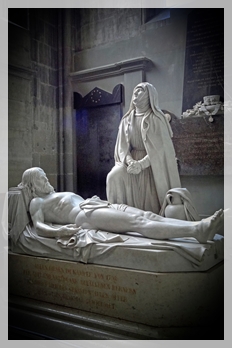
Munster - Bern CathedralAs Mary stood in the shadow of the cross, did she recall Simeon’s words when he held the infant Jesus in his arms? His prophecy came true that day at Calvary; as she watched her son endure such torture, it truly must have felt as if a sword had pierced her very soul. Jesus was supposed to be the glory of His nation but there He was—dying the death of a criminal. Mary didn’t understand why her beloved boy had to perish and she certainly didn’t know that He’d be back in three days. Imagine her sorrow and the emptiness in her heart as she witnessed her son’s agony.

Mary knew she loved her son but I wonder if that day she questioned God’s love for Him. She didn’t know that from the moment Jesus was planted in her womb her boy was headed to Calvary or that His death on the cross was all part of God’s perfect plan. How could she understand that her Son’s death was a deliberate choice: that He was dying for the very people who had placed Him on that cross? How could she know that His death proved the enormity of God’s love for all of humanity?

Like Mary, we don’t know the reason why our loved ones suffer or what will result from their suffering. Unlike Mary, however, we do know the rest of the story. Without the crucifixion, there would have been no resurrection. But, because of Jesus’s death and resurrection, there is another life waiting for us in God’s heavenly kingdom. Jesus’s resurrection means that hope overpowered desperation, love claimed victory over hate, forgiveness prevailed over condemnation, joy conquered despair, and life triumphed over death.

Jesus, the Son of God, was ignored, denied, betrayed, falsely accused, demeaned, scorned and scourged, and finally crucified on a cross. He suffered and died like a common criminal and was buried in a borrowed tomb like a vagrant. The sinless One paid the sinners’ debts. He didn’t have to, but he did. Thank you, God, for your loving redemption.

…death was not Jesus’ penalty; it was His destiny. It was not His lot in life; it was His mission. It was not His unavoidable fate; it was His purpose statement for coming to earth that first Christmas: “Born to die.” [Bill Crowder, from“The Path of His Passion”]

But he was pierced for our rebellion, crushed for our sins. He was beaten so we could be whole. He was whipped so we could be healed. All of us, like sheep, have strayed away. We have left God’s paths to follow our own. Yet the Lord laid on him the sins of us all. [Isaiah 53:5-6 (NLT)]

Copyright ©2019 jsjdevotions. All rights reserved.