
Children, let us not love in word, or in speech, but in deed and in truth. [1 John 3:18 (NTE)]
 Even though we live 1,400 miles away, I still stay in touch with our northern church; after all, it was our church home for forty-six years. Over the last several months, I’ve joined them in a weekly abundance exercise, the purpose of which is to realize the abundance in life promised by Jesus. Reminding me that “love is an action word,” my abundance assignment was: “Be love to a family member or an old friend you haven’t spoken to in a while.” I was to call or visit someone with whom I’d fallen out of touch and the reconnect was to be more than a quick note or text. Since my calendar was already crowded with meetings, guests, deadlines, chores, and other obligations, I griped that the last thing I wanted or needed was another task (even if it was as simple as meeting an old friend for lunch). With an abundance of items on my to-do list, I certainly didn’t need one more to have an abundant life! I figured this exercise could wait for a more convenient time.
That was my frame of mind when, the following day, I learned that the pastor at my northern church has metastatic cancer. There’s nothing like a cancer diagnosis to put things into proper perspective. While I’d been complaining that showing a little love to someone was inconvenient and disruptive, he’d been given a diagnosis that truly was inconvenient, disruptive, and life-changing!
While grumbling about the inconvenience of the exercise, I’d missed the whole point: love. Indeed, love is an action word and rarely is there anything convenient about it. Selflessness, generosity, patience, kindness, bearing all things, and enduring all things: none of that sounds convenient and sacrifice always comes with a cost! In the ultimate act of love, God sacrificed His only Son for us yet I dared to grumble about arranging a lunch date! Out of love, Jesus laid down His life for us sinners but I didn’t seem to have time to spare for a friend! Yes, love often is inconvenient, even challenging, but we must never consider love to be a burden.
The pastor’s troubling diagnosis and the unexpected news I received the next morning that my sister died are vivid reminders of why we should reconnect with those we’ve let drift away. We don’t know if there will be a more convenient time tomorrow, next week, or the week after because we don’t know what the future will bring either for them or for us. There never will be a better time to be love to someone than today! Ann Voskamp said, “You love as well as you are willing to be inconvenienced.” Is there someone to whom you should be love? There’s no better time than right now to do it!
Three keys to more abundant living: caring about others, daring for others, sharing with others. [William Arthur Ward]
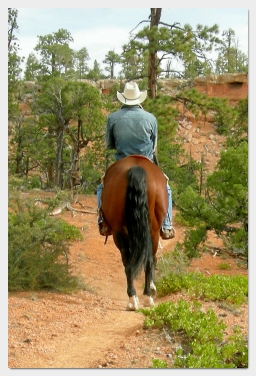 In A Gentle Thunder, author Max Lucado compares the hero of the Bible, the shepherd, with the hero of the American west, the cowboy. They both herd livestock, their home is the range, and they sleep under the stars. The difference, says Lucado, is that the shepherd knows and loves his sheep because he leads them to be shorn. The cowboy, however, doesn’t get attached to his cattle because he’s leading them to slaughter! While several cowboys drive a herd of cattle and know one another’s names, just one shepherd leads a flock of sheep and it is their names that he knows!
 When Jesus finished the Sermon on the Mount, the crowds were astounded at his teaching because, unlike the scribes and Pharisees, He taught with “authority.” When the people wondered at Jesus’ authority, they weren’t referring to His ability to speak confidently and persuasively. The Greek word translated as “authority” was exousia which meant power or right; the people wondered at Jesus’ authorization to say the things He said. Rather than teach on their own authority, most rabbis taught on the authority of earlier sages. The Moody Bible Commentary depicts them as virtual “walking footnotes” who merely cited famous teachers and repeated what had been said before by others.
 The story has been told of a shoemaker who dreamt that Jesus would come to his shop the following day. His dream was so realistic that he washed his shop windows and dusted every shelf in preparation for his holy guest. The man patiently waited at his bench for the Lord to arrive but the only person to come through his door that morning was an old man seeking shelter from the icy winter rain. When the cobbler looked down at the man’s wet feet, he saw toes poking out of his beat-up shoes. Selecting a new pair of shoes, the shoemaker sat the old man down, dried off his feet, gave him a fresh pair of socks, and fitted him with the new shoes. When the rain stopped, the old man went on his way.
 When the Apostle James tells us that God can’t be tempted by evil, we wonder how Jesus could be tempted to sin while in the wilderness. Christians agree that Jesus never sinned but some question whether He actually could. They hold the “impeccability” position: because Jesus was God, sin was impossible and He couldn’t have been tempted. Others hold the “peccability” position: because Jesus was a man, he could sin and was tempted. Still others, recognizing His dual nature, say that, as a man, Jesus could be tempted to sin but, as a divinity, He couldn’t.
 Instead, be kind to each other, tenderhearted, forgiving one another, just as God through Christ has forgiven you. [Ephesians 4:32 (NLT)]
 Devotions of the Heart