OUR PRAYERS

Sing praises to God, sing praises; sing praises to our King, sing praises! For God is the King over all the earth. Praise him with a psalm. [Psalm 47:6-7 (NLT)]

O what peace we often forfeit, O what needless pain we bear, All because we do not carry Everything to God in prayer! Have we trials and temptations? Is there trouble anywhere? We should never be discouraged, Take it to the Lord in prayer. [“What a Friend We Have in Jesus” by Joseph Scriven]

ZINNIA“That’s more like it!” I thought as I read Psalm 47; I certainly preferred it to the curses of the previous set of Psalms I’d read. I’m reading the Bible in chronological rather than in canonical order which means that the various books and chapters have been divided and rearranged. As a result, the psalms of lament and complaint were grouped together during David’s trials and the praise psalms were placed after the chapters outlining the duties in the Temple. These psalms of worship, adoration and thanksgiving seem more appropriate for Israel’s book of hymns than the earlier ones about wickedness, treachery, calamity and vengeance.

Although I prefer the joyful psalms, there is a reason Israel’s prayer book has lasted over 3,000 years and continues to be our prayer book today. Rather than a sappy feel-good book of poetry, Psalms reflects the gamut of human experience and emotions. When the disciples asked Jesus how to pray, I’m surprised He didn’t tell them they already knew and direct them to the Psalms for guidance. The Psalms’ words are intense, raw and honest; they conceal nothing. If the Psalmist is suffering, fearful, angry, depressed, or exhausted, he says so as readily as when he expresses his elation, adoration and thanksgiving. Never pretending that all is well when it isn’t, he fearlessly lays out his emotions before God. Wretchedness and joy, pain and jubilation, wickedness and virtue, despair and hope, grief and thanksgiving, fear and confidence: all are articulated. It is in that depth of personal expression and experience that we find words of consolation, faith, trust, and hope.

When I seriously evaluate my own prayer life, I’m nowhere near as honest and bold as the psalmists. Of course, God knows my personal struggles but, unlike David and the rest of the psalmists, I’m not as willing to lay them so passionately or openly at His feet. When Joseph Scriven wrote the words, “Take it to the Lord in prayer,” he meant all of it, not just the pretty stuff. I’m sure God would prefer honest words of grievance to false words of praise any day.

A human heart is like a ship on a wild sea, driven by the storm-winds from the four quarters of the world. Here it is struck with fear, and worry about coming disaster; there comes grief and sadness because of present evil. Here breathes a breeze of hope and of expectation of happiness to come; there blows security and joy in present blessings. These storm-winds teach us to speak with earnestness, and open the heart, and pour out what lies at the bottom of it. … What is the greatest thing in the Psalter but this earnest speaking amid these storm-winds of every kind? Where does one find such words of joy as in the psalms of praise and thanksgiving? … On the other hand, where do you find deeper, more sorrowful, more pitiful words of sadness than in the psalms of lamentation? … And, as was said, it is the best thing of all that they speak these words to God and with God. [Martin Luther, Preface to the Psalter]
The Lord is close to all who call on him, yes, to all who call on him in truth. [Psalm 145:18 (NLT)]

Copyright ©2018 jsjdevotions. All rights reserved.

MY ENEMIES

Why, then, have you despised the word of the Lord and done this horrible deed? For you have murdered Uriah the Hittite with the sword of the Ammonites and stolen his wife. From this time on, your family will live by the sword because you have despised me by taking Uriah’s wife to be your own. [2 Samuel 12:9-10 (NLT)]

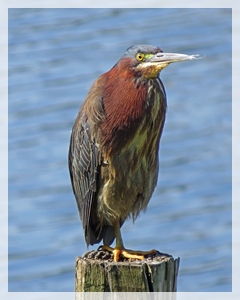
green heronPsalm 139 is one of my favorites among the psalms. As I read it this morning, however, I got annoyed with David. Near the end of this beautiful song praising God for His omniscience, omnipresence, and intensely personal involvement in his life, David throws in a curse on his enemies. Granted, they’re God’s enemies, too, but sometimes David seems incredibly angry and vengeful. After comparing his enemies to deadly snakes, hungry lions, and vicious dogs, among others things, he wants them to dissolve into slime like snails, be cast into the fire, become palsied and blind, and for their wives to become widows and their children fatherless beggars. One Bible commentary said David had a “particularly vigorous attitude toward the enemy,” but wanting to wash his feet in the blood of the wicked sounds merciless and vindictive to me.

The NLT Bible has 143 occurrences of “enemy” or “enemies” in Psalms and even the beautiful 23rd Psalm mentions enemies! Indeed, David had his share of enemies including Goliath, King Saul, Absalom (the son who tried to overthrow the kingdom), Ahithophel (the counselor who defected to Absalom), and Adonijah (who tried to wrest the crown from Solomon), along with the enemy nations of the Philistines, Moabites, Geshurites, Girzites, Amalekites, and Ammonites. Looking at his history, I understand why he wrote about enemies but what do these angry Psalms mean to me? I’d never think, let alone say, some of the cruel things David does.

When trying to list our enemies, my husband and I agreed that deep in the dark web lurks someone who wants to steal our identities or hold our computers for ransom but we don’t want to wash our feet in his blood. We know that radical Islamic terrorists probably count as enemies and we’re not comfortable with North Korea, Russia, China, Iran, Syria or Iraq, but we certainly don’t want them destroyed. As for individuals, we could think of none who qualify as enemies. We’ve had competitors, rivals, opponents, and some very annoying and exasperating people in our lives, but we’ve never thought of them as enemies. So again, what do these Psalms mean to us?

Looking again at David’s history, I see a far greater enemy than Saul or the Philistines: David himself. Although courageous, he could be afraid and it was fear that made him lie to Ahimelech and pretend to be insane to King Achish. By allying himself with the Philistines, he was both deceitful and a traitor. In spite of seven wives (and numerous concubines), the lustful man took another man’s wife as his own and killed her husband. At best, David was an inattentive father; he failed to punish his son Amnon for raping Tamar and ignored Absalom. A reckless man of pride and ambition, he failed to follow God’s directions concerning the Ark and census. While loyal to his friends, David was ruthless to his enemies. Considered a man after God’s heart, we like to think of David as the ideal man but, like any man or woman, he had his dark side. Nathan’s words in 2 Samuel tell us that most of David’s calamities were the result of his own sins.

My enemies, like David’s real enemies, are not flesh and blood. They are pride, fear, anger, hate, doubt, insecurity, unforgiveness, thoughtlessness, impatience, jealousy, arrogance, materialism, pretense, and lack of faith. Like David, I want God to smash their jaws, break off their fangs, and make them disappear like water into thirsty ground! ”We have met the enemy and he is us!” are the words cartoonist Walt Kelly put in Pogo’s mouth. How right he was!

Rescue me from my enemies, Lord; I run to you to hide me. Teach me to do your will, for you are my God. May your gracious Spirit lead me forward on a firm footing. [Psalm 143:9-10 (NLT)]

Copyright ©2018 jsjdevotions. All rights reserved.

HIS TIME IS THE RIGHT TIME

butterfly weedBut when the right time came, God sent his Son, born of a woman, subject to the law. [Galatians 4:4 (NLT)]

When an angel of the Lord told the elderly priest Zechariah that his barren wife, Elizabeth, would conceive a son, the old man was struck dumb because of his unbelief. As happened with Samuel more than 1,000 years earlier, this child’s future was decided even before his conception. This time, however, it was God who decided the boy would be a Nazirite, have the spirit and power of Elijah, prepare the people for the coming of the Lord, and be named John. Imagine the mute Zechariah, with gestures and writing, trying to explain his supernatural encounter to Elizabeth and her reaction to his shocking news.

As strange as God’s timing must have seemed to the elderly Elizabeth, God’s timing probably seemed even stranger to Elizabeth’s cousin, a young virgin in Nazareth named Mary. While Elizabeth’s unexpected pregnancy seemed late in coming, Mary’s must have seemed terribly premature to her and her betrothed, a carpenter named Joseph. Nevertheless, both of these unexpected pregnancies were part of God’s enigmatic plan and came at exactly the right time, at least for Him.

We don’t know why God chose that particular time in history for the births of John and Jesus. Did God pick it because He had the right people to be the parents he needed? The priest and his wife were “righteous in God’s eyes, careful to obey all of the Lord’s commandments and regulations,” [Luke 1:6] which certainly qualified them as a prophet’s parents. For the parents of Jesus, God needed a both a virgin and lineage to King David. Rather than glowing words to describe Mary, we only have the virgin’s obedient and willing response. Risking rejection, disgrace, and even stoning, she willingly offered herself as God’s vessel. As for Joseph, he was a righteous man, of the house of David, and, like Mary, obedient to the Lord. Perhaps God chose that time because conditions were favorable for the start of a ministry: there was peace in the empire, Greek had become the universal language, an excellent road system enabled easy travel, and a postal service existed. Was it a perfect combination of both people and conditions? We’ll never know; we only know that the time was right for God.

Nevertheless, I’m sure God’s timing didn’t make much sense to either woman. For Elizabeth, God seemed late and, for Mary, He seemed way too early. Let us remember, however, that God is neither late nor early; He’s always right on time!

In the infinite wisdom of the Lord of all the earth, each event falls with exact precision into its proper place in the unfolding of His divine plan. Nothing, however small, however strange, occurs without His ordering, or without its particular fitness for its place in the working out of His purpose; and the end of all shall be the manifestation of His glory, and the accumulation of His praise. [B.B. Warfield]

Yet God has made everything beautiful for its own time. He has planted eternity in the human heart, but even so, people cannot see the whole scope of God’s work from beginning to end. [Ecclesiastes 3:11 (NLT)]

Copyright ©2018 jsjdevotions. All rights reserved.

TAKE NOTHING BUT YOUR FAITH

He sent the apostles out to tell about God’s kingdom and to heal the sick. He said to them, “Take nothing for your trip, neither a walking stick, bag, bread, money, or extra clothes. [Luke 9:2-3 (NCV)]

giant swallowtaiil butterflyTake only what I’ve got on my back and the one pair of sandals on my feet? You’ve got to be kidding! Obviously, Jesus hasn’t looked in my suitcase! We’re taking the grands through the Tetons and Yellowstone and I need hikers, sneakers, and Tevas along with my sandals! In addition, I need my backpack, water bottles, hiking poles, shorts, hiking pants, jeans, tops, swim suit, jacket, fleece, cap, undies, toiletries, and assorted other essentials (like phone and iPad). While attempting to cram everything I want into my bags, I pondered this verse: take nothing. At least we have hotel reservations for our entire journey; the disciples didn’t even have that. They were expected to depend on the good will and hospitality of the towns they visited.

Would I have taken nothing with me or would I have squirreled away a little money in my robe’s pocket “just in case”? Would I have had enough faith that God would provide everything I needed or would I have worried about my next meal or finding a place to rest my head at night? We know the end of the story: Jesus died and rose again. He truly was the son of God—the promised Messiah—God in flesh. The disciples, however, weren’t yet Easter people; they were followers of an itinerant rabbi from Nazareth. Nevertheless, they followed his command; their faith in Him was that strong!

Thank you, Jesus, for the faith of those who went before us. Forgive us, Lord, for our lack of faith and for our deep attachment to the things of this world. We know that if we truly rely on your power, you will, indeed, provide everything we need. Help us surrender our lives and future to you, confident in your provision and love.

Then Jesus said to the apostles, “When I sent you out without a purse, a bag, or sandals, did you need anything?” They said, “No.” [Luke 22:35 (NCV)]

Don’t worry and say, “What will we eat?” or “What will we drink?” or “What will we wear?” The people who don’t know God keep trying to get these things, and your Father in heaven knows you need them. Seek first God’s kingdom and what God wants. Then all your other needs will be met as well. [Matthew 6:31-33 (NCV)]

Copyright ©2018 jsjdevotions. All rights reserved.

LEAVING THE NEST

anhinga chicksMy child, pay attention to what I say. … Guard your heart above all else, for it determines the course of your life. … Look straight ahead, and fix your eyes on what lies before you. Mark out a straight path for your feet; stay on the safe path. Don’t get sidetracked; keep your feet from following evil. [Proverbs 4:20a,23, 25-27 (NLT)]

This past spring we watched an anhinga family who’d nested near the swamp boardwalk. At first, mom and dad provided around the clock nest service for their brood of blind and helpless chicks. When the chicks were about three weeks old, rather than returning to the nest with food, the parents would perch nearby. If the youngsters wanted dinner, they had climb out of the nest and hop along a branch to get it. As the babies grew, mom and dad perched further and further from the nest until, at about six weeks, their chicks had to fly for their supper. Within two months of hatching, the youngsters were flying across the pond and the nest was abandoned. Mom and dad, however, were never too far away; perched nearby, they watched their brood learn to fend for themselves around the swamp. I wonder if they worried about their youngsters becoming dinner for an alligator while they fished or sunned on a log. Nevertheless, mom and dad knew their young ones had outgrown the nest; it was time to let them lead their own lives.

Today, my eldest grand receives her high school diploma. An honor student, she’s a delightful young woman and I know her parents are immensely proud of her many accomplishments. That pride, however, is combined with a fair amount of apprehension on their part. Later this summer, this young woman will leave the nest and move 5,500 miles to London where she’ll spend her freshman year of college. Although her parents won’t be worried about alligators, there will be plenty of other concerns that might keep them awake at night.

Our children: we love them, teach them, correct them, encourage them, support them, lead them, and guide them in an effort to prepare them for adulthood. As a mama, I know how difficult it is to let our children go, but let them go we must. After all, parenthood is a job that is supposed to become obsolete; it’s when our children are confident enough to leave home that we know we’ve done our job well. Let us praise God when we see them spread their wings and fly. No matter how far away they go, however, we still have the job of acting as prayer warriors for our children and we’ll do that for the rest of our lives.

Heavenly Father, we thank you for the gift of children and the privilege of leading them into adulthood. Reassure those parents who are struggling with letting go; may their tears of sadness become ones of joy as they watch their children take their next steps. As we release our children to your tender care, we ask you to wrap your loving arms around them and protect them from the dangers of the world. May they always walk in your ways and grow in courage, strength and wisdom. Let your Holy Spirit fill them with faith, hope, and love. Teach them, guard them, lead them and lift them so that they soar!

A wise woman once said to me that there are only two lasting bequests we can hope to give our children. One of these she said is roots, the other, wings. And they can only be grown, these roots and these wings, in the home. We want our sons’ roots to go deep into the soil beneath them and into the past, not in arrogance but in confidence. [Hodding Carter]

My child, never forget the things I have taught you. Store my commands in your heart. … Trust in the Lord with all your heart; do not depend on your own understanding. Seek his will in all you do, and he will show you which path to take. Don’t be impressed with your own wisdom. Instead, fear the Lord and turn away from evil. [Proverbs 3:1,5-7 (NLT)]

May the Lord bless you and protect you. May the Lord smile on you and be gracious to you. May the Lord show you his favor and give you his peace. [Numbers 6:24-26]

Copyright ©2018 jsjdevotions. All rights reserved.

WHEN GOD REMODELS

And I am sure of this, that he who began a good work in you will bring it to completion at the day of Jesus Christ. [Philippians 1:6 (ESV)]

tiger swallowtailMany years ago, we did some major remodeling on our lake house. The original structure was gutted: carpets ripped up, paneling pulled off, decks knocked down, stairs demolished, walls cut open, and our landscaping ruined. Filled with fear and misgivings, I stared at the gaping hole in the hillside and what was left of the original dwelling. The architect/builder kept reassuring me that, having drawn the plans, he knew how everything would eventually fit together. Me? I just saw the ruined house, a deep pit and piles of dirt. I hadn’t expected this devastation; it had seemed so simple on paper. How this mess was ever going to become the house we’d pictured, I didn’t know. I simply had to trust the builder and leave it in his hands. Seven months later, I stood in the same spot, thrilled with the final result; it was better than I’d ever expected!

Life can be like that remodeling project. Change can be unpleasant; at times, it may even look downright ugly and hopeless. We can rest easy when God is in charge; we’ll find that all will be good in its proper time. When God is finally finished, everything will make sense. We have to trust Him and not judge His work before it’s complete. He is a master architect and builder; let Him do His job!

Father, thank you for the beauty and joy you can salvage from our messed up lives. Help us trust your plan and timeline; give us patience and faith as we grow and change into the people you want us to be.

Imagine yourself as a living house. God comes in to rebuild that house. At first, perhaps, you can understand what He is doing. He is getting the drains right and stopping the leaks in the roof and so on; you knew that those jobs needed doing and so you are not surprised. But presently He starts knocking the house about in a way that hurts abominably and does not seem to make any sense. What on earth is He up to? The explanation is that He is building quite a different house from the one you thought of – throwing out a new wing here, putting on an extra floor there, running up towers, making courtyards. You thought you were being made into a decent little cottage: but He is building a palace. He intends to come and live in it Himself. [C.S. Lewis, “Mere Christianity”]

Now to him who is able to do far more abundantly than all that we ask or think, according to the power at work within us, to him be glory in the church and in Christ Jesus throughout all generations, forever and ever. Amen. [Ephesians 3:20-21 (ESV)]

For we are his workmanship, created in Christ Jesus for good works, which God prepared beforehand, that we should walk in them. [Ephesians 2:10 (ESV)]

Copyright ©2018 jsjdevotions. All rights reserved.