
The Lord will give [unyielding and impenetrable] strength to His people; The Lord will bless His people with peace. [Psalm 29:11 (AMP)]
 I have a small wooden box on my desk—my “God box.” It’s where I literally give my concerns to God; right now there are three items in it. The first is a photograph of a little girl. It is my grand, a sweet child with three congenital heart defects—none of which is going to disappear and all of which promise more trouble in the future. She also has learning issues—none of which will dissipate and all of which will cause more difficulty as she progresses into higher grades. The second item is a medallion from a sobriety program. It represents several people I love who have battled alcoholism or addiction—a battle they will continue to fight daily for the rest of their lives. The third item is a laminated card on which is written Reinhold Niebuhr’s Serenity Prayer. That one is for me.
I tend to be a fixer and once believed that, if I prayed hard enough and searched long enough, there was a solution for every problem. Surely, if something was wrong, it could be corrected. I’ve now accepted that not everything is fixable. There is no way anyone can fix my grand. Granted, she regularly works with a tutor, has an excellent cardiologist, and will be having more surgery. Her problems can be helped but they won’t disappear. My prayer for her is no longer one of miraculous healing; it is one of thanks and praise for a one-of-a-kind child. It’s not a prayer for change but rather a prayer for a joy-filled life and success within her limitations. As to the sobriety of those I love, their problem has never been mine to fix—their sobriety is their task, not mine. My prayers for them are for success in their challenging daily journey. As to the Serenity Prayer, that’s my challenge—to have strength enough to repair that which can be corrected, peace enough to accept that which can’t be altered, and wisdom enough to know and accept the difference. God never promised life would be easy; He did, however, promise His peace.
Thinking that every difficulty has a solution, we give God our problems (and the problems of others) and ask Him to solve them. Not everything that is broken will be repaired, not every disease will be cured, not every puzzle will be solved and not every problem can be resolved, nor are they even meant to be. Not everyone in Israel was healed as Jesus walked the streets and the “thorn” in Paul’s flesh never left him. Some situations are unfixable and must be accepted. As Niebuhr did in his prayer, we must pray for the wisdom to know the difference between what can be changed and what can’t. Then, of course, we need to pray for peace, acceptance and coping skills. Instead of fixing the problem, we need God to fix us.
God grant me the serenity to accept the things I cannot change; courage to change the things I can; and wisdom to know the difference. Living one day at a time; enjoying one moment at a time; accepting hardships as the pathway to peace; taking, as He did, this sinful world as it is, not as I would have it; trusting that He will make all things right if I surrender to His Will; that I may be reasonably happy in this life and supremely happy with Him forever in the next. Amen.
 Back in 1765, Dr. John Fawcett became the pastor of a small church in Wainsgate, England. Although his congregation of farmers and shepherds paid him a modest salary and donated wool and potatoes to them, the growing Fawcett family struggled to make ends meet. When a prestigious London church extended a call to him, Fawcett accepted and preached his farewell sermon. The family’s belongings were loaded on their wagon when parishioners gathered around him and begged him to stay. When his wife cried, “Oh John, John, I cannot bear this,” the pastor agreed. He ordered the wagon unloaded and remained at that parish for 54 years. Tradition has it that Fawcett wrote the words to “Blest be the Tie” in commemoration of that day.
 Upon receiving an invitation from a business acquaintance to a “Celebrate Life” picnic, my first response was “Who died?” The words “It is just for fun!” along with the promise of pony rides, moonwalk, magician and games seemed rather odd for a Celebration of Life. That this was the 19th such picnic further confused me. Fortunately, accompanying the invitation was a brief note explaining that nineteen years ago his son had overcome serious health issues and every year since his family has gathered with friends and family to celebrate. Rather than celebrating the life of someone who died, they were celebrating that he lived!
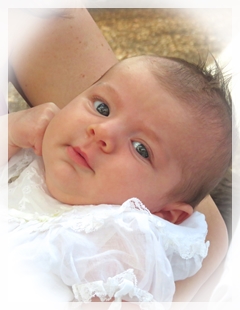 Like all children, my grands are growing up and new challenges face them every day. The eldest is now driving and old enough to date. Come fall, she’ll be looking at colleges, two others will start junior high school, one enters kindergarten and the youngest is off to nursery school. Where did the time go?
 Devotions of the Heart