
Direct your children onto the right path, and when they are older, they will not leave it. [Proverbs 22:6 (NLT)]
And anyone who welcomes a little child like this on my behalf is welcoming me. But if you cause one of these little ones who trusts in me to fall into sin, it would be better for you to have a large millstone tied around your neck and be drowned in the depths of the sea. … Beware that you don’t look down on any of these little ones. For I tell you that in heaven their angels are always in the presence of my heavenly Father. [Matthew 18:5-6,10 (NLT)]
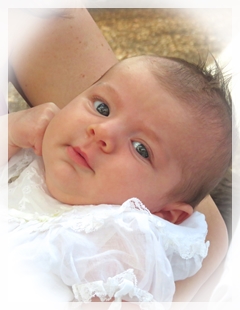 Like all children, my grands are growing up and new challenges face them every day. The eldest is now driving and old enough to date. Come fall, she’ll be looking at colleges, two others will start junior high school, one enters kindergarten and the youngest is off to nursery school. Where did the time go?
One look back at my childhood (especially my teen years), tells me that I kept my guardian angel working overtime. Not wanting my grands to make the same mistakes I did, I’d love to put a protective bubble around each one of them. It would shield them from evil influences, bad people, poor choices and dangerous situations. Although a protective bubble won’t work, perhaps the armor of God will. While not the typical school uniform, we can clothe our children with the belt of God’s truth, the breastplate of righteousness, the peace of the gospel on their feet, the shield of faith, and the helmet of salvation. Although weapons aren’t allowed in school, we can arm them with the sword of God’s word and the power of prayer. In the end, however, it will be their battle to fight and not ours.
Blessed Lord, thank you for the children you have given us; please protect them. Shield them from influences that run counter to your teachings. May they come to know both you and your word so they can withstand the challenges of this troubled and confusing world. Movies, magazines, television, music, books, social media and even their peers bombard them with opinions, advice, and examples that challenge their values and faith. Fill their lives with positive influences to inspire, teach and guide them. May they flourish and grow in their relationship with you. Let your light shine brightly in their lives so that all of their attitudes and actions honor your holy name.

 While writing yesterday’s meditation, I remembered back to my high school days when I studied theater at an arts academy in northern Michigan. I should have been happy for my friend when she got the lead in a play, but I wasn’t. Instead, I was annoyed because I thought that role should have been mine. While the play was still being rehearsed, my friend returned to Ohio with a medical emergency. Did I pray for her? Of course not; I was a self-involved teenager and my only prayer was one of thanks because the lead role became mine. The emergency, however, wasn’t that serious and she returned to school (and her part in the play) several days later. Did I say a prayer of thanksgiving for her? Of course not; being a self-involved teenager, I pouted and gave her the cold shoulder.
 around me, myself and I: my toys, my games, my friends, my wants, my school, my plans. As I matured, I became a little less self-involved but I have to admit that my priorities still revolved around me: my education, my husband, my children, my family, my projects, my future! All of these are important, but no matter how much I love my husband, children and grandchildren, and no matter how worthwhile my projects or causes, none of these should be my first priority. That should always be God.
 In Hebrew, mitzvah means command and the mitzvoth are the 613 commandments that came from God in the Old Testament. In Reformed Judaism (and Yiddish), mitzvah has come to mean “good deed.” In actuality, I’m sure any good deed falls somewhere within one of those 613 original commands! Moreover, isn’t every good deed a way to connect with God and express both our love for Him and for our neighbor?
 It was such a wonderful and joy-filled day that I can’t believe we almost didn’t attend. We’d been invited to a 60th anniversary celebration and 60th anniversaries don’t happen that often. Nevertheless, we’d planned on declining because the date and place were inconvenient, getting there was expensive, and working out the logistics was problematic. A little thought and prayer, however, helped us realize that while inconvenient, it was not impossible; while expensive, it was not prohibitive; while difficult, with some adjustment on our part, it was doable. Moreover, our absence would disappoint people we love. One final thing was holding us back—we had nothing to wear! OK, you men have heard that one before but, in this case, it was true. We were in our Colorado mountain town where jeans and boots are the all-purpose outfit. Dressing up simply means clean jeans and boots and, no matter how clean the jeans or boots, that didn’t seem appropriate. We had plenty of clothes in other closets that would have been perfect for the event but they were more than a thousand miles away. The Holy Spirit, however, did His job and reminded me: “It’s not about you!” What we wore was of no importance to this milestone event. Few would even notice and no one would remember; it was our presence, not our appearance, that mattered. Another look into the closet found attire that, while not fashionable, was acceptable.
