No trial has overtaken you that is not faced by others. And God is faithful: He will not let you be tried beyond what you are able to bear, but with the trial will also provide a way out so that you may be able to endure it. [1 Corinthians 10:13 (NET)]
 From today’s verse, you might think I’m going to say that God will never give us more than we can bear. That Christianese sentiment, however, comes from 1 Corinthians 10 and is about temptation, not difficulties and afflictions. The belief that God will never give us any burden or challenge we can’t bear puts the emphasis on us and our strength rather than where it should be—on God and His power! In 2 Corinthians, Paul wrote of being so burdened beyond his strength that he despaired of even living. Clearly, there will be times in our lives when we will be given far more than we can possibly bear by ourselves.
Florida is pretty much flat as a pancake and my husband and I can hike and bike long distances with little or no effort. We thought we were nearly invincible until we returned to the rolling hills of the Midwest and the mountain trails of our beloved Rockies. As I trudged up my first steep hill, I was sure God made it longer and higher in my absence; all I wanted was for someone to carry me!
Although I’ve been working on getting stronger since returning north, God’s spiritual training is quite different from physical training. Unlike a cross-country coach, God doesn’t train us on steeper and steeper hills so we can eventually run up them without needing to stop and catch our breath. He keeps challenging us with uphill climbs so that we learn to trust Him to raise us up. We’re not supposed to be lifting the heavy weight of life’s burdens; that’s God’s job. When we encounter the steep grades, he doesn’t expect us to climb them by ourselves; he wants us to learn to let Him empower us. Our faith isn’t demonstrated by how strong we are but by how readily we recognize that we’re too weak to ascend life’s hills and peaks by ourselves. Our faith is revealed by our willingness to trust God enough to let Him bear our burdens, lift us over the barriers, and get us up the mountains.
Without topographical challenges, I’d overestimated my fitness and strength until my first trek from the lake up to our house (100 paces and every one of them uphill) left me exhausted. When we live in a spiritual flatland with no challenges, we tend to overrate our strength as well. Mistakenly, we think we’re strong enough to conquer life’s trials on our own and stop depending on God’s power. He regularly gives us hills, not to get us powerful enough to climb them alone but to have faith enough to give every uphill climb to Him. We’ll then realize that it is our faith, not our strength, that carries and sustains us.
Thank you, God, for the challenges of life, not because they strengthen us enough to go it alone, but because they strengthen our trust and dependence on you.
 Last Friday, a crazed young man attacked a Munich shopping mall and ten were left dead. A few days earlier, an ax-wielding teen on a rampage hacked at passengers on a German train and, less than two weeks ago, 84 people died in Nice, France, after a terrorist plowed a truck into a crowd of Bastille Day celebrants. My 16-year old granddaughter has been living in Germany the last three weeks and my first reaction to these horrendous incidents was to get her home so she could be safe here with us. Unfortunately, she would be no safer here than there. I’m sure families thought their loved ones were safe last month in that Orlando nightclub where 50 were killed and another 53 injured or when they walked into their classroom at Umpqua Community College last October and nine were carried out on stretchers while another nine were carried out in body bags. Parishioners had no reason to fear when attending a prayer meeting in Charleston last year until a man opened fire and killed nine of them. While writing this devotion, news just broke of bombings in Kabul, Afghanistan, that left 80 dead and 231 wounded. Mass acts of hate and terror are becoming ever more frequent and it both alarms and sickens me that these horrific events are beginning to seem commonplace to us.
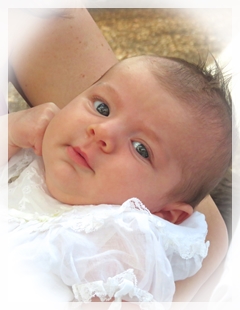 Like all children, my grands are growing up and new challenges face them every day. The eldest is now driving and old enough to date. Come fall, she’ll be looking at colleges, two others will start junior high school, one enters kindergarten and the youngest is off to nursery school. Where did the time go?
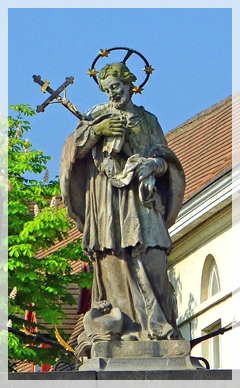 How would we prove we are Christians? If we were Islamic converts to Christianity, seeking asylum in the United Kingdom or several other nations, an assessor would interview us to determine whether or not we actually are believers. Unfortunately, many of those doing the interviewing have no real understanding of Christianity themselves. Worse, as new Christians, we probably won’t know the answers to the sort of questions that are asked while those who are pretending to be Christian might have all the answers memorized. After all, back in Jesus’ time, the Pharisees had all the answers but were sorely lacking in faith. If we failed our interviews, we’d be subject to deportation. For a Christian, especially a Christian convert (an apostate), returning to one’s Islamic homeland could have dire (even fatal) consequences.
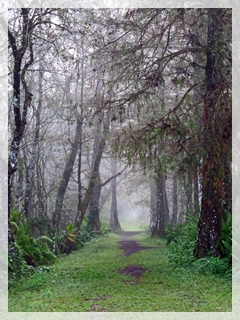 Within a day of having written yesterday’s words about trusting Jesus and following Him, God reminded me how difficult it is to actually do that. Granted, it wasn’t God’s voice we were following but His point was well taken. Mid-way through our 1,400 mile drive north, the GPS cautioned us of one accident after another within a few miles ahead of us. After the first such warning, I studied the map trying to find a detour but couldn’t seem to find a route that wouldn’t lead us right back into the accident area and the promised lane closures. When five accidents lay right in our path, not wanting to spend hours in a traffic jam, we reluctantly decided to let the GPS lead us around the congestion. Following its guidance, my husband exited the interstate while I kept trying to figure out what route we’d be taking. Although the GPS screen always indicated the direction of the next turn, we never knew the long-range plan for returning to the highway. We simply had to trust the GPS and take it one turn at a time. Of course, with my trusty map, I tried to second-guess the GPS the entire way. I just couldn’t cede complete control to that sweet calm voice directing us. Without any help from me, however, that voice got us back on the interstate well north of all of the accidents and congestion.