
We put our hope in the Lord. He is our help and our shield. In him our hearts rejoice, for we trust in his holy name. Let your unfailing love surround us, Lord, for our hope is in you alone. [Psalm 33:20-22 (NLT)]
Trust in the Lord with all your heart; do not depend on your own understanding. Seek his will in all you do, and he will show you which path to take. [Proverbs 3:5-6 (NLT)]
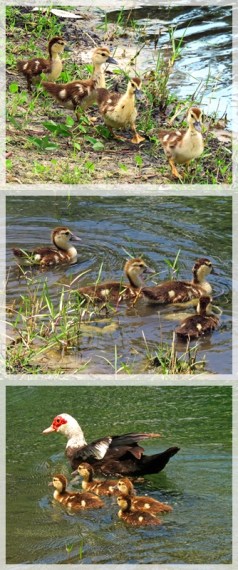
While relaxing on the lanai and watching the sun set, we saw a pair of Muscovy ducks usher their little ones along the far side of the canal. Too far away for a photo, we just enjoyed another of God’s “Aha!” moments and commented on how blessed we are to be surrounded by His feathered creatures. We have a pair of fish crows tending to their newborns in the palms to our left and a pair of blue jays waiting for eggs to hatch in the palms to our right. Earlier that day, we’d watched a red-bellied woodpecker hammer away in a tree by the pool and witnessed a mockingbird “dive bomb” both a squirrel and crow who’d ventured too near her nest. Although the ducks were long gone, suddenly I felt compelled to grab my camera and walk down to the edge of the water. There, right in front of me was the duck family! I’d never seen those ducks on our canal before that evening and I’ve not seen them since. Had I remained on the lanai or been a few minutes earlier or later, I would never have seen them at all! God put me there at precisely the right moment—it seems He always has a few surprises up His heavenly sleeve.
Although I’d just composed yesterday’s devotion about trusting God’s timing and knew the words I’d written to be true, I’m not so sure I really believed them deep in my heart. I was still troubled by His delay. Just to make sure I truly understood and believed the words I’d just penned that morning, God blessed me with the ducks that evening. It was His way of reminding me that He knows what He’s doing. Indeed, while unpredictable and rarely what we’ve planned, His timing is always impeccable!
Thank you, God, for always knowing what we lack and for providing us with it at exactly the moment we most need it. Thank you for your inspiration, encouragement, and the unexpected blessings of life.
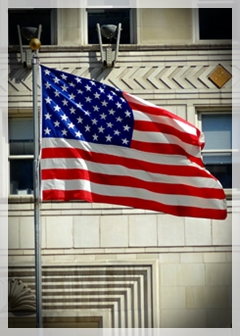 Today is the National Day of Prayer. Back in 1952, during the Korean War, the Reverend Billy Graham challenged our nation’s leaders with these words: “What a thrilling, glorious thing it would be to see the leaders of our country today kneeling before Almighty God in prayer. What a thrill would sweep this country. What renewed hope and courage would grip the Americans at this hour of peril.” In response, members of the House and Senate introduced a joint resolution for an annual National Day of Prayer, “on which the people of the United States may turn to God in prayer and meditation at churches, in groups, and as individuals.” President Truman signed a bill proclaiming that a National Day of Prayer must be declared by each subsequent president at an appropriate date of his choice. In 1988, the law was amended and the first Thursday in May was designated as our National Day of Prayer. The day’s purpose is to unite people of all religions in prayer and to renew respect for God throughout the world. This being the United States, the constitutionality of this law has been challenged several times. Fortunately, the challenges have been unsuccessful—chalk one up for the good guys!
 Yesterday, I wrote about unfounded fears. Although I’m a bit of a nervous flyer, I’d rather travel than stay home, so I pray and fly. While I’m a little nervous about heights, I’d rather ride than hike up the mountain, so I pray and ride the lifts. Since my little Ziggy-like guy can easily capture my irrational fears, they rarely plague me. It’s not fear of external things like plane crashes or gondola accidents, however, that disturb me. Instead, it’s the fear that happens when I focus on me instead of God. Will I be wounded, bothered, abandoned or tested? What if I don’t succeed, reach my goal, or make a good impression? Will I be welcome? What if I make a mistake?
 Bad things happen, unforeseen events occur, and every one of us will eventually become a fatality statistic of some kind. A certain amount of fear or caution is wise in our unpredictable world. Most of us, however, are rather selective in our fears. We obsess over things about which we have little or no control and ignore those things over which we do. We don’t want to give up control to the pilot when the odds of dying in a plane crash are 1 in 11 million but trust our driving when the odds of a fatal car crash are 1 in 5 thousand! While we are far more likely to die of heart disease (1 in 6), we tend to obsess about things like dying in a terrorist attack (1 in 20 million). In actuality, we are fourteen times more likely to die in our bathtubs and twenty-five times more likely to die by choking on our food than in a terrorist attack, but we prefer not to think about that while bathing or eating.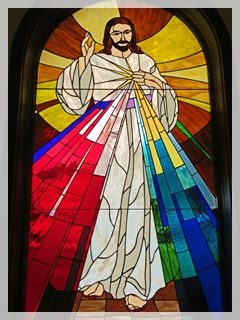
 Jehovah Rapha, the “Lord who Heals You,” was the name of God proclaimed to the Israelites through Moses at Marah. Indeed, a God who could make the blind see, the lame walk, the lepers clean and raise Lazarus from the dead can heal any physical ailment.
