
Your word is a lamp for my feet and a light for my path. … See how I have loved your guiding principles! … O Lord, in keeping with your mercy, give me a new life. There is nothing but truth in your word, and all of your righteous regulations endure forever. [Psalm 119:105,159-160 (GW)]
 I often find myself lost in the Bible, fascinated by this amazing book of history, poetry, passion, and wisdom. Comparing translations and reading commentaries helps me understand the context and meaning of verses. Knowing something about the specific church to whom Paul was writing, for example, allows me to better understand his directions, many of which seem peculiar in today’s world where churches don’t argue about circumcision and food isn’t offered to idols. For example, Paul wasn’t playing fashion police when giving instructions about hair length and head coverings to the church in Corinth. Although Greek women worshipped without head coverings, Jewish women had always covered their heads in worship—an uncovered head for them was a sign of loose morals. Moreover, in Corinth (the city with Aphrodite’s temple and its 1000 prostitutes) both long hair on men and short hair on women were signs of prostitution. Paul was trying to unify both Jewish and Gentile believers and prevent anyone’s appearance from interfering with their ability to be a witness for Christ. Bible study also makes old familiar verses take on deeper meaning. David’s sorrowful words of repentance in Psalm 51 are even more poignant when we know they refer to his adultery with Bathsheba and the murder of Uriah. Bible study, however, is far more than an intellectual exercise; it enables us to know God as He revealed himself in Scripture and then to weave His word into our daily lives.
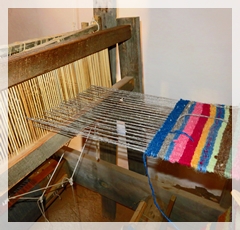
As a girl, I used to weave potholders and I’ve taught both my children and grands to do the same. We attached fabric loops across a small metal loom and interlaced other loops at right angles. Over and under the loops we’d go until the loom was filled. When finished, instead of a bunch of unconnected loops, we had a thick potholder that could withstand heat. While that’s the only thing I’ve woven, I try to weave God’s word into the fabric of my life daily. Unlike the Corinthians, I don’t live in sin city but, like them, I’ve been challenged to live up to God’s standard of morality and to behave in a way that is considerate to the sensitivities of others. I’ve neither committed adultery nor murdered anyone’s husband but, like David, I have allowed my sins to drive a wedge between God and me. Yet, as I weave God’s word into my life, I can handle all of life’s circumstances, even when I get into hot water.
“The touch, the feel, of cotton…the fabric of our lives,” the television ads for cotton tell us. Sorry, Madison Avenue, but neither cotton, linen, wool, polyester, nor silk are the fabric of my life. That honor belongs to God’s word.
A Pew Research poll in 2010 found that evangelicals ranked only a smidgen higher than atheists in familiarity with the New Testament and Jesus’s teachings. [Newsweek Magazine (1/2015)]
 My doorbell rang and, by the time I got to the door the FedEx man was walking away, having left a large box on the porch. As he backed out of the driveway, I shouted a thanks and brought in my latest order from Amazon.
 The elderly Abraham and Sarah laughed at the thought of the two of them making a child and the old Jewish priest Zechariah doubted his barren wife could conceive. Yet, a thirteen-year old virgin believed that she would miraculously bear a son and a pagan Roman officer believed Jesus could heal his servant with just a word.
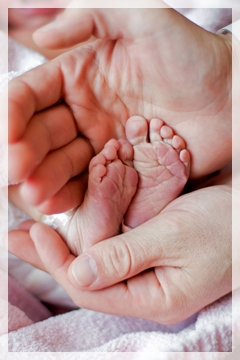 Writing about my granddaughter yesterday made me think about birth defects. In actuality, all of us have what could be called birth defects—it’s just that some are more obvious than others. While all of God’s children have defects, none are defective. I consider a young man at our Florida church. Cerebral palsy keeps him strapped into a wheel chair and his physical limitations are immense. There is, however, nothing defective about this bright young man. I ponder the enthusiastic grocery worker with Down’s syndrome. She may have an extra chromosome, but there is nothing defective about her. I think of a fellow at church who has no ears. He may be deaf but there is nothing defective about him, nor is there anything defective about a friend’s grand born with only a partial arm and hand or my grand, with her heart defects and learning issues. They are all marvelously made—different from others, but no less wonderful.
 I have a small wooden box on my desk—my “God box.” It’s where I literally give my concerns to God; right now there are three items in it. The first is a photograph of a little girl. It is my grand, a sweet child with three congenital heart defects—none of which is going to disappear and all of which promise more trouble in the future. She also has learning issues—none of which will dissipate and all of which will cause more difficulty as she progresses into higher grades. The second item is a medallion from a sobriety program. It represents several people I love who have battled alcoholism or addiction—a battle they will continue to fight daily for the rest of their lives. The third item is a laminated card on which is written Reinhold Niebuhr’s Serenity Prayer. That one is for me.
