
And he said to him, “Please, Lord, how can I save Israel? Behold, my clan is the weakest in Manasseh, and I am the least in my father’s house.” And the Lord said to him, “But I will be with you, and you shall strike the Midianites as one man.” [Judges 6:15-16 (NLT)]
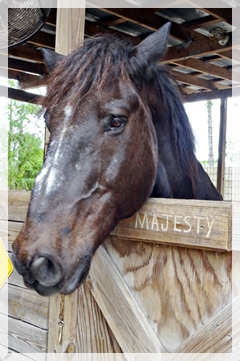
Because the Midianites were raiding and plundering Israel, we meet Gideon hiding in a large vat. Rather than threshing wheat in the open air so the wind could blow away the chaff, he was cautiously working in the bottom of a secluded wine press when an angel of the Lord delivered a message to the timid man. Addressing Gideon as a mighty warrior, the unlikely hero demurred and claimed to be the least worthy of the weakest clan in the tribe of Manasseh.
After a fair amount of hesitation and questions, the reluctant warrior eventually gathered an army of 32,000 to battle the Midianites, a force of 153,000 men. With the odds against Gideon being four to one, I imagine he was wondering where to find more men when God told him that he had too many! He was instructed to send home all those who were afraid. After 22,000 men departed, God told Gideon there still were too many men. He was to separate them by the way they drank water from a stream—whether they cupped the water with their hands and lapped it up or knelt down to drink from the stream. Only the 300 warriors who drank from their hands were allowed to remain. With an overwhelming ratio of 450 Midianites to one Israelite, Gideon’s defeat seemed inevitable. Nevertheless, while Gideon may have been fearful, he never lost faith. Gideon’s few good men crushed the Midianites. The nomadic tribe never recovered and there was peace in the land for the next forty years.
We might wonder why God chose Gideon—the least of the least—and why He didn’t provide him with as large an army as possible to ensure an Israelite victory. The odds were bad enough when Gideon started with 32,000 men but, with only 300, victory seemed impossible. But that was God’s point! When the angel of the Lord entered Gideon’s life, the Israelites had been oppressed by the Midianites for seven years because they “did evil in the Lord’s sight.” [Judges 6:1] They’d worshipped pagan gods, built an altar to Baal, and erected an Asherah pole. Gideon’s first task, prior to leading the men into battle, had been to destroy those pagan symbols. When Baal did not retaliate, it became clear how worthless the false god was. But, did the people understand how powerful the Lord was?
God chose Gideon, the youngest son of the weakest clan, and only a handful of men because their victory against absolutely impossible odds made it abundantly clear to all that the victory didn’t belong to Gideon or his soldiers; it belonged only to God! Rather than looking at this story as an example of what just a few men (or women) can do, we should look at it as an example of what God can do just with a few! He is, after all, the hero in every story!
Selfish and proud creatures that we are, we tend to blame God when things go wrong but remove Him of any responsibility for our successes. In Gideon’s story, God eliminated any possibility that the Israelites’ strength, skill, or valor had anything to do with their triumph. Victory was the Lord’s! God was the hero of Gideon’s story; let Him continue to be acknowledged as the hero of ours, as well!
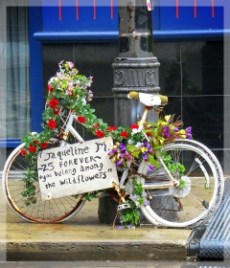 It’s often said that there are no atheists in foxholes. This maxim traces its beginnings back to 1914 and World War 1 when an English newspaper quoted a chaplain at a memorial service for a fallen soldier: “Tell the Territorials and soldiers at home that they must know God before they come to the front if they would face what lies before them. We have no atheists in the trenches. Men are not ashamed to say that, though they never prayed before, they pray now with all their hearts.” When we joined our northern church, it was during the Viet Nam War. I remember a young man in our new member class who’d drawn a low number in the draft lottery. Expecting to be in combat within the year, he confessed wanting to “get right” with God before that time came. Apparently, even the threat of a foxhole is enough to cause some people to rethink their relationship with the Almighty.
 The anchor, the Christian symbol of hope, is the most prevalent of all the Christian symbols found in the Roman catacombs. In fact, all of the symbols, paintings, mosaics, and reliefs found in the miles of labyrinth-like narrow tunnels and thousands of graves in the catacombs reflect hope in some way. Instead of the dark funereal images you might expect in an underground cemetery, the white walls of the Christian catacombs feature living things like flowers and birds along with Bible stories expressing hope in God’s plan of salvation. Prominent themes from the Old Testament include Daniel emerging untouched from the lions’ den and Shadrach, Meshach, and Abednego exiting unharmed from the fiery furnace. Frequently depicted are the stories of Noah, who escaped from the flood, and Jonah who was delivered from the sea monster. Continuing the theme of deliverance are many images of the good shepherd so frequently mentioned in Psalms. New Testament stories usually showed Jesus raising the dead (with over fifty representations of Lazarus), healing people, and feeding the multitude. The art of the catacombs is all about man’s hope in God’s deliverance, provision, and plan of salvation.
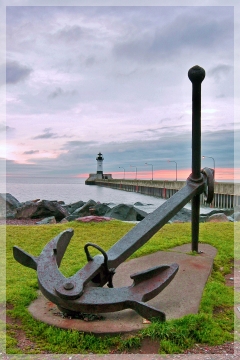 The sign in front of a nearby church read, “Our hope is anchored in the Lord,” which got me thinking about anchors. I’d never given them much thought until we took a Windjammer cruise off the coast of Maine many years ago. Accompanied by four friends and a crew of two, we sailed for a week. At dusk, we’d lower the sails and anchor in a harbor for the night. After breakfast, we’d pull up anchor for another relaxing day of sailing by lighthouses, granite cliffs, fishing villages, and even a few seals. One day, however, gale force winds replaced the gentle breeze and the calm sea turned violent. The sky darkened as rain and hail poured down on us. We immediately pulled into the nearest inlet, lowered the sails, and dropped two anchors to keep from being blown into the rocks! If we’d had two more anchors (as did the sailors in Acts 27), I suspect we would have dropped them, as well. After donning my life jacket and slicker, all I could do was pray and hope those anchors held. You really don’t appreciate the worth of an anchor until you’ve needed one in a storm!
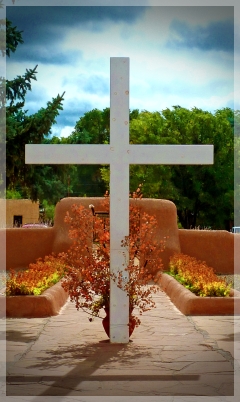 Yesterday, I wrote about Job’s lamentation. 19th century bible scholar George Granville Bradley said this about Job 3: “Where in the world will you find a sadder strain of more hopeless, uncontrolled, and unbroken lamentation and mourning? … Filled to the brim, they run over with pain.” I have to agree.
