BREAKING BREAD TOGETHER

When we bless the cup at the Lord’s Table, aren’t we sharing in the blood of Christ? And when we break the bread, aren’t we sharing in the body of Christ? And though we are many, we all eat from one loaf of bread, showing that we are one body. [1 Corinthians 10:16-17 (NLT)]

communion cupSometimes our Florida church celebrates Communion at the beach. The church provides fried chicken and everyone brings a dish to pass. After enjoying dinner and fellowship with our church family, we congregate around the gazebo, pray, hear a brief sermon, and partake of the Lord’s Supper. Some Sundays, there also may be a Baptism in the ocean. We stand on the beach as the sun sets in the west and welcome a new Christian into the body of Christ. These sunset meals are a celebration of God’s grace, Jesus’s love, and the power of the Holy Spirit.

Whenever we have our sunset celebrations, I think of what it must have been like for the early church. Because most of the early Christians were Jews, initially they gathered in the temple and synagogues for worship. Unable to celebrate the Lord’s Supper or baptize in a Jewish house of worship, this arrangement was unsatisfactory. Without a church building or a formal baptistery, people were brought to wherever there was water for Baptism and, on Sundays, the Christians gathered in homes for a 1st century potluck. The partaking of the bread and wine was usually celebrated as part of the meal, called an agape or love feast. To show their union in Jesus, people were to set aside their differences in status, wealth, ethnicity, and education and any quarrels were to be settled before partaking in the meal. Their worship was close and intimate. When we celebrate with our church at the beach, I feel that same sense of fellowship. We are an odd assortment of people, of diverse backgrounds and various ages, and from all walks of life but we are family—united by our belief in Jesus. Celebrating the sacraments in such a way is a profoundly meaningful experience.

Of course, the early church wasn’t perfect and problems arose. Paul took the Corinthians to task for dissension among their members and for not settling their differences. Worse, some of the Corinthians were selfish with the food or got drunk during the meal; not everyone cared or shared. Their gluttony and disregard for the needs of others didn’t demonstrate the unity and love that were to characterize the early church. With no alcohol at our church potlucks, no one ever gets drunk but some people in the front of the line have been known to take far more than their share, making it slim pickings for those at the end. I have a sneaky suspicion that not everyone comes together with all of their differences settled either. In actuality, we probably aren’t a whole lot different from our Corinthian forefathers.

By the beginning of the 2nd century, Christ’s followers had moved out of the synagogues, the Christian church found its own way to worship, and the Lord’s Supper was no longer celebrated as part of a meal. Although a few denominations and house churches still celebrate agape meals with communion, most of us celebrate the Lord’s Supper in a more formal setting than a potluck at someone’s house or a park. Nevertheless, we should always remember its beginnings. That first Lord’s Supper was an actual meal that fed both body and soul.  Apart from Judas, the participants were a family of believers, a band of brothers, united in their love for one another and for Jesus. The Lord’s Supper began as a Passover feast celebrating God’s redemption of His people from slavery to Pharaoh and it continues as a celebration of the redemption of His children from slavery to sin. Moreover, we should never come to His table without settling our differences with one another.

But every Lord’s day . . . gather yourselves together and break bread, and give thanksgiving after having confessed your transgressions, that your sacrifice may be pure. But let no one that is at variance with his fellow come together with you, until they be reconciled, that your sacrifice may not be profaned. [Didache 14 (c.90 AD)].
If someone says, “I love God,” but hates a fellow believer, that person is a liar; for if we don’t love people we can see, how can we love God, whom we cannot see? And he has given us this command: Those who love God must also love their fellow believers. [1 John 4:20-21 (NLT)]

Copyright ©2017 jsjdevotions. All rights reserved.

AUDACIOUS PRAYERS

And without faith it is impossible to please him. For whoever would draw near to God must believe that he exists and that he rewards those who seek him. [Hebrews 11:6 (RSV)]

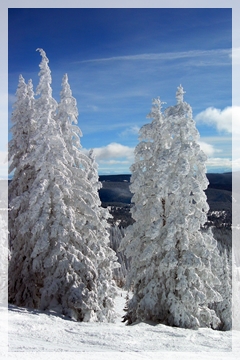
Steamboat Ski - COIt was a dreary winter day when the entire congregation exited the church into a weed-filled field. Like the Israelites, we were armed with horns, only ours were those silly blowout noisemakers seen at children’s birthday parties. Silently, we marched until we’d circled the muddy patch of ground seven times. Anyone observing us from the highway surely thought us foolish as we raised those noisemakers to our lips, blew hard and then cheered. Unlike the Israelites who marched around Jericho so God would knock down walls, we marched around that field to show our faith that God would erect walls for us!

That was a little more than five years ago in the Colorado mountain town where we spent our winters. Armed only with big prayers and bold faith, that church built a 15,000 square-foot Family Life Center. At its dedication last September, the congregation was again given noisemakers; when the service ended, the horns sounded as they celebrated God’s love, grace, and amazing provision.

Erecting that building wasn’t an easy task—blueprints were drawn and redrawn, delay after delay occurred, the red tape seemed never ending, and everything was more complicated and often more expensive than expected. The church never lost faith in the project nor did they cut back on serving God’s people. They faithfully continued their discipleship, benevolence, education, community outreach and missions work while raising additional funds for their expansion. This ski and ranch town is not a wealthy one and many are employed only seasonally. Nevertheless, they generously stepped out in faith, shared their resources, made sacrifices, and trusted God to provide. The pastor is fond of reminding his flock that God honors audacious prayers because audacious prayers honor God. The Family Life Center is a testament to that statement—when the people dared to dream and pray big, instead of walls falling, they were raised!

Picture the audacity of the bleeding woman who was so sure Jesus could heal her that she pushed her way through the crowd just to touch the hem of His robe. Imagine the audacity of Joshua asking God to stop the sun and moon from moving until the Israelites had defeated their enemies. When Elijah prayed for both drought and rain, he made some audacious predictions to Ahab. Like the bleeding woman and Joshua, he would have looked a fool if God had not answered those prayers. God came through for them all because their big bold prayers honored an even bigger God.

We insult our amazing Father with trivial prayers; they’re like asking famed chef Gordon Ramsey to make only a peanut butter sandwich. Inconsequential prayers imply we’re not sure He really can do anything that great. Courageous faith means bold audacious prayers and stepping out for God’s kingdom. Because they prayed, believed, and acted on their belief, that mountain church saw our awesome God provide in miraculous ways. He can do far more than we can imagine or ask and we must never doubt His power. Perhaps God will say, “No!” but, if we never ask, He can’t say, “Yes!” God honors audacious prayers because audacious prayers honor Him!

Then the disciples came to Jesus privately and said, “Why could we not cast it [a demon] out?” He said to them, “Because of your little faith. For truly, I say to you, if you have faith as a grain of mustard seed, you will say to this mountain, ‘Move from here to there,’ and it will move; and nothing will be impossible to you.” [Matthew 17:19-20 (RSV)]

Copyright ©2017 jsjdevotions. All rights reserved.

HALLOWED BE THY NAME

So you shall keep my commandments and do them: I am the Lord. And you shall not profane my holy name, but I will be hallowed among the people of Israel; I am the Lord who sanctify you, who brought you out of the land of Egypt to be your God: I am the Lord. [Leviticus 22:31-33 (RSV)]

water lilyFor several years, a well-known and highly regarded actor/comedian’s name was synonymous with fatherhood and family values. After becoming the subject of sexual abuse allegations, spanning more than fifty years, by more than fifty women, his name went from respected to scorned. Several universities rescinded the honorary degrees awarded him, removed him from their boards and fund-raising campaigns, and eradicated his name from buildings and scholarships. His statue was removed from a Disney theme park, reruns of his shows were cancelled, there was a petition to revoke his Presidential Medal of Freedom, and he was dumped by his agent. No one wanted their good names tarnished by any association with such disgraceful behavior.

Names and reputations are important and none of us want our names to be besmirched by someone else’s words or actions. Apparently, God felt the same way when He gave us that often ignored commandment about not taking His name in vain. Some Bibles translate “in vain” as misusing, using thoughtlessly or irreverently, or making empty promises in God’s name. Whatever Bible we use, the meaning is clear; we must honor God’s name and never use it in a disrespectful, false or blasphemous way.

When Jesus taught us to pray, after addressing our Father in heaven, He said the words, “Hallowed be thy name.” Although some Bibles translate that sentence as, “May your name be kept holy,” the King James’ words are the ones most of us use in the Lord’s Prayer. I used to think those words were a call to worship and pretty much dismissed them as part of the preface to the actual prayer. I hadn’t realized that they are the first petition (or request) the prayer makes. In those four prayerful words, “Hallowed be thy name,” we are appealing to God to help us keep His commandment about not dishonoring His name! That sentence, however, means far more than just not cursing or committing perjury after promising to tell the truth.

If we call ourselves Christians—followers of Jesus Christ—whenever we act or speak shamefully we are not keeping God’s name holy. If we distort God’s word with our witness or actions, His name is not hallowed. It’s not just blasphemy, irreverence or profanity; hypocrisy, deception, treachery, insincerity, falseness, and immorality of any kind profane His name! We don’t have to be celebrities and have our transgressions blasted across the tabloids; we disgrace His name whenever we speak or act in any way that dishonors Him.

If we never get beyond those four little words, “Hallowed be thy name,” we’ve said enough. In that one sentence, we ask God to make our words and actions reflect His holiness. We express our desire to live godly lives and ask Him to enable us to live in a way that makes His name holy. Heavenly Father, hallowed be thy name!

We always pray for you, that our God may make you worthy of his call, and may fulfil every good resolve and work of faith by his power, so that the name of our Lord Jesus may be glorified in you, and you in him, according to the grace of our God and the Lord Jesus Christ. [2 Thessalonians 1:11-12 (RSV)]

Bless the Lord, O my soul; and all that is within me, bless his holy name! [Psalm 103:1 (RSV)]

Copyright ©2017 jsjdevotions. All rights reserved.

OUR FATHER

Mute swan - cygnetsPray like this: Our Father in heaven…” [Matthew 6:9a (NLT)]

Throughout Scripture, God is called by several ancient names that reflect His character: El Shaddai (God Almighty), El Olam (The Everlasting God), El Elyon (The Most High God), and El Roi, (The God Who Sees). He is Yahweh-Jireh (The Lord Will Provide), Yahweh-Rapha (The Lord Who Heals), and Yahweh-Roh (Our Shepherd). We also find references to God as both a Rock and a King. Yet, with all these ways to address God, when Jesus taught us how to pray, He chose to address God with the words “Our Father.”

As I pondered calling on our Father in prayer, I recalled an episode that occurred more than twenty-five years ago when two of our children attended college together. They went camping with a group of friends and enjoyed beers around the campfire. In the wee hours of the morning, the group was awakened by a police officer who breathalyzed them all. Unfortunately, the results indicated they’d been drinking and, since all were all under 21, each received a ticket for “illegal possession of alcohol by consumption” (a Class C misdemeanor). My children’s friends were amazed when they immediately called their dad, admitted their mistake, and asked his advice. My daughter’s response to her friends’ shock at their quick call was simple: “If I can’t call my father, who can I call?”

Our children called their father not because he paid their tuition and provided for them or even because he has a law degree. Even knowing he would expect them to face the consequences of their foolishness, they called on their father because he loves them! He’s their daddy and they are his children and they knew that, in spite of his disappointment in them, he would lovingly forgive and wisely counsel them.

“Our Father,” said Jesus. We can address God as Creator, Most High, Shepherd, Rock, Healer or any of a dozen other impersonal ways but it’s like calling on someone great and powerful; we know of Him but we don’t know Him. Prayer isn’t like scheduling an appointment to present a petition before a foreign king; it is an intimate conversation with someone we love who also loves us. It’s like my children coming to their daddy, confessing their error, and asking for his guidance. We appeal to God in love, not in fear of His anger or even awe of His power. God adopted us when we accepted Christ—we are His children, His heirs, and we can come boldly before Him with our prayers. That our unchanging, sovereign, all-knowing, all-powerful, ever-present, infinite God desires a relationship with us and wants us to address Him as “Our Father” is a privilege and an honor—let us never take it lightly.

For all who are led by the Spirit of God are children of God. So you have not received a spirit that makes you fearful slaves. Instead, you received God’s Spirit when he adopted you as his own children. Now we call him, “Abba, Father.” For his Spirit joins with our spirit to affirm that we are God’s children. [Romans 8:14-16 (NLT)]

May God our Father and the Lord Jesus Christ give you grace and peace. [Romans 1:7b (NLT)]

Copyright ©2017 jsjdevotions. All rights reserved.

THE ENEMY – FEAR

Laudermilk Park Naples FLWe, therefore, can confidently say: ‘The Lord is my helper; I will not fear. What can man do to me?’ [Hebrews 13:6 (PHILLIPS)]

“The only thing we have to fear is fear itself,” said Franklin D. Roosevelt in his first inaugural address. It was 1933 and the nation was in the dark days of the Great Depression. Although the reason for our nation’s darkness differs, his words still hold true.

Like many others, our church spent last week discussing and implementing security measures. How can a house of worship—a place that welcomes the lost and the least, the weary and the burdened—protect itself from the violence that increasingly surrounds us? As so many schools do, should we require everyone to have laminated ID cards for entrance through our doors? Do we pat down people or pass them through metal detectors? Should we carry guns in shoulder holsters and purses? Do we cease welcoming strangers? Will we refuse entry to anyone involved in a domestic dispute lest their angry spouse chooses to vent his anger on our doorstep?

Will we allow fear to stop us from attending church? If we do, we might as well stop going to concerts, schools, theaters, shopping centers, street festivals, airports, parades, marathons, or sporting events—all of which are perfect targets for both terrorists and the mentally ill. No place is entirely safe, especially when cars and trucks can become weapons with just a turn of the wheel and a little pressure on the gas pedal.

I admit to being more cautious nowadays. I look for exits and avoid confrontations but that’s being sensible rather than afraid. Told to say something if we see something, I am attentive to my surroundings but for what are we supposed to look? The concert goers in Las Vegas never saw the shooter and, by the time the parishioners in Texas saw the gunman, it was too late. Once it was easy to identify the deranged—they were the ones talking or screaming to themselves, gesturing wildly, or dancing to their own inner music. Now, because of cell phones, blue tooth, and iPods, many on the street seem unbalanced when they aren’t and terrorists don’t wear t-shirts announcing their hateful plans.

Admittedly, we live in a world of random violence but it’s not nearly as violent as we think it is. The odds of dying of either heart disease or cancer are more than 30,000 times greater than dying at the hands of a terrorist. While those odds are of no comfort to the families who have lost loved ones to terror, they tell us to be watchful rather than afraid.

There is more to FDR’s quote: “The only thing we have to fear is fear itself—nameless, unreasoning unjustified terror which paralyzes needed efforts to turn retreat into advance.” When we allow fear to keep us from our daily routine, when fear keeps us from attending  our children’s football games or  flying on a plane, when we become too afraid to go the beach or even to church, we are retreating from the real enemy—Satan. Rather than arming ourselves with weapons, let’s put on the armor of God and, as Christ’s soldiers, bravely advance onward into battle.

Never be afraid of those who can kill the body but are powerless to kill the soul! Far better to stand in awe of the one who has the power to destroy body and soul in the fires of destruction! [Matthew 10:28 (PHILLIPS)]

Copyright ©2017 jsjdevotions. All rights reserved.

THE TRAIN WILL COME

And by the same word, the present heavens and earth have been stored up for fire. They are being kept for the day of judgment, when ungodly people will be destroyed. But you must not forget this one thing, dear friends: A day is like a thousand years to the Lord, and a thousand years is like a day. The Lord isn’t really being slow about his promise, as some people think. No, he is being patient for your sake. He does not want anyone to be destroyed, but wants everyone to repent. But the day of the Lord will come as unexpectedly as a thief. Then the heavens will pass away with a terrible noise, and the very elements themselves will disappear in fire, and the earth and everything on it will be found to deserve judgment. [2 Peter 3:7-10 (NLT)]

train tracks - Galena ILAlthough more people prefer to believe in heaven than in hell, the Bible tells us that hell is as real as heaven. It exists whether or not someone likes the idea of a place of eternal punishment or refuses to believe in its actuality. The Bible uses words like fire, brimstone, pits of darkness, torment, anguish, weeping and gnashing of teeth to describe it. I won’t pretend to know what hell is like but, based on Scripture’s description (whether literal or figurative), hell doesn’t sound like any place I (or anyone I know) would deliberately choose to be.

As Christians, do we believe in heaven and hell? Do we truly believe in judgment and that Jesus is the only way to salvation? Why, then, do we seem so casual about sharing the gospel message? While fear of hellfire makes a poor basis for people’s acceptance of Jesus, concern for their final destination should be good motivation for our evangelism.

Pretend we’re at the train station. We see someone laying on the train tracks but he tells us there’s no need for concern since there’s no train coming. Although we don’t know exactly when it will arrive, we’re sure there is a train and that it is moving down that track. If we truly believed him to be in the path of that speeding train, what would we say or do? Would we walk away and quietly wait on a nearby bench or would we try to convince him to come to safety? Would we try to pull him off the tracks? If we are sure someone will spend eternity separated from our loving God, what will we do to keep that from happening?

Last April, the news aired video of a man collapsing onto the subway tracks. A utility worker spotted his fall and jumped off the platform to rescue him. The barely conscious man was scooped up and lifted back to safety just seconds before a train sped into the station. Fortunately, Jesus doesn’t ask us to step into the path of a speeding train in our witness. He does ask us, however, to clear the tracks the best we can. We do that simply by sharing the Gospel message.

If we understand what lies ahead for those who do not know Christ, there will be a sense of urgency in our witness. [David Jeremiah]

But you will receive power when the Holy Spirit comes upon you. And you will be my witnesses, telling people about me everywhere—in Jerusalem, throughout Judea, in Samaria, and to the ends of the earth. [Acts 1:8 (NLT)]

Copyright ©2017 jsjdevotions. All rights reserved.