
 We, therefore, can confidently say: ‘The Lord is my helper; I will not fear. What can man do to me?’ [Hebrews 13:6 (PHILLIPS)]
“The only thing we have to fear is fear itself,” said Franklin D. Roosevelt in his first inaugural address. It was 1933 and the nation was in the dark days of the Great Depression. Although the reason for our nation’s darkness differs, his words still hold true.
Like many others, our church spent last week discussing and implementing security measures. How can a house of worship—a place that welcomes the lost and the least, the weary and the burdened—protect itself from the violence that increasingly surrounds us? As so many schools do, should we require everyone to have laminated ID cards for entrance through our doors? Do we pat down people or pass them through metal detectors? Should we carry guns in shoulder holsters and purses? Do we cease welcoming strangers? Will we refuse entry to anyone involved in a domestic dispute lest their angry spouse chooses to vent his anger on our doorstep?
Will we allow fear to stop us from attending church? If we do, we might as well stop going to concerts, schools, theaters, shopping centers, street festivals, airports, parades, marathons, or sporting events—all of which are perfect targets for both terrorists and the mentally ill. No place is entirely safe, especially when cars and trucks can become weapons with just a turn of the wheel and a little pressure on the gas pedal.
I admit to being more cautious nowadays. I look for exits and avoid confrontations but that’s being sensible rather than afraid. Told to say something if we see something, I am attentive to my surroundings but for what are we supposed to look? The concert goers in Las Vegas never saw the shooter and, by the time the parishioners in Texas saw the gunman, it was too late. Once it was easy to identify the deranged—they were the ones talking or screaming to themselves, gesturing wildly, or dancing to their own inner music. Now, because of cell phones, blue tooth, and iPods, many on the street seem unbalanced when they aren’t and terrorists don’t wear t-shirts announcing their hateful plans.
Admittedly, we live in a world of random violence but it’s not nearly as violent as we think it is. The odds of dying of either heart disease or cancer are more than 30,000 times greater than dying at the hands of a terrorist. While those odds are of no comfort to the families who have lost loved ones to terror, they tell us to be watchful rather than afraid.
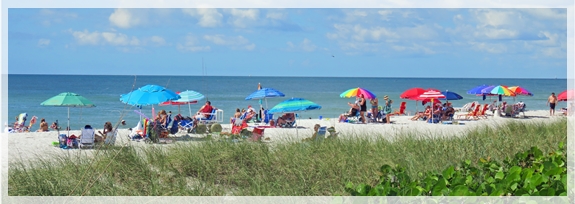
There is more to FDR’s quote: “The only thing we have to fear is fear itself—nameless, unreasoning unjustified terror which paralyzes needed efforts to turn retreat into advance.” When we allow fear to keep us from our daily routine, when fear keeps us from attending our children’s football games or flying on a plane, when we become too afraid to go the beach or even to church, we are retreating from the real enemy—Satan. Rather than arming ourselves with weapons, let’s put on the armor of God and, as Christ’s soldiers, bravely advance onward into battle.
 Although more people prefer to believe in heaven than in hell, the Bible tells us that hell is as real as heaven. It exists whether or not someone likes the idea of a place of eternal punishment or refuses to believe in its actuality. The Bible uses words like fire, brimstone, pits of darkness, torment, anguish, weeping and gnashing of teeth to describe it. I won’t pretend to know what hell is like but, based on Scripture’s description (whether literal or figurative), hell doesn’t sound like any place I (or anyone I know) would deliberately choose to be.
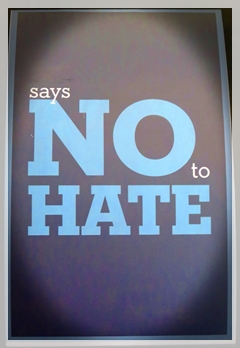 I walked into the university workout facility and was greeted by a large sign telling me the school says no to hate. I was surprised that a Christian University felt the need to say what should be obvious. Has hate become so much a part of our everyday lives that we have to be reminded not to do it? There wasn’t a sign telling us not to pee in the pool, have fist fights, or swear. Evidently, certain acceptable behavior was assumed but not hating wasn’t! Apparently, the sign is necessary because people feel freer to express their prejudice, intolerance, and bias than do any of those other things.
 These people are false apostles. They are deceitful workers who disguise themselves as apostles of Christ. But I am not surprised! Even Satan disguises himself as an angel of light. So it is no wonder that his servants also disguise themselves as servants of righteousness. In the end they will get the punishment their wicked deeds deserve. [2 Corinthians 11:13-15 (NLT)]
 There are always going to be poor and needy people among you. So I command you: Always be generous, open purse and hands, give to your neighbors in trouble, your poor and hurting neighbors. [Deuteronomy 15:11 (MSG)]
 The celebration of the Eucharist or Holy Communion has been central to our Christian worship since the early church. If asked the meaning of the word eucharist, most of us would probably respond that it is the Christian sacrament that commemorates the Last Supper with bread and wine. While it has come to mean that and often refers to the consecrated elements, especially the bread, the word eucharist originally meant something else entirely. Coming from the Greek words eukharistos, meaning grateful, and kharizesthai, meaning to offer graciously, it is a translation of the Hebrew word berekah which means a blessing or benediction. Acknowledging God as the source of all good things, a berekah would be similar to the grace or table blessing we offer before or after a meal.
 Devotions of the Heart