STILLING THE WATERS

Their ships were tossed to the heavens and plunged again to the depths; the sailors cringed in terror. They reeled and staggered like drunkards and were at their wits’ end. “Lord, help!” they cried in their trouble, and he saved them from their distress. [Psalm 107:26-18 (NLT)]

sunset - Naples FLMark, Matthew, and Luke all tell the story of Jesus calming the sea. He and the disciples had started to sail the five miles across the Sea of Galilee when a fierce storm struck. Tired from a day of preaching, Jesus remained asleep in the stern while the storm raged. As the waves broke and the boat began to fill with water, the disciples were sure they would perish. After they woke Jesus by shouting, “Teacher, don’t you care that we’re going to drown?” He rebuked the wind and the storm ended.

Since we’ve probably heard more than one sermon on this story, we know that the presence of Jesus in our boat is no guarantee of a storm-free life and that, even when it seems like God is asleep on the job, He has the situation firmly in hand. But think about the storm and imagine the sounds that night: the howling of the wind, waves smacking the sides of the boat, rain pounding down, sails furiously flapping, the crack of thunder, and men shouting to one another as they tried to lower the sails, bail and row. With all that noise and the boat pitching and heaving as the waves tossed it about, even the soundest sleeper would have difficulty sleeping. Jesus, however, was undisturbed by the commotion and remained asleep. Although the storm couldn’t wake Him, the disciples’ call to Him did! Whether we are shouting over the sound of thunder or whispering to Him beside a loved one’s hospital bed, this story tells us God will hear our call.

My final take-away from this story is not to underestimate the power of Jesus, something I think the disciples did. When they spotted the first black clouds on the horizon, they didn’t wake Jesus and ask Him to send the storm elsewhere. They tried to sail through the storm on their own power. It wasn’t until they feared they were at death’s door that they finally called to Him. Did the men wake Him because they thought He could still the storm or because they needed His help bailing and rowing? In spite of the miracles they’d seen Jesus do, their shock and terror when He stopped the wind and calmed the sea instantly (something that normally took 24 to 48 hours after a storm’s end) makes me think they expected a helping hand rather than a supernatural solution.

I wonder how often we, like the disciples, underestimate God’s power to handle the crises in our lives and wait until we’re desperate before calling to Him. While we may not get a miracle, His power is enough to get us through any storm. Even if He doesn’t calm the waters, He will bring us safely into harbor.

He calmed the storm to a whisper and stilled the waves. What a blessing was that stillness as he brought them safely into harbor! Let them praise the Lord for his great love and for the wonderful things he has done for them. [Psalm 107:29-31 (NLT)]

Copyright ©2018 jsjdevotions. All rights reserved.

CLOSED MINDS

Again I say, don’t get involved in foolish, ignorant arguments that only start fights. A servant of the Lord must not quarrel but must be kind to everyone, be able to teach, and be patient with difficult people. Gently instruct those who oppose the truth. Perhaps God will change those people’s hearts, and they will learn the truth. [2 Timothy 2:23-25 (NLT)]

killer whaleWhen discussing whales, the 3rd grade science teacher insisted that because of the whale’s small throat it was physically impossible for one to swallow a human. Disagreeing, the little girl told her that Jonah had been swallowed by a whale. When the teacher insisted it was just a silly story, the girl said that when she got to heaven she would ask Jonah. ”Well,” replied the teacher scornfully, “What if Jonah isn’t there? What if he went to hell?” The little girl politely answered, “Then I guess you can ask him!”

Last year, we took a bus tour of the Canadian Rockies and, at times, our tour guide and bus driver must have felt like they were herding cats. Although there were less than forty in our group, I compared us to the two million Israelites of Exodus and them to Moses and Aaron who led those “stiff-necked” people for forty years. When people weren’t ready on time, asked already answered questions, complained about the food, whined about accommodations, didn’t follow directions, wanted special treatment and misplaced their possessions, I appreciated the frustrations the brothers must have had leading the Israelites to the Promised Land. Overhearing my comment, a fellow traveler took me aside. After advising me that he didn’t want to disparage my faith, he added, “But really—two million people? Forty years? How can you possibly believe that? How could they all be fed?” My response was easy: “God provided manna!” Rather than continue the conversation, I smiled and walked away. This man didn’t want to talk miracles or God’s provision and, in spite of his words to the contrary, like the teacher in the joke, he really did want to disparage my faith.

As for that whale, according to several sources, including the Smithsonian, while most species of whales (like the killer whale pictured) couldn’t swallow a human, the exception is the sperm whale. Capable of swallowing a whole giant squid, it could easily swallow a man. In actuality, however, both the girl and the teacher were wrong. The Hebrew Bible says neither whale nor fish but rather dag gadôl  which means a great sea creature. The Greek translation was kêtei megalô, meaning a mega-sized ketos or huge sea serpent. The ketos was a sort of dog-headed sea dragon and several references to it are found in both art and non-Biblical literature from 700 BC through 500 AD. Whether the leviathan mentioned in Job, Psalms, and Isaiah is the same creature as that in Jonah and whether it was fish, reptile, whale, or some extinct form of sea monster, we really don’t know. Just because we don’t know, however, doesn’t mean it didn’t happen. Would the teacher have been interested in this answer? I think not. Like the man who spoke to me, her mind was already made up.

There always will be non-believers who are more interested in proving we’re wrong than hearing our answers. Wanting to display their cleverness and our naiveté, they ask questions like, “Why aren’t there dinosaurs in the Bible? How did Noah get those animals in the ark? How did the penguins get to the ark from Antarctica?” and, “If God is so all-powerful, why did it take Him six whole days to create the world?” The Bible is filled with a slew of fantastic and extraordinary accounts that defy easy explanation and I’m not sure it’s worth getting into a debate about such things. In most cases, even if we answered these types of questions to the skeptics’ complete satisfaction, it wouldn’t make a difference to them. All we can do is decline to accept their challenge with a simple and gracious answer. Jesus told the disciples to shake the dust from their feet as they left any town that refused to welcome them. Sometimes, we must do the same thing.

Their minds are full of darkness; they wander far from the life God gives because they have closed their minds and hardened their hearts against him. [Ephesians 4:18 (NLT)]

Instead, you must worship Christ as Lord of your life. And if someone asks about your hope as a believer, always be ready to explain it. But do this in a gentle and respectful way. Keep your conscience clear. Then if people speak against you, they will be ashamed when they see what a good life you live because you belong to Christ. [1 Peter 3:15-16 (NLT)]

Copyright ©2018 jsjdevotions. All rights reserved.

THE GATEWAY SIN

You must not covet your neighbor’s wife. You must not covet your neighbor’s house or land, male or female servant, ox or donkey, or anything else that belongs to your neighbor. [Deuteronomy 5:21 (NLT)]

roseIn spite of many states having legalized its use, countless studies suggest that marijuana is a “gateway drug” meaning that it may lead to the use of other stronger more addictive drugs. I’m not going to enter into that argument but I’d like to use the word “gateway” as it regards to sin. Just like marijuana (when compared to heroin or cocaine) seems innocuous, coveting (when compared to murder or stealing) seems like an insignificant sin. After all, who does it harm? No sin, however, is insignificant and every sin is an offense to God
While desiring God, wisdom, right living, and faith is good, the tenth commandment’s coveting is desiring what God doesn’t want us to have or what rightfully belongs to another. Masquerading as envy, jealousy, resentfulness, lust, longing, selfishness, greed, materialism, desire, craving, bitterness, and even wishful thinking, it is one of the easiest commandments to break. Just as a rose by any other name is still a rose, coveting (no matter what you call it) is still coveting and easily can lead to more sin. Coveting is a “gateway” sin because it can lead us deeper into the enemy’s darkness.

Consider Achan who disobeyed God’s direct command to take none of Jericho’s plunder for himself. Coveting the spoils of war, he stole a beautiful robe, 200 silver coins and more than a pound of gold. His coveting led not just to stealing but also to murder when 36 of his countrymen died in battle and his family was killed in punishment for his sin. David coveted his neighbor’s wife and then committed both adultery and murder to have her. Coveting Esau’s rightful blessing, Jacob stole it from his brother and failed to honor his father. King Ahab coveted the field of Naboth; when Naboth refused to sell it, Ahab’s covetous heart made him so sullen and angry that he refused to eat. His wife Jezebel then hatched a scheme in which two of her minions falsely accused Naboth of cursing both God and king; the man was stoned to death and Ahab claimed his field. Ahab’s coveting led to breaking the commandments about false witness, murder and misusing the name of the Lord. It would seem that when we want something that isn’t ours to have, we’re likely to break several other commandments to get it!

Indeed, coveting is a gateway sin!

Yet true godliness with contentment is itself great wealth. After all, we brought nothing with us when we came into the world, and we can’t take anything with us when we leave it. So if we have enough food and clothing, let us be content. [1 Timothy 6:6 (NLT)]

Copyright ©2018 jsjdevotions. All rights reserved.

A MESSAGE IN THE SKY

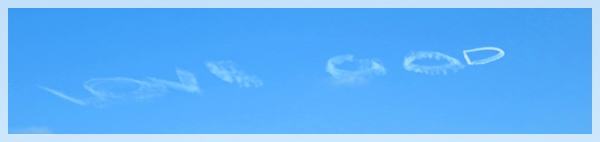
skywriting - love godJesus replied, “‘You must love the Lord your God with all your heart, all your soul, and all your mind.’ This is the first and greatest commandment. A second is equally important: ‘Love your neighbor as yourself.’ The entire law and all the demands of the prophets are based on these two commandments.” [Matthew 22:37-38 (NLT)]

After a lovely walk in the park, I looked up in the sky and saw a skywriter busy at work. The word “love” was starting to fade in the sky and, thinking a marriage proposal was in the works, I thought the pilot needed to work faster to get his message written. Curious, I waited to see what came next and was surprised to see the word “God” written in pale white smoke before the pilot flew off.

“Love God” – that’s the first and greatest commandment and we are to love God with all of our heart, soul and mind. In other words, love Him with our entire being: our passions, prayers, thoughts, words, voices, skills, desires, reactions, appearance, finances, strength, desires, relationships, and possessions. With no punctuation, however, that wasn’t necessarily what was meant. Rather than the command “Love God!” those little two words in the sky could have been more like the closing and signature line to a letter, card, or love note: “Love, God.” Indeed, the sunny day had been a beautiful gift sent from Him.

Although God sends us love notes all of the time, they’re usually not done in skywriting on a blue sky day. A rainbow, the symbol of God’s covenant with His creatures to never again send an all-destructive flood, is one of His reassuring love notes reminding us that His love shines through all the storms of life. Rainbows, beautiful days, magnificent sunsets, butterflies, even the aroma of spring lilacs—all can say “Love, God” to us. Today, when I opened my email, I realized God sends His love another way—in the encouraging words and prayers of a Christian friend. Having mentioned my heavy heart for a loved one, she immediately responded with encouraging words and by lifting us both in prayer. The email may have come from her address, but it bore His signature: “Love, God.”

In church Sunday, I turned to a stranger and told her how beautifully her daughter had sung during the teen led worship service. She welcomed those words with such enthusiasm that you would have thought I’d offered her girl a recording contract. Telling me how thrilled her daughter would be to hear the compliment, she added that the teen had just been cut from a choral group and badly needed reassurance. I spoke the words but they came from one of His nudges and were signed “Love, God.” In the many ways we share God’s love, we fulfill the second, equally important commandment given to us: to love our neighbors as ourselves.

“Love God!” or “Love, God” – in this case, the punctuation makes no difference. Each day brings opportunities to love and honor God by being one of His love notes with our prayers, an encouraging word, a quick text or email, a warm touch, a hand-written note, extra patience, a friendly smile or a helping hand. It is in the love we show to one another that we can fulfill both of His commands at once.

All who declare that Jesus is the Son of God have God living in them, and they live in God. We know how much God loves us, and we have put our trust in his love. God is love, and all who live in love live in God, and God lives in them. [1 John 4:15-16 (NLT)]

Copyright ©2018 jsjdevotions. All rights reserved.

LEAVING THE COMFORT ZONE

snake river raftingHe said, “That’s what I mean: Risk your life and get more than you ever dreamed of. Play it safe and end up holding the bag.” [Luke 19:26 (MSG)]
If I am never tempted, and cannot even imagine myself being tempted, to gamble, this does not mean that I am better than those who are. The timidity and pessimism which exempt me from that temptation themselves tempt me to draw back from those risks and adventures which every man ought to take. [From “Reflections on the Psalms” by C.S. Lewis]

We were accompanied by two grandchildren, ages fifteen and eighteen, during part of our trip west. When my husband mentioned taking them on a raft trip, I pictured a scenic float down the Snake River and readily agreed. What got booked, however, was a white water adventure. Not a thrill seeker, adrenaline inducing adventures are not my thing. I was not happy about the scheduled activity and began thinking of ways to gracefully bow out of it. By coincidence (or what I call God-incidence), the above quote by C. S Lewis arrived in my email. I realized that my fear of stepping out of my rather narrow comfort zone was threatening to keep me from sharing this once-in-a-lifetime experience with my precious grands. Lewis’ words (and some much needed prayer) convinced me that this was one adventure I should not miss.

Prayer got me in the raft and I bravely paddled through the rapids. Even after we tipped and lost six of the eight passengers on the third set of rapids, witnessing the grins on the kids’ faces as they were pulled back into the raft made both the dunking and the adrenaline spike worth it. All’s well that ends well and, in spite of the soaking in the rapids, the rafting wasn’t nearly as terrifying as I’d imagined. When asked to name the highlight of their twelve days with us, our grands both mentioned the raft trip—and to think I nearly missed sharing that experience with them! The pictures taken from the photographer’s spot on shore would not have captured their smiles and whoops of delight at the rapids or the thrill of the ride!

While a certain amount of caution is wise, as C.S. Lewis pointed out, there are certain risks and adventures that none of us should miss. Timidity, pessimism, faint-heartedness, fear, and anxiety can keep us from unsafe behavior like drugs, gambling, or adultery but they shouldn’t make us retreat “from those risks and adventures which every man [and woman] ought to take.” Consider what they would have missed if Peter had allowed fear to keep him from stepping out of the boat onto the water, if David had allowed faint-heartedness to keep him from facing Goliath, or if Moses and Gideon had allowed their pessimism to prevent them from accepting the tasks given them by God.

God invites us to participate in world-changing adventures that probably have nothing to do with white water rafting. We mustn’t allow a reticence to step out of our comfort zones prevent us from accepting His invitation to go on that journey. While the adventure may involve an element of risk, the rewards will be well worth it!

Summing it all up, friends, I’d say you’ll do best by filling your minds and meditating on things true, noble, reputable, authentic, compelling, gracious—the best, not the worst; the beautiful, not the ugly; things to praise, not things to curse. Put into practice what you learned from me, what you heard and saw and realized. Do that, and God, who makes everything work together, will work you into his most excellent harmonies. … Whatever I have, wherever I am, I can make it through anything in the One who makes me who I am. [Philippians 4:8-9,13 (MSG)]

Copyright ©2018 jsjdevotions. All rights reserved.

UNIMAGINABLE  BUT TRUE

Then the rich man said, “O Father Abraham, then please send him to my father’s home—for I have five brothers—to warn them about this place of torment lest they come here when they die.” But Abraham said, “The Scriptures have warned them again and again. Your brothers can read them any time they want to.” The rich man replied, “No, Father Abraham, they won’t bother to read them. But if someone is sent to them from the dead, then they will turn from their sins.” But Abraham said, “If they won’t listen to Moses and the prophets, they won’t listen even though someone rises from the dead.” [Luke 16:27-31 (TLB)]

A land of contradictions, a spectacular pageant, a world incomprehensible…a wonderful gift to men from a benign God—all this and more. [Olin Wheeler, 1914]

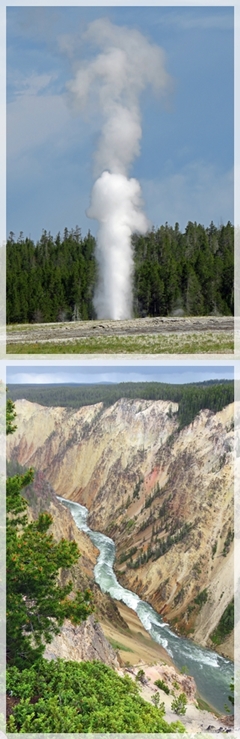
lion geyser - grand canyon of yellowstone

Although Native Americans have existed in the Yellowstone area for as long as 11,000 years, it took three major expeditions before the American public finally believed that the wonders in what is now Yellowstone National Park actually existed. The earlier descriptions of “fire and brimstone,” huge waterfalls, exploding geysers, boiling mud pots and other strange features of the region were met with unbelief until William Jackson’s photographs and Thomas Moran’s paintings from their 1871 Yellowstone expedition were presented to Congress. Once people had visual proof of the area’s bizarre geothermal wonders, they finally believed and Yellowstone became our nation’s first national park.

Indeed, having recently toured this park that sits on atop of the largest super-volcano in North America, I can understand how unbelievable those first mountain men’s stories must have seemed. In my wildest dreams, I couldn’t have imagined either the beauty or the strangeness of Yellowstone—colored travertine terraces, mud volcanos, steaming caves, a 24-mile long canyon, over 200 waterfalls, and more than 10,000 geysers and hot springs. Other worldly, it is something that truly must be seen to be believed.

Jesus told the Pharisees a parable about two men: the unrighteous rich man who died and went to a place of torment and the beggar Lazarus who died and went to a heavenly banquet. The rich man wanted to send Lazarus back to warn his brothers to change their ways. His request was denied since, like him, his brothers had ignored the warnings found in the Law and the Prophets so they wouldn’t be convinced by someone returning from the dead. Indeed, even though Jesus did return from the dead, there are many who do not believe.

We often wonder what heaven and/or hell will be like. Jesus didn’t mince any words when he spoke of the final judgment and it doesn’t sound pleasant. When the Apostle John was given a glimpse of heaven, his words in Revelation seem almost as incomprehensible to us as the words the mountain men used to describe Yellowstone’s bubbling mud pots and hissing fumaroles were to nineteenth century Americans. Father Abraham didn’t send back Lazarus and no one is going to return from death with photographs or paintings to prove what happens when we take our last breath.

Words can’t adequately describe Yellowstone and the few Biblical descriptions of both heaven and hell don’t do them justice, either. Nevertheless, like the rich man’s brothers, we have all the information we need in Scripture. As the American public learned in 1871, just because we can’t imagine something doesn’t mean it isn’t there!

Just as in this story the thistles are separated and burned, so shall it be at the end of the world: I will send my angels, and they will separate out of the Kingdom every temptation and all who are evil, and throw them into the furnace and burn them. There shall be weeping and gnashing of teeth. Then the godly shall shine as the sun in their Father’s Kingdom. Let those with ears, listen! [Matthew 13:40-43 (TLB)]

Copyright ©2018 jsjdevotions. All rights reserved.