
Then I will sprinkle clean water on you, and you will be clean. Your filth will be washed away, and you will no longer worship idols. And I will give you a new heart, and I will put a new spirit in you. I will take out your stony, stubborn heart and give you a tender, responsive heart. And I will put my Spirit in you so that you will follow my decrees and be careful to obey my regulations. [Ezekiel 36:25-27 (NLT)]
 When we think of the Pharisees, we usually think of their hypocrisy and self-righteousness but they started out with good motives. Like us, they simply wanted to avoid sin. I have no doubt that some were well meaning, with high standards and pure motives. Since Jesus was teaching in the Temple, it was only right that these interpreters of the law would want to examine His teachings.
The Pharisee Nicodemus came to visit Jesus one night. Since Jesus seemed to spend his days surrounded by a crowd, the dark of night may have been the only time the Pharisee could meet one-on-one with the rabbi. On the other hand, perhaps he was afraid that others might see him talking to this teacher who challenged the behavior and beliefs of his sect. Nicodemus may have come as a seeker of truth or, possibly, as a spy who was hoping to catch Jesus in some sort of blasphemy. We don’t know his motives, only his questions, the most famous of which was, “How can an old man go back into his mother’s womb and be born again?”
When Jesus speaks of being born of water and the Spirit, this concept should not have been new to a scholar like Nicodemus. Jesus probably was referencing the above words found in Ezekiel 36 and the Pharisee should have been familiar with them. Yet, the man did not seem to understand that the Messiah would bring spiritual cleansing and a new heart—a new nature—to the people. I can imagine Jesus’s frustration as He rebuked the scholar for not recognizing that Scripture taught the necessity of a new birth by the Spirit. Their conversation ends with Jesus speaking of God’s light and people preferring darkness to light. Still not understanding, Nicodemus leaves in the darkness both of night and of spirit.
The next time we hear of Nicodemus, he’s in a meeting with the Sanhedrin. The Temple guards had been sent to arrest Jesus but, amazed at His teachings and unable to find any cause, they come back empty-handed. As the Pharisees condemn and curse the crowd following Jesus, Nicodemus speaks up: “Is it legal to convict a man before he is given a hearing?” [John 7:51] Could it be that Nicodemus reread the Messianic prophecies and was beginning to understand the meaning of Jesus’s words?
The last time we meet Nicodemus, he is with Joseph of Arimathea. A member of the Sanhedrin and Nicodemus’s friend, Joseph was probably a Pharisee; yet we read that he also was a secret disciple of Jesus. It was Joseph, not the disciples, who asked Pilate for permission to take down Jesus’s body and it was his tomb that became the brief resting place for Christ’s body. Nicodemus brought seventy-five pounds of myrrh and aloe with which he and Joseph prepared the Lord’s body for burial. No longer secret believers, it would seem that both Nicodemus and Joseph moved from the darkness into the light.
The Apostle John tells us that other Jewish leaders believed in Jesus but, fearing they’d be expelled from the synagogue, they kept silent. [12:42] Are we secret believers, keeping silent in the shadows or, like Nicodemus and Joseph, Peter and John, will we boldly proclaim our faith?
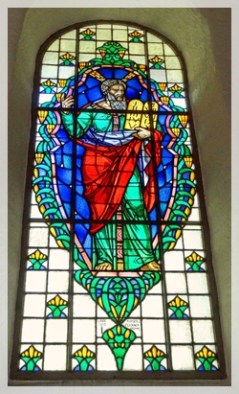 Throughout Scripture, we find Jesus at odds with the Pharisees, one of the most important Jewish sects of the day. Not priests, the Pharisees were laymen (mostly merchants and tradesmen) who zealously followed Mosaic Law, often by adding non-Biblical traditions to it. Considered interpreters of the law, they were known for their austere life style and vast knowledge. The Pharisees accepted the oral explanations and additions of earlier generations to be equally inspired and authoritative as the written words of the Torah (the first five books of the Bible).
 I’ve been reading The Pilgrim’s Progress by John Bunyan. I vaguely remember reading some of this 1678 allegory in senior English class but that time it was in the original Middle English (the language of the King James Bible) and difficult to read. Although I thought myself a Christian, I was unfamiliar with most of the biblical references and concepts. In reality, all I wanted to do was to get through it (along with Beowulf, Canterbury Tales, and Ulysses). With less pressure, more biblical knowledge, and an annotated modern version, I’m actually enjoying the tale of Christian: a man who leaves his home in the City of Destruction in search of the Celestial City.
 As she sang, “Will you let me be your servant, let me be as Christ to you; pray that I may have the grace to let you be my servant too,” I reached over to take my husband’s hand. I contemplated the road we’ve traveled together for over half a century as the soloist continued: “We are pilgrims on a journey, we are trav’lers on the road; We are here to help each other walk the mile and bear the load.” As I listened to the rest of Richard Guillard’s beautiful song, I thought it was the perfect choice for a wedding.
 We know that within a few days of the angel’s visit that Mary went to her cousin Elizabeth’s home, but what of those first few days after the annunciation? Did Mary tell anyone or did she wait until she’d seen proof of Elizabeth’s pregnancy before she truly believed that she, too, was with child? Did she tell Joseph immediately or wait until she returned to Nazareth three months later?
 Knowing it was important for both the leaders and the people to be reminded of their rights and duties, Moses instructed the people that every seven years the Book of the Law was to be publicly read to the entire nation (including children and foreigners). This reading was to be done following the Feast of Shelters during the Sabbath year.
