ADMIT IT

The Pharisee stood by himself and prayed: “God, I thank you that I am not like other people—robbers, evildoers, adulterers—or even like this tax collector. I fast twice a week and give a tenth of all I get.” But the tax collector stood at a distance. He would not even look up to heaven, but beat his breast and said, “God, have mercy on me, a sinner.” [Luke 18:11-13 (NIV)]

The man who is seriously convinced that he deserves to go to hell is not likely to go there, while the man who believes that he is worthy of heaven will certainly never enter that blessed place. [A.W. Tozer]

snowy egretA.W. Tozer’s words remind me of Jesus’s parable about the Pharisee and tax collector who prayed in the Temple. Acting as if God should feel grateful to receive his prayers, the Pharisee didn’t understand that he should be grateful that God listens! Rather than express thanks for God’s righteousness, power and majesty, the proud Pharisee thanked God for his own righteousness and then listed his virtues! Although it wasn’t required, he fasted twice weekly and was so fastidious about tithing that he tithed not just what was earned but also anything he acquired. If he were unsure that a farmer had tithed his produce, the Pharisee would tithe it again! Standing before God and proclaiming both his good works and his contempt for others (like the tax collector), the Pharisee is a perfect illustration of a man “who believes that he is worthy of heaven.” How wrong he was! Perhaps the Pharisee’s refusal to recognize his own self-righteousness was his biggest sin of all.

On the other hand, we have the tax collector. Standing apart, beating his breast in repentance, and feeling so contemptible that he couldn’t even look up, we find a man who clearly knew he was a sinner. Recognizing exactly who and what he was, the tax collector humbly came before God and, with a repentant heart, admitted his sin and begged for mercy.

When Jesus told this parable, He must have shocked his listeners. The Pharisee was considered the epitome of pious living and the tax collector of sinfulness. Jesus turned that comparison upside down when He said that it was the humble tax collector, not the Pharisee, who went home with his sins forgiven.

It’s only when we’re sick that we see the need for a physician and only when we see our sinfulness that we see the need for a Savior. We must approach God as did the tax collector: by understanding our wickedness and the need for His mercy. The Pharisee didn’t understand that nobody deserves salvation and it can’t be secured by fasting, tithing or other good deeds. It is out of God’s love for his children that He generously saves those who repent of their sins. It is only when we know we’re sinners, deserving of hell and undeserving of God’s grace, that we are likely to find our way to heaven.

Don’t say that a loving God is going to send you to hell – He’s not. The thing that’s going to send you to hell is that you’re a sinner and you don’t want to admit it. [J. Vernon McGee]

I tell you that this man, rather than the other, went home justified before God. For all those who exalt themselves will be humbled, and those who humble themselves will be exalted. [Luke 18:14 (NIV)]

Copyright ©2020 jsjdevotions. All rights reserved.

THE FEAST OF EPIPHANY – JANUARY 6

Jesus was born in Bethlehem in Judea, during the reign of King Herod. About that time some wise men from eastern lands arrived in Jerusalem, asking, “Where is the newborn king of the Jews? We saw his star as it rose, and we have come to worship him.” [Matthew 2:1-2 (NLT)]

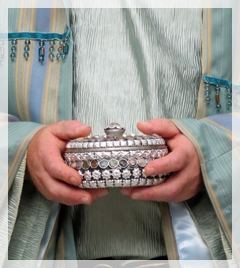
magi

Assuming you don’t worship in the Orthodox Church, today is known as the Feast of Three Kings or Epiphany. Since the church year for Orthodox Christians follows the Julian calendar, tonight is their Christmas Eve and Epiphany won’t be until January 19th. For those of us using the Gregorian calendar, however, today often is the day the Christmas tree is taken down, the nativity sets boxed up, and the holiday decorations are tucked away until next December.

Epiphany, however, isn’t about decorations or eating the last of the Christmas cookies. The word “epiphany” means to show, make known, or reveal. Those “ah-ha” moments when we have a flash of insight or understanding are often called epiphanies. (I frequently prayed for epiphanies when studying algebra and geometry.) When the travelers to Emmaus (in the gospel of John) suddenly recognized the resurrected Jesus, they had an epiphany as did Saul when Jesus revealed Himself on the road to Damascus. Today’s Epiphany celebration is about the coming of the wise men with gifts to visit the Christ child. Their visit revealed Jesus to the world as Lord and King, not just to the Jews, but also to the Gentiles.

When the long awaited Messiah was born, angels sent the birth announcement to lowly shepherds rather than religious leaders. The king was born, not in a palace, but in a stable. The newspaper didn’t list His birth but a star led the way. The baby gifts were brought not by Jews but by Gentiles: pagans who traveled from Persia, Arabia or India for several months to find this newborn king. They didn’t present the family with typical baby gifts and their offerings certainly weren’t what a poor carpenter’s family would expect to receive. Their offerings, however, were standard gifts to honor a king or deity in the ancient world. Gold, the metal of royalty, symbolized His kingship and acknowledged His right to rule. Frankincense, used in worship and the anointing of priests, symbolized the role Jesus would take as our High Priest. Myrrh, a spice used for embalming, was an odd gift for a child but the magi were familiar with the prophecies that told of the Messiah’s suffering. This was the perfect offering for the One who would be a sacrifice. Perhaps the greatest gift the magi brought was the one that didn’t come in a box: their worship!

As we put away the last of the holiday decorations, let’s not put away the message of Christmas. May the living Christ remain in our hearts: our King, God, and Savior—the One who lived and died so that we might die and live.

Born a king on Bethlehem’s plain, Gold I bring to crown Him again,
King forever, ceasing never Over us all to reign. …
Frankincense to offer have I. Incense owns a Deity nigh.
Prayer and praising all men raising, Worship Him, God on high. …
Myrrh is mine: Its bitter perfume Breaths a life of gathering gloom.
Sorrowing, sighing, bleeding dying, Sealed in the stone-cold tomb.
[“We Three Kings” by John Henry Hopkins, Jr.]

They entered the house and saw the child with his mother, Mary, and they bowed down and worshiped him. Then they opened their treasure chests and gave him gifts of gold, frankincense, and myrrh. [Matthew 2:11 (NLT)]

Copyright ©2020 jsjdevotions. All rights reserved.

PRAY, SEND, GO

The Lord now chose seventy-two other disciples and sent them ahead in pairs to all the towns and places he planned to visit. These were his instructions to them: “The harvest is great, but the workers are few. So pray to the Lord who is in charge of the harvest; ask him to send more workers into his fields. Now go.” [Luke 10:1-3a (NLT)]

daisyThe story is told of a minister who made this announcement just before passing out the offering plates: “The good news is that God has all of the funds necessary to fund His church’s ministry.” As the congregation started to return their checks and cash to their wallets, the pastor added, “But the bad news is that it’s still in our pockets!”
Having been called by the Holy Spirit to serve, a young woman in our church shared her plans to become a missionary. Just as being a teacher, nurse, plumber or electrician is a career choice, so is being a missionary. Unlike those other careers, however, as a missionary, she has to provide the funds for her paycheck! Like everyone else, missionaries need a salary and insurance along with money for travel, ministry tools, professional support, and even retirement. A love for Jesus and a desire to obey His call won’t put food on the table or pay rent!

When Jesus told his disciples to count the cost of discipleship, He reminded them that builders don’t start construction without calculating the cost and being sure they have enough money to finish the project. This woman is doing that by working with an evangelical Christian mission organization to determine her funding needs. This charitable agency requires her to have a full year’s salary raised or pledged before she goes abroad. Technically, she will be their employee, but the monthly checks she receives from them will come from the funds that she has raised, and she is actively seeking financial partners for her ministry. Perhaps a missionary’s biggest obstacle is raising the funds needed to go out and share God’s word.

We rarely think about the business side of ministry and certainly not of Jesus and money. Nevertheless, in their three years together, Jesus and His disciples had financial needs. After all, they’d quit their jobs to follow the Lord. I suppose, miracle worker that He was, Jesus easily could have multiplied their few provisions or had Peter catch fish with gold coins in their mouths every morning, but that’s not how He did things. Scripture tells us they all shared a common purse and that Judas was in charge of it. From where did that money come? Luke tells us that Mary Magdalene, Joanna, Susanna, and “many others” provided for them out of their financial resources. When Jesus sent seventy-two of his followers out into the countryside, He told them to take nothing with them. They were to live on the kindheartedness of those they visited. Even Jesus depended on the generosity of others; he rode a borrowed donkey into Jerusalem and was buried in a donated tomb. Generosity fueled by the faith of His followers is how Jesus started His ministry and how we must continue it.

When Jesus sent out those seventy-two, He used three verbs: go, pray, and send. While all of us are called to share the gospel message, not all of us are called to go out and do missions work as a career. All of us, however, can pray both for more workers and for their funding. Some of us (perhaps many) also are capable of sending those workers to the harvest. The good news is that we have the funds to further spread Jesus’s message by financing those who do go. The bad news, however, is that the funds probably are still in our pockets!

“Everyone who calls on the name of the Lord will be saved.” But how can they call on him to save them unless they believe in him? And how can they believe in him if they have never heard about him? And how can they hear about him unless someone tells them? And how will anyone go and tell them without being sent? [Romans 10:13-15a (NLT)]

Copyright ©2020 jsjdevotions. All rights reserved.

DEFYING NATURE

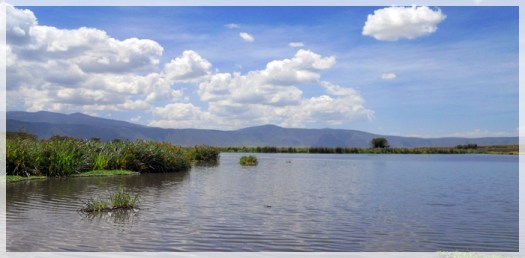
ngorongoro crater

At the blast of your breath, the waters piled up! The surging waters stood straight like a wall; in the heart of the sea the deep waters became hard. … The finest of Pharaoh’s officers are drowned in the Red Sea. The deep waters gushed over them; they sank to the bottom like a stone. [Exodus 15:8,4-5 (NLT)]

Skeptics love questioning the miracle of the Red Sea. Either they provide a natural explanation or deny it ever happened. Unfortunately, sometimes we even find believers doing the same thing. A miracle is usually defined as something that violates the laws of nature, but God wrote those laws! “Miracles are not contrary to nature,” said Augustine, “but only contrary to what we know about nature.” As Christians, we base our faith on a miracle—the resurrection of Jesus—so a belief in God’s powerful ability to defy nature’s laws is essential to our faith.

How can the waters part for the Israelites and then come surging down on the pursuing Egyptians? For decades, scientists have tried to find a natural explanation using various computer models. In spite of Moses giving a good description of where their crossing occurred, land and water are not static and the topography of the area has shifted over 3,500 years. Not knowing exactly where it happened, many suggest that, instead of it being the Red Sea, the crossing actually took place further north in a shallow lake called the Reed Sea. They explain that a wind temporarily drained this shallow marshy area just enough to allow the Israelites to safely cross. The Hebrew word used to describe the seabed was yahbashah which means dry land, not the muck or mud of a damp marsh. Moreover, while the Egyptians with their heavy chariots might have gotten bogged down in the mire, that can’t explain how an entire army was drowned in a few feet of water.

Other skeptics have argued that a volcano or earthquake north of Egypt produced a tidal wave or tsunami that parted the Red Sea. A tidal wave happens suddenly which hardly supports Moses’ description of the gradual retreat of the waters during the night or the fortuitous return of the waters in time to drown the Egyptians.

Scientists also have estimated that a steady 63 mph wind from the east could have swept the water back to the western shore to create a land bridge. Winds of just 45 mph make driving hazardous and can knock down a person weighing 100 pounds. A wind of 63 mph would make the crossing nearly impossible. Moreover, Moses described two walls of water, one on each side. I’m not a scientist but two opposing walls of water would seem to imply winds blowing in opposite directions and I can’t see how anyone could get anywhere in that kind of crosswind! When considering the width of the path required for about two million Israelites (along with sheep, goats, and cattle) to cross a seabed in just part of one night, it needed to be at least one mile wide. It’s hard to believe that any natural wind could do that.

Even if some of these explanations are partially or totally correct, there is no explanation for what would seem to be the most amazing coincidence in all of history: that the Israelites arrived at some body of water at the exact moment a tsunami or gale force winds occurred that caused the waters to recede, that the land remained dry just long enough for them to cross, and that the waters gushed back at precisely the moment the Egyptians were in the seabed! That so-called coincidence would require the miraculous power of Almighty God!

Scientists admit they can’t explain everything but even a valid scientific or medical explanation doesn’t negate a belief in the hand of God. While her doctors might say that Pearl’s recovery from metastasized cancer is a result of oncology advances, they originally thought she’d not live a year. While John’s doctors could say his ability to walk after having his pelvis crushed is the result of their skills as orthopedic surgeons, they initially thought he wouldn’t live, let alone walk! I know how thoroughly Pearl’s body was attacked by cancer and I’ve seen John’s x-rays; I have no doubt that without our prayers and God’s intervention, modern medicine would have failed them both. In spite of a medical explanation for their recoveries, they are nothing short of miraculous.

Skeptics and atheists have trouble believing in miracles because a belief in miracles necessitates believing in the hand of someone or something that can cause them: God. I’ve seen His wonderful work firsthand; our God is a God of miracles and that’s explanation enough for me!

I will meditate on your majestic, glorious splendor and your wonderful miracles. [Psalm 145:5 (NLT)]

He does great things too marvelous to understand. He performs countless miracles. [Job 9:10 (NLT)]

Copyright ©2018 jsjdevotions. All rights reserved.

REMEMBER

We were crushed and overwhelmed beyond our ability to endure, and we thought we would never live through it. In fact, we expected to die. But as a result, we stopped relying on ourselves and learned to rely only on God, who raises the dead. And he did rescue us from mortal danger, and he will rescue us again. We have placed our confidence in him, and he will continue to rescue us. [2 Corinthians 1:8-10 (NLT)]

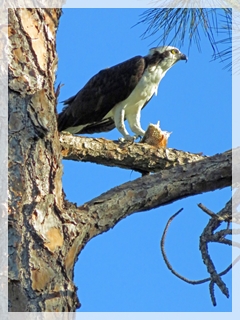
osprey600 war chariots and at least 1,200 soldiers were fast approaching and the Israelites were trapped between the mountains and the Red Sea. Panicking, they immediately blamed Moses for their predicament. No longer regarding Moses as the man who freed them from years of suffering slavery, he was now the fool who’d led them to certain death in the wilderness. In despair, the Israelites second-guessed their decision to leave Egypt. Facing such a formidable army and sure they were to die, the miseries of slavery now appealed to them. Ungrateful, unarmed, on foot, and with no place to turn, they lost heart. Failing to recall God’s powerful hand in releasing them from Pharaoh’s tyranny just a few weeks earlier, they immediately conceded defeat.
Have you ever felt like the Israelites: between a rock and a hard place, with no place to turn? When that happens, we usually do what they did: panic, find someone to blame, lose heart and want to quit because the circumstances seem greater than our God. Assuring the people that God would fight for them, Moses said, “Watch the Lord rescue you today.” I’m not sure he had any idea how the Lord planned on doing that but Moses trusted the God he knew for a solution he didn’t know.

Following God’s instructions, Moses raised his hand over the waters, the Red Sea parted as blowing winds turned the sea into dry land, and the Israelites walked across the seabed. Although we know that all the Israelites safely made it across, they didn’t know that’s what would happen! Can you imagine the faith it took when the first of them stepped onto the dry seabed with a wall of water positioned on each side? Were they fearful the waves would come rushing at them without warning? Did they literally run for their lives as they crossed? We know the rest of the story: Pharaoh and his army gave chase, their chariots got stuck, Moses raised his hand once again, the waters surged over the Egyptians and none of them survived.

Seeing God’s tremendous power, the Israelites were filled with awe and again put their faith in Moses and the Lord. What a great ending to their story, but we know it doesn’t end there. That won’t be the last time they complain, the last time they think slavery in Egypt a better option than freedom in the Promised Land, the last time they rebel against Moses’ leadership, or the last time they stop having faith in the Lord. Sadly, it won’t be the last time they forget God’s faithfulness, power and might!

Sometimes God brings us to what seems to be an impossible situation: to that spot between a rock and a hard place or an army and the deep blue sea. Those barriers are put before us so that we have nowhere to turn but to God. While He may not have parted the Red Sea for us, there have been many times that He’s led us safely through a whole sea of troubles. Unlike the Israelites, may we never forget His power and faithfulness in those trying times. Let us always be willing to trust our unknown future to our known God.

And I said, “This is my fate; the Most High has turned his hand against me.” But then I recall all you have done, O Lord; I remember your wonderful deeds of long ago. They are constantly in my thoughts. I cannot stop thinking about your mighty works. [Psalm 77:10-12 (NLT)]

Copyright ©2019 jsjdevotions. All rights reserved.

THE CRÈCHE AND THE CROSS

For this is how God loved the world: He gave his one and only Son, so that everyone who believes in him will not perish but have eternal life. God sent his Son into the world not to judge the world, but to save the world through him. [John 3 16-17 (NLT)]

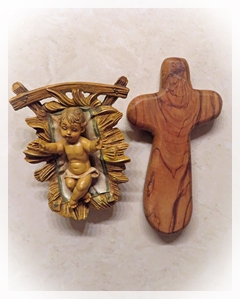
creche and crossPew Research reports that while 90% of Americans celebrate Christmas, more than half of them celebrate it only as a cultural holiday! While they’ll decorate their house with lights and wreaths, trim a tree, send cards, and exchange gifts, Christmas is just an excuse for good food, parties, family gatherings, and presents. While they’re not indifferent to Santa, gifts, merriment, or decorations, like the people of 1st century Palestine, they are indifferent to the Christ child. The shepherds saw the star and sought the babe in the manger and a caravan from the East brought Him gifts, but we don’t read of any townspeople visiting Joseph and Mary. What of the priests and scribes who told Herod where the Messiah would be born? They knew the prophecies but didn’t join the Magi in their quest to find the One who would fulfill those prophecies. Lowly shepherds and men from a faraway land recognized Jesus as the Messiah but most of God’s chosen people ignored the greatest event in all of history.

Some people react to Christmas with antipathy; like Herod, they hate its message. Rather than join the magi and seek the newborn King of the Jews, the enraged Herod slaughtered all of the male babies around Bethlehem in an attempt to kill the king! The “bah humbuggers” are like the atheist who erected a 10-foot 300-pound pentagram just 20-feet from a nativity scene in a Boca Raton park in 2016. Non-believers don’t want a King who might knock them off their pedestals any more than Herod wanted one who could knock him off his throne. They’re uncomfortable with the concepts of sin, salvation, love, sacrifice, obedience and forgiveness that surround Christmas. Then again, maybe they dislike this day simply because Christmas reminds them of the emptiness of their lives.

Some people respond to Christmas as did the angels, shepherds, magi, Simeon, and Anna: with worship. Tonight and tomorrow, people around the world will raise their voices in praise and thanksgiving, light candles, sing carols, kneel in prayer, lift their hands in worship, and share bread and wine at communion. Some will come and adore Him tonight but won’t return to church until next Christmas. But others will ponder the events of this night, as did Mary. They will allow the Christ child to enter into their hearts and lives and affect their every thought, word, and action for the rest of their lives. After extinguishing the Christmas Eve candles, they will continue to let their lights shine all year long. They are the ones who know that God came as a baby and lay in a manger so that He could suffer, die on the cross as a common criminal, and pay the penalty for mankind’s sins. They know that the crèche is meaningless without the cross!

Let us behold, the Lamb of God who takes away the sin of the world!

But Mary kept all these things in her heart and thought about them often. The shepherds went back to their flocks, glorifying and praising God for all they had heard and seen. It was just as the angel had told them. [Luke 2:19b-20 (NLT)]

Copyright ©2019 jsjdevotions. All rights reserved.