
Saul, also known as Paul, was filled with the Holy Spirit, and he looked the sorcerer in the eye. … Paul and his companions then left Paphos by ship for Pamphylia, landing at the port town of Perga. [Acts 13:9,13 (NLT)]
 It’s a common misconception that Saul became known as Paul when Jesus transformed the Christian hater into a Christ follower on the road to Damascus. Saul, however, was always named Paul. As a Roman citizen, he would have had a three part Roman name. While we don’t know the first two parts, the third (the cognomen) and commonly used name was Paullus (which becomes Paul in English). As devout Jews, however, his parents also would have given him a Hebrew name. They named him Saul, a good name for a boy from the tribe of Benjamin (King Saul’s tribe). Understandably, when among Jews, Saul would have used his Hebrew name and Luke, the writer of Acts, refers to him as Saul until Acts 13, about fifteen years after his conversion. Saul (and Luke) started using his Roman/Gentile name of Paul around the time he moved further into the Roman Empire on his first missionary journey. As he moved into Gentile territory, Paul’s Roman name was more appropriate. The Apostle was not alone in having both a Roman and Hebrew name. One of the candidates to replace Judas had two Jewish names, Joseph and Barsabbas, along with the Roman one of Justus.
Although Paul’s name was given to him by his parents, sometimes a new name was forced upon someone. When Pharaoh put Joseph in charge of the land, he gave his new second-in-command an Egyptian wife and the Egyptian name of Zaphenath-paneah. In honor of Babylonian gods, King Nebuchadnezzar gave Daniel, Hananiah, Mishael, and Azariah the names of Belteshazzar, Shadrach, Meshach, and Abednego. Sometimes, it was circumstances that changed a person’s name. When the widowed Naomi returned to Bethlehem, the grief-stricken woman called herself called Mara, meaning “bitter.” After destroying the altar of Baal and cutting down the Asherah pole next to it, Gideon became known as Jerub-baal, which meant “Let Baal defend himself.”
In some cases, it was God who did the name changing. These name changes often described someone’s character or calling. In Genesis, Abram (“exalted father”) became Abraham (“father of a multitude”) and Jacob, the “heel-catcher” or “deceiver,” became Israel, “God’s fighter.” Jesus changed Simon’s name (meaning “he has heard”) to Cephas, the Aramaic word for “rock.” Since the New Testament was written in Greek, we know Cephas by the name of Peter, also meaning “rock.” Although Peter wasn’t rock solid during Jesus’s life, following the resurrection, he fulfilled the promise of his name by becoming the rock upon which the new church was built.
In actuality, most of us go by more than one name. My personal favorite is the one my grands use for me: “Nonnie.” Some people say they don’t care what they’re called, as long as they’re called for dinner. As for me, I don’t care what you call me as long as God has my name written in His Book of Life!
All who are victorious will be clothed in white. I will never erase their names from the Book of Life, but I will announce before my Father and his angels that they are mine. … And anyone whose name was not found recorded in the Book of Life was thrown into the lake of fire. [Revelation 3:5,20:15 (NLT)]
Copyright ©2019 jsjdevotions. All rights reserved.
 In writing about change yesterday, I couldn’t help but think of the Apostle Paul. He knew firsthand of God’s transforming power. When we first meet Paul, he’s going by his Hebrew name of Saul and looking on as Stephen (the first of Christ’s followers to give his life for the gospel) is stoned to death.
 The fellow looked at me and apologized: “I’m sorry; I know I can be a real #@!%* at times!” I debated as to my response. While the polite thing would have been, “It’s OK, I understand,” that wouldn’t have been honest. His behavior wasn’t OK. We’re told in Proverbs 27:6 that wounds from a friend are better than an enemy’s kisses and, since he’d left the door wide open, I agreed with him. “I know you are. But you don’t have to be,” I gently added. “It’s your choice!” Apparently preferring an enemy’s kisses to my honest assessment, he shrugged his shoulders and left the room.
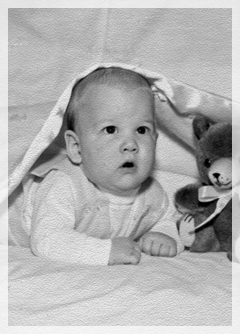 On the night He was betrayed, Jesus forewarned the disciples of the grief and fear they’d encounter in the days ahead. In his short parable about labor and delivery, Jesus prepared the remaining eleven disciples for the emotions they would encounter over the next three days: their anguish and despair as He hung upon the cross, died, and was buried. For His followers, those three days would feel like an eternity of hopelessness. But, as happens when a woman beholds her newborn baby after hours of painful labor, their despair would turn to joy when they saw the resurrected Christ!
 Martin Luther once compared human nature to a drunkard who, after falling off the left side of his horse, resolves not to make same mistake again. He remounts and then, overreacting, leans to the right side of his saddle only to fall off again. His point is that just because one side is wrong, the opposite extreme isn’t necessarily correct!
 In January, there will be an Empty Bowls event in our town. Attendees will purchase a bowl and then fill it with soup and bread donated by local restaurants. The money raised will help feed the more than 36,000 food insecure people in our county. To make that event possible, 4,500 one-of-a-kind bowls are made by local potters. Then, with the help of local volunteers, the bowls are painted and fired. Recently, several of us from church gathered to decorate some of those bowls. While we painted, I thought about the potters who made our bowls—how they formed and reformed their creations until they were just right. Varying in shape and size, no two bowls were exactly the same and, by the time they are painted, each will have a personality of its own. When their purchasers are done eating soup from them, they will be put to different uses. The ones embellished with paw prints or bones probably will be used by pets, and the others may be used for popcorn, nuts, cereal, loose change, or even soup!
 Devotions of the Heart