
“Let the children come to me. Don’t stop them! For the Kingdom of God belongs to those who are like these children. I tell you the truth, anyone who doesn’t receive the Kingdom of God like a child will never enter it.” Then he took the children in his arms and placed his hands on their heads and blessed them. [Mark 10:14b-16 (NLT)]
 When we moved to southwest Florida several years ago, everything was new and strange—we didn’t know which farmer’s market had the finest produce, the best routes to avoid traffic, the amenities of each beach, the fun activities available, or where to hike or bike. Rather than be confused and discouraged, we got out the guidebooks and maps and enthusiastically started exploring—churches, parks, theaters, markets, beaches, and museums. Every day became an adventure and, as we got to know our community, we came to love it.
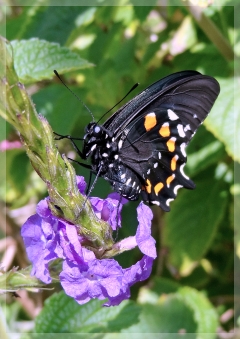
I continue to be amazed at the number of people we meet who’ve lived here for decades or more who haven’t been to the Conservancy, zoo, or free band concerts in the park. They’ve never gone to the county museum or walked the boardwalk through the mangroves, visited the nearby state parks, wandered the old town alleys, or hiked any of the land trust trails. They’ve missed seeing the orchids and butterflies at the Botanic Gardens, the spoonbills at the bird sanctuary, and the giant gingerbread house at the Ritz. Taking the local attractions for granted, many old-time residents have ignored the beauty and opportunities right in their front yard.
It’s not just our surroundings about which we can get jaded; it also can be our faith. While new believers are usually enthusiastic about prayer and Bible study and excited about getting to know Jesus, old believers may get blasé and lax in exercising their faith. Our Bible study can get humdrum, prayer time repetitive, meditation wearisome, and worship unexciting. Familiarity may not breed contempt but it can breed boredom. Jesus, however, is anything but dull and uninspiring
I’ve encouraged my neighbors to look at our town with the fresh eyes of a tourist or newcomer. Perhaps we should do the same with our faith and look at Jesus with the heart and mind of a new believer. Could that be what receiving the Kingdom of God “like a child” means—coming to Jesus with the unbridled enthusiasm of a youngster? Children, like newcomers to town, are fully aware of how little they actually know. Inquisitive and eager to learn, they want to discover all there is to see; they seek so that they can find!
When Mrs. Zebedee asked her boys about their day, I doubt that John and James responded with a bored, “Same old, same old—a big picnic lunch, several healings, and some parables.” Eager to learn more about Jesus, every day was an adventure in faith for them. It can be for us, as well.
If our faith has become lackluster or monotonous, it’s not God’s fault. We’ve just become unaware of His presence, blind to His works, and deaf to His voice. It’s time to open our hearts and minds, renew our acquaintance with Jesus, and experience His glory the way a child or new believer would. We wouldn’t want boredom or indifference to cause us to miss experiencing all that Jesus offers: direction, strength, peace, joy, redemption, reconciliation, forgiveness, salvation, an abundant life today and an eternal life tomorrow.

 Colors have been used to differentiate liturgical seasons since the 4th century and, by the 12th century, Pope Innocent systemized their use in the church. Originally Advent was about penance, prayer and fasting in preparation for baptism so purple (the color associated with sacrifice and repentance from sin) was its liturgical color. Like the Advent wreath, however, liturgical colors are merely traditions and have no basis in Scripture. Most denominations have added more colors to the original five.
 My New York Times newsletter has a section called “What You’re Doing” in which readers share how they’re dealing with the pandemic—everything from dreaming up innovative waffle recipes to sending “karaoke grams” to friends on their birthdays. Today, M.B. wrote that she’d started 2020 with a line-a-day diary. Since March, however, she’d filled the diary with “dire COVID milestones, illness among family and friends, anger at deniers, and mourning for the loss of normal life, vacations, and more.” Tiring of her negativity on Thanksgiving Day, M.B. turned that line-a-day diary into a daily gratitude journal and reported having a positive attitude that will carry her through the pandemic.
 When I was in college, most of the girls in my sorority house played bridge. After watching a few games, newcomers would sit in and learn from the more experienced players as they played. We novices lost a lot of games in the process but, eventually, we became good players. One friend, however, wanted to start as an expert. She sat alone in her room with a deck of cards and a bridge book trying to teach herself. Unwilling to make rookie mistakes, she wouldn’t play a hand until she was a skilled player; that day never came. She wasn’t much different from the people who say they’ll join a gym once they’ve gotten in better shape; rarely does that day come either.
 A suspicious spot was removed at my annual dermatology appointment. When the biopsy indicated cancer, I had Mohs surgery to remove it. In Mohs, the tissue is sliced off in stages and examined by the pathologist to determine if (and where) any cancerous tissue remains. If it does, the surgeon removes the next layer of tissue, the pathologist examines it, and the process continues until no cancer cells remain. While it’s a time-consuming process, Mohs spares healthy tissue while eradicating all of the cancer.
 Devotions of the Heart