
After Jesus said this, he looked toward heaven and prayed: “Father, the hour has come. Glorify your Son, that your Son may glorify you.” [John 17:1 (NIV)]
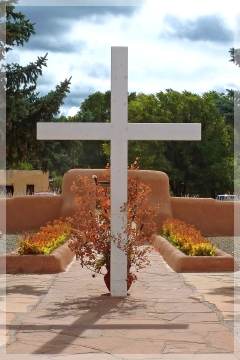 This pandemic may have may have postponed the Olympics but it hasn’t delayed the National Day of Prayer. Today’s observances, however, will look quite different from previous ones. There won’t be any prayer breakfasts or luncheons and large groups won’t assemble in parks, churches or on courthouse steps. Instead, churches will stream their services and religious leaders from across the county will participate in a national broadcast to be aired tonight from 8 to 10 PM ET (see their website or Facebook page for details). Because of the many “virtual” events planned, today’s observance actually could be this day’s largest prayer gathering.
The theme this year is “Pray God’s Glory across the Earth.” Since the Westminster Catechism says, “Man’s chief end is to glorify God, and to enjoy Him forever,” I understand why we’d want to pray God’s glory across the earth. Man was created to give glory to God and this year’s theme probably was chosen long before coronavirus so drastically impacted the lives of people throughout this nation. In all likelihood, prayer resources, promotional materials, and PSAs were finished and distributed by the time we’d heard of COVID-19. I wondered how we can pray God’s glory when our hearts are so broken but that’s precisely what Jesus did on the eve of His death and betrayal. John 17 tells us that Jesus didn’t pray with anxiety, doubt or fear. His prayer focused on the glory of God: the revelation of his character and presence. Jesus’ words show us that the purpose of prayer isn’t for us to get something from God; it is to give God the glory He deserves!
The National Day of Prayer task force asks us to pray today’s prayer together, yet individually, at noon your local time. Please join me today in saying the following prayer. Let us lift our voices as one people and pray God’s glory across the earth!
Lord, we exist to give You glory. We exist because of Your glory, and in Your glory, as our Creator, Redeemer, and Sustainer. We give you thanks and praise for every breath and moment You have given to us. We repent of our sin; for the shameful things we have done against You and for our silence when we did not speak up to proclaim Your Name, profess Your Word, or protect and practice Your will. We ask Your forgiveness.
We pray that the knowledge of the glory of the Lord will spread across our nation and the entire earth as we seek Your Kingdom and righteousness; as we walk in obedience to You, and in humble unity, love one another.
Jesus, the Bible says that You are “the knowledge of the glory of the Lord.” You have taught us to pray, commanded us to love, and commissioned us to share Your gospel of grace. Your glory fills our hearts and families, it overflows into our neighborhoods, workplaces, campuses, churches, entertainment, and media.
We give thanks for our military and ask that Your glory would spread to, and through them as they preserve freedom around the world. We pray for our government, that all of our leaders and laws would be filled with Your glory, that they would magnify Your Holy Word and honor Your will and ways. We pray that Your grace and glory would spread to bring hope to the hopeless, and love where there is hurt and hate.
God, use us as we pray your promise, that “the earth will be filled with the knowledge of the glory of the Lord as the waters cover the sea.” In Jesus Name, Amen! [Kathy Branzell, President, National Day of Prayer Task Force]
 I recently read about Derek Black, a young man who grew up immersed in white nationalism. The heir apparent to the WN movement, by the age of twenty, he’d already created a racist website for children and was co-hosting a national radio show advocating prejudice and hostility toward blacks, Jews, immigrants, and other minorities. During college, Black gradually recognized the ugliness of his beliefs but it wasn’t confrontation, heated debate, or ostracism that led to his transformation; it was the hand of friendship!
 Many of us have friends and relatives whose memories are declining (and some of us may be those people). As my mother-in-law’s memory started failing, she rewrote history with what we called “wishful memories” and “selective forgetting.” Since her memories became rosier and happier as time passed, it really didn’t matter if nearly a century’s worth of memories were accurate or not; they were good ones. Happy to see her enjoying her version of the past, we ignored faulty memories that were of no consequence.
 I know I’m not invulnerable but I never thought of myself as particularly vulnerable until now. Since I am well over 65, I am officially vulnerable to COVID-19, as is my husband; that knowledge, along with the terrible toll being taken by this pandemic, has put me on edge. Knowing that it is just a matter of time before someone I love is taken down by this virus has unnerved me. That my prayer list is lengthening by the day doesn’t make it any easier. Before this, I rarely had been apprehensive about my health or that of my family, uneasy about our finances, or concerned about the family business. I’ve endured my share of trials, sorrow, illness, and uncertainty but this combination of circumstances is the “perfect storm” that has shaken me to my core.
 With each new day feeling like yesterday, we decided to watch the 1993 movie Groundhog Day. In it, the discontented TV weatherman Phil Connors, played by Bill Murray, is trapped in a time loop and keeps reliving February 2. At first, he takes advantage of never having to reap the consequences of his selfish actions but grows tired of his hedonistic life. When the predictability of the day causes boredom, depression, and cynicism to set in, he commits suicide several times—only to wake again and again on the same February 2. Eventually, Phil comes to grips with his situation and decides to make the most of it. Among other things, he learns to to play jazz piano, speak French, memorize the life story of everyone in town, sculpt ice, and master the art of flipping cards into an upturned hat. As he betters himself, he begins to better the lives of the people around him. The time loop eventually ends when the changed man finally gets the day right by caring more about others than himself.
 Yesterday, I wrote about koinonia or what I called the art of Christian community. Writing about Christian fellowship, however, can be easier than actually living in it. Just as a family has a vast array of different personalities, temperaments, and gifts, so does the church. In fact, with our sheltering in place, social distancing, working from home, having children home all day, and parks, playgrounds, gyms, and beaches all closed, some of us might be having more difficulty maintaining a spirit of fellowship with one another in our own homes than in our churches!
 Devotions of the Heart