
He said, … “For I am the Lord who heals you.” [Exodus 15:26b (CSB)]
 For three days, Israel traveled across the desert without finding any water. When they arrived at Marah, the exhausted and thirsty group was disappointed to find the water undrinkable because of its bitterness. When Moses cried out to the Lord, God told him to throw a piece of wood into the water to make it sweet. It was then that God proclaimed His name to be Jehovah Rapha, the “Lord who Heals You.” Jehovah Rapha took the bitter out of the Israelites’ water and made it palatable.
Jehovah Rapha does more than turn bitter water sweet. He can heal any physical ailment. Scripture tells us He made the barren fertile, the blind see, the lame walk, the lepers clean, and even raised people from the dead. While the hands that do the work may be mortal (as were Moses’ when he tossed that wood into the water, Isaiah’s when he applied a poultice to Hezekiah’s head, and a surgeon when he successfully removes a tumor), the healing always comes from God! Jehovah Rapha, however, is more than the Great Physician (and water purifier)!
The Hebrew word rapha means to heal, to cure, to restore or repair. Originating from Arabic and Ethiopic words meaning to darn, stitch together or mend, rapha occurs about sixty-seven times in the Hebrew Scriptures. Rapha conveys the sense of restoring wholeness where destruction, harm, disease, unrest, or confusion have made inroads. It isn’t limited to making foul water drinkable or healing physical ailments. Rapha is used for restoring land, cities, broken hearts and minds, and covenant relationships as well as bodies. Emphasizing that it is the Lord’s choice to fix what has been broken or tainted, the subject of the verb rapha usually is the Lord.
In the true sense of the word, Jehovah Rapha is more than the Great Physician. He’s the tailor who stitches up the tears in the fabric of our lives. He’s the restoration specialist who scrubs out the gunk and mold left from life’s devasting storms and the handyman who fixes what’s no longer working in our lives. Instead of darning socks, He’s the one who weaves together the fibers that hold us together. He’s the mason who rebuilds our fallen walls and the contractor who brings back structural integrity to our crumbling foundation.
Bitterness, anger, shame, fear, depression, loss of faith, and guilt can poison our hearts and take away life. We still may be breathing but we’re dead inside. Just as the God who Heals, can provide healing to our broken bodies here on earth, Jehovah Rapha can take our ailing embittered minds, hearts, and souls and restore them to health. As He did with the water at Marah when he made the unpalatable palatable, Jehovah Rapha can transform the bitter in our lives into something bearable.
Christ is the Good Physician. There is no disease He cannot heal; no sin He cannot remove; no trouble He cannot help. He is the Balm of Gilead, the Great Physician who has never yet failed to heal all the spiritual maladies of every soul that has come unto Him in faith and prayer. [James H. Aughey]
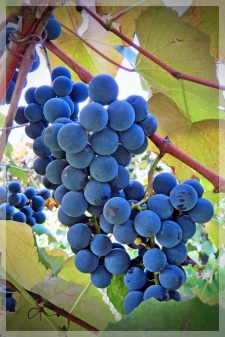 If there were a litmus test for Christians, it would not be pious words, powerful preaching, grandiose gestures, or even extraordinary feats; it would be the presence of the Fruit of the Spirit. If love, joy, peace, patience, kindness, goodness, faithfulness, gentleness and self-control aren’t evident in our lives, we may be talking the talk but we’re clearly not walking the walk. Jesus recognizes us by our fruit and, if we’re bearing the Fruit of the Spirit, people will see some of Christ in us.
 In contrast to works, which are produced by us, the Fruit of the Spirit is produced by the Holy Spirit. Rather than a basket with a variety of fruit, this is one indivisible fruit characterized by nine virtues: love, joy, peace, patience, kindness, goodness, faithfulness, gentleness and self-control. We could call this the “Christlikeness fruit” because these characteristics describe Jesus and should describe us.
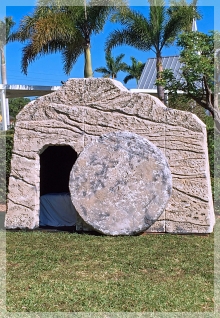 Several years ago, an entertainment network did a story on the highlights of Charlotte, North Carolina. Since the Billy Graham Library was considered a point of interest, it was visited by the show’s co-host Kristy Villa and her film crew. Commenting on the many crosses she saw throughout the property, Villa asked, “I see all the crosses, but where is Jesus?” Her guide simply replied, “He’s in Heaven,” adding, ”He is also present in the lives of those who believe in Him and follow Him as their personal Lord and Savior.” Villa exclaimed, “Oh, that’s right! Some worship a crucifix, but Christians worship a risen Christ.” Indeed, Christ’s story doesn’t end with a dead man hanging on a cross. Nevertheless, rather than an empty cross, our emphasis should be on His empty tomb!
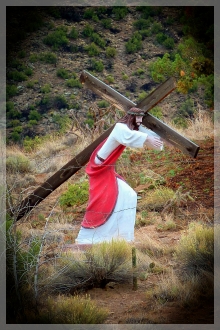 Last February, we celebrated love with the secular holiday Valentine’s Day. We may have given or received flowers, candy, or a card—tokens of someone’s love for us or our love for them. Seven weeks later, however, the flowers are dead, the candy is eaten, and the card in the recycling bin. The day dedicated to “love” is forgotten until next February when the ads for jewelry and flowers remind us.
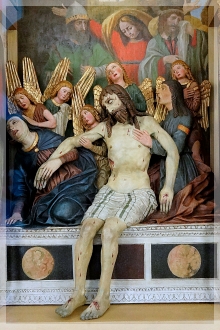 Although the common position for prayer was standing, Jesus fell to His knees that night in the garden of Gethsemane. Luke describes Him as praying so intensely that His sweat dropped like blood. Having used the word hósei, meaning “as if it were, like, as, as though, or much like,” Luke may have meant Jesus sweat so profusely that it dripped from Him like blood. Nevertheless, Luke was a doctor who paid great attention to detail; he may have described hematidrosis, a rare medical condition in which the capillaries rupture causing blood to seep into the sweat glands and then out onto the skin. It’s caused by high blood pressure, a bleeding disorder, or extreme distress or fear, such as facing abuse, torture or death on the cross! Whether Jesus’ sweat poured off his body as if it were blood or He literally sweat blood, the Lord’s prayer was so intense that an angel came and strengthened Him.
