
He said to them, “The Son of Man is going to be betrayed into the hands of his enemies. He will be killed, but three days later he will rise from the dead.” They didn’t understand what he was saying, however, and they were afraid to ask him what he meant. [Mark 9:31-32 (NLT)]
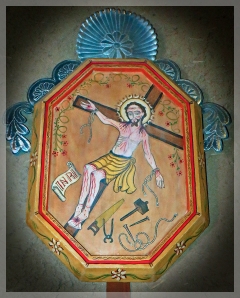 Although crucifixion probably began with the Assyrians and Babylonians, the first historical record is of Persia’s King Darius I crucifying 3,000 political opponents in 519 BC. Alexander the Great adopted the practice when he crucified 2,000 survivors of the siege of Tyre in 332 BC. In 88 BC, the Hasmonean king of Judea, Alexander Jannaeus, crucified 800 Jewish rebels after killing the rebels’ wives and children in front of them. Following a massive slave revolt against Rome in 71 BC, 6,000 rebels were crucified along the Appian Way. The crosses stretched for miles and the bodies were left there as a clear message that any rebellion would end in a violent death. After the death of Herod the Great in 4 B.C., a failed rebellion in Judea led to the crucifixion of 2,000 rebellious Jews.
While the Romans didn’t invent crucifixion, they had perfected it by the time of Jesus and the torture began long before the cross. The condemned were stripped naked, tied to a post, and flogged across the back, legs, and buttocks by Roman soldiers using whips called flagrums consisting of small pieces of bone and metal attached to a number of leather strands. The scourging left the victims’ skin ripped to the bone. If they survived the scourging, they were taunted and forced to carry the crossbar of their death instrument to the place of execution. According to Josephus, sometimes Roman soldiers further tortured the condemned by blinding them or cutting off a body part (like the tongue). Arms were nailed or strapped to the cross beam and feet to the upright. Once upright, a massive strain was put on the wrists, arms and shoulders often resulting in dislocated shoulder and elbow joints. The rib cage was constrained in a fixed position making it extremely difficult to exhale and impossible to take a full breath. While death came from suffocation, loss of body fluids, and multiple organ failure, it did not come quickly.
According to Josephus, crucifixion in Palestine was a common sight so Jesus’ disciples knew all too well what carrying a cross meant. They heard stories of Roman cruelty, saw the bloodied and battered condemned carrying their crosses, and passed by the dead bodies left decaying on crosses as a warning to those who dared challenge Rome. But, for all of their lives, these same men had been waiting for the promised Messiah to come and deliver them from Roman oppression.
Perhaps, when Jesus spoke of the cross, they thought He was referring to the many Jewish rebels who had carried their crosses for defying Rome. But, unlike those times, this time they had Jesus—the promised Messiah who finally would bring victory to the Jewish nation. Even though they believed Jesus was the Messiah, they didn’t fully understand what that meant. They thought He came to defeat Rome, rather than death, and to save a nation, not the world. Even after Jesus spoke of His death on the way to Jerusalem, we have James and John ignoring that prediction and asking Jesus for positions in His kingdom. They still pictured a political victory!
The disciples abandoned Him at His arrest and, in spite of His repeated warnings, were not prepared for His death. Surely, the man who raised Lazarus from the dead wasn’t going to die a criminal’s death, but He did and there was no doubt that He was dead. When the Sabbath was over, two disappointed followers returned to Emmaus, the women went to the tomb to anoint a dead body, and the frightened disciples were gathered in a locked room. They weren’t proclaiming Jesus that morning and didn’t even believe the women when told the tomb was empty. They were a defeated, disappointed, and frightened group of men.
So, what happened to change this group of disheartened disciples? What turned them into enthusiastic evangelists? What turned them into men who willingly followed Jesus to their own equally horrific deaths? It was seeing the risen Christ! May we always remember the truth of this message: Christ has died, Christ is risen, Christ will come again!
 Easter is over and “season” here in southwest Florida is winding down. More people are departing than arriving as our seasonal visitors return north, transport trucks laden with cars are moving up the interstate, and we finally can get a table at our favorite restaurant! It’s been said that there is no escape from death or taxes but we usually try to flee from just about every other unpleasant thing. Thinking their lives would be better here, our snowbirds came south to escape sub-zero temps, heating bills, and shoveling snow. While the climate here is nicer, our tropical paradise doesn’t come with a guarantee and none of us can flee from life’s uncertainties and problems.
 The friend said, “I hate to admit it, but every night I pray that Putin will be dead by morning.” As we witness the genocide, violence, and horror in Ukraine on the morning news, I suspect he’s not the only Christian who is saddened to learn that Vladimir Putin didn’t die last night or that bombs didn’t destroy the Kremlin and the entire Russian army!
 When the people of Israel demanded a king, Samuel cautioned them about the price they would pay. In spite of his warnings, they wanted a king and got the taxation that came with the government they wanted. Even without a king, government continues to reach its hand into our pockets and today is the deadline for filing our 2021 income taxes! We actually got three extra days this year because Emancipation Day, a public holiday in the District of Columbia, fell on the 15th. Security, protection, administration, infrastructure, and a legal system all come at a cost and taxes are the price we pay for the government we have chosen.
 In less than five minutes the house was ready for Easter. I’d hung out the spring wreath with its silk tulips, placed the resin Easter rabbit with his cart and eggs on the hall table, and put the three ceramic bunnies around the flowers on the table. With no grands visiting this year, I didn’t even have eggs to boil or baskets to fill! Since it took me days to ready the house for Christmas, I wondered why Easter doesn’t get the same amount of decoration and celebration. Granted, most of the holiday traditions for both holy days have pagan beginnings. Nevertheless, those customs have become part of our culture and Christmas seems to overshadow Easter by a mile.
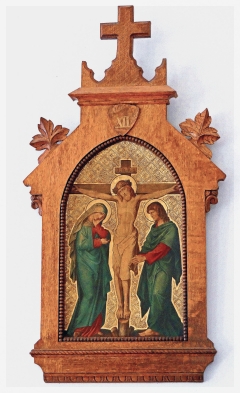 Jesus knew that one would betray Him, another deny Him, and all desert Him. He knew the people He’d fed, healed, taught, and loved—the people who just a few days earlier had greeted him like a king with palm branches and shouts of “Hosanna”—soon would prefer a thief over Him. Because of His anguished prayers later that evening in Gethsemane, we know that He knew the suffering and torment that lay ahead for him. Nevertheless, he sang with the disciples during their Passover meal that last night and it wasn’t a sorrow-filled psalm of lament.
 Devotions of the Heart