
Therefore, if anyone is in Christ, he is a new creation. The old has passed away; behold, the new has come. [2 Corinthians 5:17 (ESV)]
 Not all of the Sadducees and Pharisees were disinterested in the truth. Consider Nicodemus, a man who was both a Pharisee and a member of the Sanhedrin, the Jewish ruling council. Drawn to Jesus because of His miracles, the Pharisee visited Him alone during the night. That his approach seems furtive implies Nicodemus was hesitant to let others know of his visit. Nevertheless, he approached Jesus with respect, an open mind, and honest questions. Although some Pharisees said Jesus got His power from Satan, Nicodemus began by acknowledging that Jesus’ miracles testified He came from God. Recognizing that Jesus came from God, however, was not enough. Jesus’s response was, “Unless you are born again, you cannot see the Kingdom of God.” Jesus, of course, was speaking of spiritual rebirth but Nicodemus’ response implies he took Jesus’ words literally when he pointed out the impossibility of an old man re-entering his mother’s womb to be born again.
While most of us are familiar with this verse as saying “born again,” the word used was anóthen, meaning “from above,” so Nicodemus could have understood Jesus was speaking figuratively of a spiritual birth. The Pharisee may have wondered how an old man, set in his beliefs, habits, position, and attitude, ever could make such a radical change and start fresh. Being stuffed back into the womb is impossible but spiritual rebirth can seem as unfeasible. Jesus acted surprised that Nicodemus, a respected Jewish teacher, didn’t understand the things about which He spoke. His reference to Moses lifting up a bronze snake on a pole to heal (found in Numbers) and His words about water and the Spirit that echoed words written by Ezekiel [36:25-27] may have prompted the Pharisee to go back and re-study Scripture.
The next we read of Nicodemus is during a meeting of the Sanhedrin when he pointed out the illegality of convicting Jesus without a trial. During the sham trial that followed, however, neither he nor Joseph of Arimathea, another secret follower of Jesus, defended Jesus. Whether they still had doubts, were afraid, or simply thought no harm could come to the Messiah, they remained silent when others condemned Him. It may not have been until Calvary that the two Pharisees finally understood Jesus’ comparison of Moses raising the pole in the wilderness to heal the Israelites to the “Son of Man” being “lifted up, so that everyone who believes in him will have eternal life.” [John 3:14]
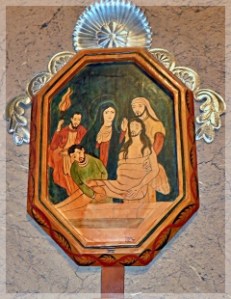
The next time we read of the two men, Jesus has been crucified. At great risk to position and reputation, Joseph asked Pilate for Jesus’ body. Rather than the disciples, it was Joseph and Nicodemus—men who once has been too afraid to speak for Jesus—who prepared His broken body for burial. They anointed the Lord with over 70 pounds of ointment, wrapped Him in sheets of linen, and placed Him in Joseph’s tomb. By doing so, the two men publicly declared their belief in Jesus. They were born anew!
While Scripture doesn’t tell us what happened to Nicodemus and Joseph, we do know what would have happened to any member of the Sanhedrin having done what they did—he’d be kicked off the High Council, lose his position as Pharisee, and probably be banished from his synagogue. There’s little doubt that both men lost their power, wealth, and position but, in return, they gained eternal life! All in all—not a bad trade!
 We reject all shameful deeds and underhanded methods. We don’t try to trick anyone or distort the word of God. We tell the truth before God, and all who are honest know this. If the Good News we preach is hidden behind a veil, it is hidden only from people who are perishing. Satan, who is the god of this world, has blinded the minds of those who don’t believe. They are unable to see the glorious light of the Good News. They don’t understand this message about the glory of Christ, who is the exact likeness of God. [2 Corinthians 4:2-4 (NLT)]
 We don’t know if John the Baptist recognized Jesus as his distant cousin when the two men met on the banks of the Jordan. Although they were the same age and their mothers were related in some way, with John in the desert and Jesus in Nazareth, it’s not likely they knew one another. If they did, Jesus probably seemed nothing more than an ordinary person to John at the time.
 When the angel promised John’s birth to Zechariah, it was ordained that the child would be named John, that he would be a Nazarite, and that he would prepare the people for the coming of the Lord. After that, other than his circumcision, the only thing we know about John’s youth is that he “grew up and became strong in spirit. And he lived in the wilderness until he began his public ministry to Israel.” [Luke 1:80] We know that Zechariah lived in the hill country of Judea and church tradition places his home in Ein Karem near Jerusalem. Considering Zechariah’s and Elizabeth’s advanced ages, they probably didn’t live to see their boy become a man. Nevertheless, they would have been sure their son knew of his divine calling and made provisions for his care.
 Since it was Easter, along with the oatmeal raisin cookies I made for Sunday treats, I brought a bowl of pastel-wrapped Hershey candy for the little ones. As I placed the candy on the hospitality table, I recalled the last time I had chocolates at church. It was several years ago at our Colorado mountain church. Even though it wasn’t Easter or Valentine’s Day, along with Bibles, the pew book racks were filled with chocolate kisses that morning.
 The wading birds of southwest Florida are absolutely beautiful, especially this time of year when they’re wearing their mating plumage. We’ve lived here eleven years and I still haven’t tired of their beauty as I encounter them daily in our ponds. 115 years ago, however, I would have been hard put to see any of these beautiful creatures anywhere. In the late 1800s, bird feathers became the fashion craze in women’s hats. Along with a plethora of plumes, some hats even featured an entire exotic bird! By 1900, more than five million birds were being killed every year and plume hunters had nearly wiped out the entire egret population. It wasn’t just the egrets with their white mating plumes—herons, roseate spoonbills, flamingoes, and peacocks were among the fifty North American species being killed for their plumage. No bird was safe.
 Devotions of the Heart