
God saved you by his grace when you believed. And you can’t take credit for this; it is a gift from God. Salvation is not a reward for the good things we have done, so none of us can boast about it. [ Ephesians 2:8-9 (NLT)]
 In immersion baptism, a person is completely submerged in the water and, every time I witness a full immersion baptism done in the Gulf of Mexico, I think of what it must have been like when John baptized Jesus and the Holy Spirit descended on our Lord. Since the Greek word used to describe this event was baptizo, meaning to dip, sink, or submerge, we can safely assume His was a full immersion baptism.
The water of baptism illustrates dying and being buried with Christ and the coming out of the water illustrates Christ’s resurrection. Baptizo is the word Jesus used when telling the disciples to baptize new believers and, in the early church, full immersion was the norm. There is, however, evidence that affusion, the pouring of water over a person, was used for invalids. Although aspersion, or the sprinkling of water for baptism, is the norm in many mainstream churches today, it did not come into practice until around the 13th century. While today’s Christian church agrees on the importance of baptism, it is divided as to the method and conduct of this sacrament.
In determining the amount of water necessary to make a baptism “official,” it would be easy to become as nitpicky as were the Pharisees of Jesus’ day as they quibbled over specifics of the law. For an immersion advocate, would the baptism be invalid if a person’s hand or some of their hair didn’t get wet and how long must they be under water? For the pourers and sprinklers, how much water is too much and how little water is not enough? If there were no water available, would spittle or tears do? I don’t know the answer but I suspect God is more concerned with matters of the heart than ritual. Since I think our commitment to Jesus is far more important than the method of baptism or the amount of water used, I’m staying clear of that controversy!
Along with the dispute among Christian churches over the method of baptism, there is disagreement on whether baptism is absolutely necessary for salvation. On Pentecost, Peter told the crowd they’d receive the Holy Spirit once they repented, turned to God and were baptized, which seems to support the side claiming baptism is required for salvation. On the other hand, while preaching to the household of Cornelius, Peter asked if anyone objected to the family’s baptism since they’d already received the Holy Spirit. This passage seems to support the side that, rather than a condition for salvation, baptism is evidence of salvation. While Scripture makes it clear that belief is a requirement for salvation, it never clearly says that baptism is, so I’ll leave the meaning of the original Greek text to theologians and scholars.
In the meantime, I’ll look to Scripture’s words that clearly tell us we are saved by grace through faith and not through works, effort or the law. A believer can be saved without being baptized because baptism isn’t how we receive forgiveness of our sins—we are saved by grace through faith in Jesus. Nevertheless, a believer will be baptized because Jesus commanded it!
Granted, I have a distinctly Protestant view of baptism and you are free to disagree. What we can agree on is that, regardless of the method used, it’s never too late to be baptized! Of all the baptisms I’ve witnessed, my favorite is when one of our church family made her declaration of faith at the age of 95. Too frail for full immersion in the Gulf, while flanked by the pastor and her son, she was baptized (by affusion) in the name of the Father, the Son and the Holy Spirit! Praise be to God!
Indeed, baptism is a vow, a sacred vow of the believer to follow Christ. Just as a wedding celebrates the fusion of two hearts, baptism celebrates the union of sinner with Savior. [Max Lucado]
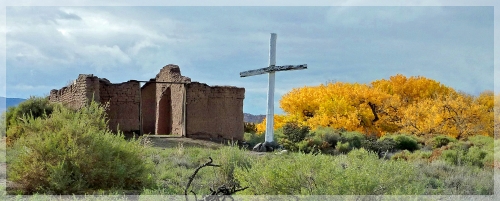 When we pray about a decision, we often set the desired outcome we want rather than ask God to reveal His will to us. Instead of trusting our decision to Him and bending our will to His, we want God to bend His will to our desires. If His response to our pleas isn’t the one we want, we refuse to recognize it or complain that He never answered our prayers! Until we’re willing to step back and say, “Thy will be done,” we can’t truly discern God’s will.
 “They are to be pitied, not….” Not what? Author C.S. Lewis did not complete the sentence and I don’t think the omission was by accident. When I read the above passage, I thought of the words I (as a Christian) should use to replace the ellipsis; they are not to be reviled, hated, judged, condemned, berated, scorned, abused, or despised. Regretfully, my initial reaction upon running across the scum of the earth—the rapists, molesters, traffickers, exploiters, extorters, attackers, murderers, deceivers, hate-spewers, and tyrants that seem to populate our world—is more likely to be the exact opposite. Rather than a feeling of pity, compassion, mercy, forgiveness, or love, it’s one of outrage, loathing, and disgust.
 The Bible is filled with evidence of God’s goodness and the great (and miraculous) things He’s done for His people. Daniel emerges unscathed from a lion’s den, David defeats Goliath and the shepherd boy becomes a king, wisdom and riches are given to Solomon, and Shadrach, Meshach, and Abednego aren’t even scorched from a fire. Water is parted more than once, the walls of Jericho collapse, jail doors miraculously open, and storms cease at a word. Armies are led to victory, manna falls from heaven, fish and bread multiply, the barren give birth, the sick and lame are healed, and the dead rise. The Bible is full of marvelous accounts of miracles, majesty, and triumphs.
 Although we try to keep Christ in Christmas, many of our ideas about Christmas aren’t Bible based. In spite of the delightful carols, the gospels make no mention of a little drummer boy, cattle lowing, Jeanette or Isabella, a partridge in a pear tree, and, rather than mid-winter, it’s more likely that Jesus was born in early fall.
 No matter what translation is used for the above verses, I find it difficult to picture something that is described as suffering, trouble, affliction, or tribulation as being small, little, or light. Moreover, while I’d like afflictions to be so, they rarely seem to be temporary or momentary. Perhaps, I’m splitting hairs but what exactly is “momentary” and “light” when it comes to suffering and affliction?
 Devotions of the Heart