
The Lord is compassionate and merciful, slow to get angry and filled with unfailing love. [Psalm 103:8 (NLT)]

Like most parents, there were times my husband and I were exasperated by, disappointed in, displeased with, and ticked off at our children. While we tried to be compassionate and merciful, we weren’t necessarily slow to get angry. In spite of our anger, however, like God, we were always filled with unfailing love. We could be disappointed, distressed, and even hurt by our children yet we persisted in our love for them. Even though they weren’t always loveable—in fact, there were times they were barely likeable—we loved them unconditionally. After all, they were our children—a part of us. Fortunately, they all survived our less than perfect parenting and have grown into wonderful adults and loving parents with children of their own. While we settle into enjoying grandparenthood, they are now experiencing for themselves the challenges of parenting and the tremendous power of parental love.
If mothers and fathers, mere flawed humans, can continue to love their children in spite of wrecked cars, skipped school or broken laws, our perfect God can easily persist in loving His children in spite of their myriad offenses. If mortal parents can still love children that deceive them, treat them with contempt, or disappoint them, think about how much our divine God can continue to love His children regardless of their transgressions. Consider how much more able He is to have unfailing love for His offspring than an ordinary man or woman. I don’t know how He manages it, but He does. He may be angry and disappointed with us, but He continues to love us.
Thank you, Father God, for not losing faith in your children; thank you for your unfailing love and forgiveness.
 While writing yesterday’s meditation, I remembered back to my high school days when I studied theater at an arts academy in northern Michigan. I should have been happy for my friend when she got the lead in a play, but I wasn’t. Instead, I was annoyed because I thought that role should have been mine. While the play was still being rehearsed, my friend returned to Ohio with a medical emergency. Did I pray for her? Of course not; I was a self-involved teenager and my only prayer was one of thanks because the lead role became mine. The emergency, however, wasn’t that serious and she returned to school (and her part in the play) several days later. Did I say a prayer of thanksgiving for her? Of course not; being a self-involved teenager, I pouted and gave her the cold shoulder.
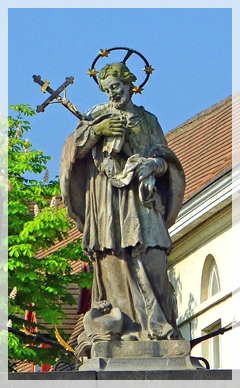 How would we prove we are Christians? If we were Islamic converts to Christianity, seeking asylum in the United Kingdom or several other nations, an assessor would interview us to determine whether or not we actually are believers. Unfortunately, many of those doing the interviewing have no real understanding of Christianity themselves. Worse, as new Christians, we probably won’t know the answers to the sort of questions that are asked while those who are pretending to be Christian might have all the answers memorized. After all, back in Jesus’ time, the Pharisees had all the answers but were sorely lacking in faith. If we failed our interviews, we’d be subject to deportation. For a Christian, especially a Christian convert (an apostate), returning to one’s Islamic homeland could have dire (even fatal) consequences.
 Within a day of having written yesterday’s words about trusting Jesus and following Him, God reminded me how difficult it is to actually do that. Granted, it wasn’t God’s voice we were following but His point was well taken. Mid-way through our 1,400 mile drive north, the GPS cautioned us of one accident after another within a few miles ahead of us. After the first such warning, I studied the map trying to find a detour but couldn’t seem to find a route that wouldn’t lead us right back into the accident area and the promised lane closures. When five accidents lay right in our path, not wanting to spend hours in a traffic jam, we reluctantly decided to let the GPS lead us around the congestion. Following its guidance, my husband exited the interstate while I kept trying to figure out what route we’d be taking. Although the GPS screen always indicated the direction of the next turn, we never knew the long-range plan for returning to the highway. We simply had to trust the GPS and take it one turn at a time. Of course, with my trusty map, I tried to second-guess the GPS the entire way. I just couldn’t cede complete control to that sweet calm voice directing us. Without any help from me, however, that voice got us back on the interstate well north of all of the accidents and congestion.
 Devotions of the Heart