
Their ships were tossed to the heavens and plunged again to the depths; the sailors cringed in terror. They reeled and staggered like drunkards and were at their wits’ end. “Lord, help!” they cried in their trouble, and he saved them from their distress. [Psalm 107:26-18 (NLT)]
 Mark, Matthew, and Luke all tell the story of Jesus calming the sea. He and the disciples had started to sail the five miles across the Sea of Galilee when a fierce storm struck. Tired from a day of preaching, Jesus remained asleep in the stern while the storm raged. As the waves broke and the boat began to fill with water, the disciples were sure they would perish. After they woke Jesus by shouting, “Teacher, don’t you care that we’re going to drown?” He rebuked the wind and the storm ended.
Since we’ve probably heard more than one sermon on this story, we know that the presence of Jesus in our boat is no guarantee of a storm-free life and that, even when it seems like God is asleep on the job, He has the situation firmly in hand. But think about the storm and imagine the sounds that night: the howling of the wind, waves smacking the sides of the boat, rain pounding down, sails furiously flapping, the crack of thunder, and men shouting to one another as they tried to lower the sails, bail and row. With all that noise and the boat pitching and heaving as the waves tossed it about, even the soundest sleeper would have difficulty sleeping. Jesus, however, was undisturbed by the commotion and remained asleep. Although the storm couldn’t wake Him, the disciples’ call to Him did! Whether we are shouting over the sound of thunder or whispering to Him beside a loved one’s hospital bed, this story tells us God will hear our call.
My final take-away from this story is not to underestimate the power of Jesus, something I think the disciples did. When they spotted the first black clouds on the horizon, they didn’t wake Jesus and ask Him to send the storm elsewhere. They tried to sail through the storm on their own power. It wasn’t until they feared they were at death’s door that they finally called to Him. Did the men wake Him because they thought He could still the storm or because they needed His help bailing and rowing? In spite of the miracles they’d seen Jesus do, their shock and terror when He stopped the wind and calmed the sea instantly (something that normally took 24 to 48 hours after a storm’s end) makes me think they expected a helping hand rather than a supernatural solution.
I wonder how often we, like the disciples, underestimate God’s power to handle the crises in our lives and wait until we’re desperate before calling to Him. While we may not get a miracle, His power is enough to get us through any storm. Even if He doesn’t calm the waters, He will bring us safely into harbor.
 Our family business recently had their annual summer picnic. As part of the festivities, the employees participated in several team-building activities. Various entertaining games, relay races, and obstacle courses required the team members to collaborate and cooperate in order to complete each task and the afternoon ended with an all-out water balloon battle. Although my husband enjoyed the barbecue, at 75, he no longer participates in the games. He stood on the sidelines with those employees who, because of physical limitations, could only observe the day’s antics. Safe from the water balloons, they each were provided with a tee-shirt identifying them as an “Innocent Bystander.”
 Earlier this week, the news broke that church leaders in six Pennsylvania Roman Catholic dioceses have protected more than 300 “predator priests.” More concerned with protecting the church and abusers than helping the more than 1,000 victims or preventing further abuse, they failed to report allegations, discouraged victims from reporting abusers, conducted their own biased and faulty inquiries, pressured law enforcement to delay or close investigations, and spun their own versions of the events. Earlier this summer, the Archdiocese of St. Paul and Minneapolis agreed to a $210 million settlement to 450 victims of clergy sexual abuse there. It’s not just the Roman Catholic Church that has failed in this arena. It was just revealed that Willow Creek, a non-denominational Protestant mega-church, paid $3.25 million to settle two lawsuits over sex abuse by a church volunteer. No amount of money, however, can remove the trauma of abuse.
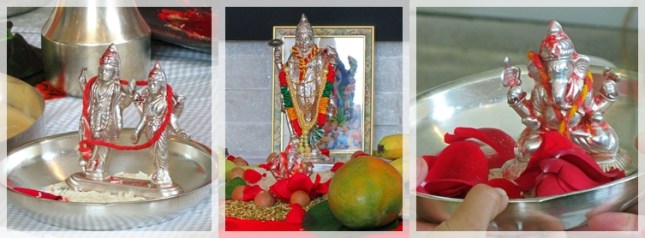 So then, about eating food sacrificed to idols: We know that “An idol is nothing at all in the world” and that “There is no God but one.” For even if there are so-called gods, whether in heaven or on earth (as indeed there are many “gods” and many “lords”), yet for us there is but one God, the Father, from whom all things came and for whom we live; and there is but one Lord, Jesus Christ, through whom all things through whom we live. [1 Corinthians 8:4-6 (NIV)]
  Recently, a pastor shared a troubling experience while at the annual conference for his denomination. Along with other ordained ministers, he was to vote as to whether or not candidates for the ministry would be ordained. While usually a gratifying experience as this ministerial board accepts people into their vocation, on occasion the vote can be heartbreaking. If a candidate receives a negative recommendation from his supervisor, he or she is permitted to offer a defense before the vote is taken. At the last conference, such an instance occurred and, sadly, one individual did not receive an affirmative vote for ordination.
 “Blessed are You, Lord our God, King of the Universe, the True Judge,” is a blessing often said by Jews when they undergo a death or tragedy. “This is all for the good,” or “Blessed is the true judge,” is often said by other Jews in response to their tragic news. Rather than being about God’s final judgment of a person, these words remind them that only God can judge whether events are good or bad. To illustrate this point, the Talmud has a story about the second century sage, Rabbi Akiva. One night, the rabbi, along with his rooster and donkey, arrived in a village. When no one would give Akiva a place to stay, the rebbe said, “All that God does, He does for the good.” He then walked to a field outside of town, set up camp, and lit his lantern. That evening, a gust of wind knocked over the lantern breaking it, a fox came and ate the rooster, and a lion came and killed the donkey. In spite of all that, Akiva said, “All that God does, He does for the good!” Just before dawn, marauders came and attacked the village but, camped in the field without light, crowing rooster or braying donkey to reveal his presence, the rabbi remained safe.
 Devotions of the Heart