
You do not desire a sacrifice, or I would offer one. You do not want a burnt offering. The sacrifice you desire is a broken spirit. You will not reject a broken and repentant heart, O God. [Psalm 51:16-17 (NLT)]
 The fellow looked at me and apologized: “I’m sorry; I know I can be a real #@!%* at times!” I debated as to my response. While the polite thing would have been, “It’s OK, I understand,” that wouldn’t have been honest. His behavior wasn’t OK. We’re told in Proverbs 27:6 that wounds from a friend are better than an enemy’s kisses and, since he’d left the door wide open, I agreed with him. “I know you are. But you don’t have to be,” I gently added. “It’s your choice!” Apparently preferring an enemy’s kisses to my honest assessment, he shrugged his shoulders and left the room.
Although “sorry” and “repentant” often are used synonymously, they are not the same thing. My friend’s regret may have been heartfelt but repentance requires a change of heart. While sorry, he wasn’t ready to change his heart or his petulant behavior.
In John 8, we read about a woman caught in adultery. Facing a crowd ready to stone her to death, she surely regretted her behavior. After Jesus’s words caused the crowd to disperse, our Lord didn’t condemn her but He didn’t send her back to her paramour either. Clearly expecting repentance, He told her, “Go and sin no more.” [8:11] Whether or not she repented, we don’t know, but Jesus’s actions and words that day make two things clear. First, rather than wanting sinners to die, God wants them to repent and live! Second, forgiveness doesn’t mean tolerance.
Repentance has two requirements: turning from evil and turning to good. When we repent, we turn from sin to obedience, evil to good, selfishness to selflessness, deception to truth, vulgarity to civility, meanness to kindness, animosity to goodwill, dysfunction to function, and childishness to maturity. As Christians, we don’t repent because we’re afraid of fire and brimstone or that God will strike us dead. Out of our love for God, we consciously decide to become better by moving away from anything that offends Him toward something that pleases Him. The power to do that comes from the Holy Spirit.
Let us never confuse an apology, regret or even confession with repentance. It’s not enough to say, “I have sinned;” we must commit to making a change and not sinning again!
To do so no more is the truest repentance. [Martin Luther]
 On the night He was betrayed, Jesus forewarned the disciples of the grief and fear they’d encounter in the days ahead. In his short parable about labor and delivery, Jesus prepared the remaining eleven disciples for the emotions they would encounter over the next three days: their anguish and despair as He hung upon the cross, died, and was buried. For His followers, those three days would feel like an eternity of hopelessness. But, as happens when a woman beholds her newborn baby after hours of painful labor, their despair would turn to joy when they saw the resurrected Christ!
 I’m continually amazed that, for someone who claims to believe in the power of prayer, I so rarely exhibit my belief! Our distressed friend had come over for advice and encouragement. The three of us brain-stormed various ways to meet her many challenges. When she departed several hours later, my husband and I promised to keep her family in our prayers. As she walked down the driveway, I realized that, while we pray daily for her, her family and their difficulties, we hadn’t bothered to pray with her! During our long discussion, we’d never paused to pray together and ask God for His guidance. Yes, my husband and I are a good source of information and encouragement, but it was God’s direction and His gift of courage that our friend needed far more than ours. We should have started the conversation with a prayer for God’s guidance rather than ending it with a promise to pray!
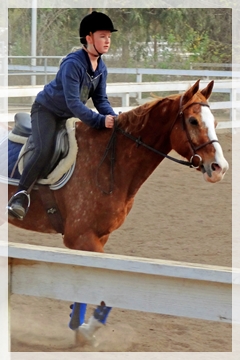 Martin Luther once compared human nature to a drunkard who, after falling off the left side of his horse, resolves not to make same mistake again. He remounts and then, overreacting, leans to the right side of his saddle only to fall off again. His point is that just because one side is wrong, the opposite extreme isn’t necessarily correct!
 As Jesus was walking along, he saw a man named Matthew sitting at his tax collector’s booth. “Follow me and be my disciple,” Jesus said to him. So Matthew got up and followed him. [Matthew 9:9 (NLT)]
 Pride goes before destruction, and haughtiness before a fall. [Proverbs 16:18 (NLT)]
 Devotions of the Heart