DUST TO DUST – ASH WEDNESDAY

I take back everything I said, and I sit in dust and ashes to show my repentance. [Job 42:6 (NLT)]
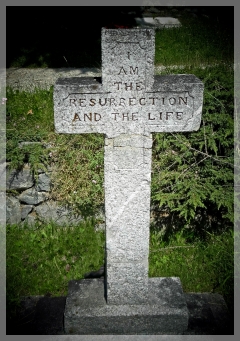
Matterhorn Memorial - ZermattToday is Ash Wednesday and the beginning of the Lenten season. Marking the forty days Jesus spent fasting in the wilderness before beginning His ministry, Lent is a time many believers intentionally reflect on the life of Jesus: his ministry, sacrifice, death, and resurrection. For some Christians, today also starts a season of repentance, fasting, and self-examination.

Although many evangelical Christians do not observe Lent, it is one of the oldest traditions of the Church. A letter written by Irenaus of Lyons (c. 130-200) describes a pre-Easter fast that originated “in the time of our forefathers.” Originally lasting only a few days, in 325 AD the Council of Nicaea wrote about the occurrence of a 40-day season of fasting, penitence and self-examination. While it originally may have been a time for new Christians to prepare for Baptism, the whole Church soon joined in observing the Lenten season.

Although Lent is 40-days long, a look at the calendar tells us there are 46 days until Easter. Since those other six days are Sundays, they aren’t considered Lent. The disciples and most of the first followers of Jesus were Jews who had observed the seventh day (Saturday) as the Sabbath. Because Jesus rose from the dead on Sunday, however, the early apostles changed their Sabbath day of rest and worship to the first day of the week as a continued celebration of His resurrection. When the early church began to observe the season of Lent, Sundays (being mini-celebrations of the risen Christ) were exempt from fasting and other forms of self-denial.

Most Roman Catholics and some Protestants will observe this day with the imposition of ashes on their foreheads. Made by burning palms from the previous year’s Palm Sunday and mixing the residue with anointing oil, the ashes are a visible reminder of mankind’s mortality—God made us by breathing life into dust and it is to dust that our bodies shall return. [Genesis 3:19] The ashes also represent penance. Putting dust or ashes on the head was an ancient gesture of mourning and penitence; when people repented of their sins, they would dress in uncomfortable sackcloth and cover themselves with ashes. Today, some worshipers may leave church with the ash cross still on their foreheads as a way of carrying the cross into the world while, in other churches, worshipers will wash off the smudge as a sign that they’ve been cleansed of their sins.

Neither Ash Wednesday nor Lent is Biblically ordained and whether we observe either is a matter between us and God. We must keep in mind that observing any religious ritual or rite is not a way to earn salvation; we are saved by God’s grace through faith alone. Moreover, if we choose to observe Lent, Jesus made it clear that fasting and abstinence should be done humbly, sincerely, and discreetly. [Matthew 6:16-18] While it is okay to be seen fasting, it is not okay to fast so to be seen. Finally, let us remember that there is no specific season for repentance; we should repent of our sins all year long!

I have come to call not those who think they are righteous, but those who know they are sinners and need to repent. [Luke 5:32 (NLT)]

Now repent of your sins and turn to God, so that your sins may be wiped away. [Acts 3:19 (NLT)]

Copyright ©2020 jsjdevotions. All rights reserved.

BEYOND REPROACH

Elders must be blameless, the husband of only one wife. Their children must be believers, and must not be open to the accusation of loose living, or being rebellious. This is because an overseer, as one of God’s household managers, must be blameless. [Titus 1:6-7 (NTE)]

yellow-crowned night heronIn my granddaughter’s ethics class, the question was posed, “Should elected officials be held to a higher standard than the population that elected them?” She maintained that everyone should be held to the same high standard and I agreed. We have no right to hold anyone to a higher standard than the one we keep. I added, however, that having taken on the public’s trust, elected officials have an obligation to hold themselves to the highest standards possible.

In Jesus’ day, every community had a group of adult men known for wisdom and maturity called elders who gathered as a kind of village council. When Christian churches came into being, they borrowed this leadership model and elders were appointed for each congregation. Sometimes referred to as bishops or overseers, their duties were to teach and preach, direct the affairs of the church, shepherd the flock, and guard the church from error. The other church office was that of deacon. The deacons assisted the elders which enabled them to give their full attention to prayer and ministry. The qualifications for both elders and deacons were much the same.

Paul gave both Timothy and Titus a list of the qualities necessary for elders and deacons. It’s interesting that Paul wasn’t concerned with their skill sets, talents, or spiritual gifts. Whether they were competent writers, brilliant speakers, accomplished musicians, or wealthy businessmen wasn’t his concern; their personal character was!

The principal requirement was that an elder be anenklētos, often translated as blameless, not accused, above reproach, of unquestionable integrity, or of unimpeachable virtue. For the sake of the church’s good name, the elder’s impeccable reputation was as important as his good character. Perhaps this seems unfair but the early church was a minority and already misunderstood by many. It could easily be smeared by even the hint of a scandal. Those who represented it had to be irreproachable.

Paul then spelled out the characteristics necessary for an elder. In his personal life, the elder was to be discrete, self-controlled, clear-headed, fair-minded, and not arrogant, argumentative, violent, or quick-tempered. In their homes, elders were to have a well-ordered household and healthy family relationships. As for the elder’s social life—he was to be hospitable. This was an important aspect of his calling since churches often met in homes and travelling evangelists and teachers were housed and fed by members of the church. Moreover, an elder was not to indulge in riotous living. Financially, the elder was to be a good steward of God’s gifts, trustworthy with money, and not greedy. Spiritually, elders were to be mature in their faith, virtuous, and knowledgeable in the Word of God. Their lives were to be an example for others to follow.

These requirements bring me back to a slightly rephrased version of the question posed in my grand’s ethics class: should we hold those in authority (such as elected officials, pastors or church council members) to a higher standard than our own? Are our own standards as high as those Paul purposed for the elders and deacons of the early church? They should be. As representative of Jesus, we all should strive to be the sort of people Paul would want to serve as elders and deacons: people above reproach! Let us remember that public perception of Christ’s followers and the church is as important today as it was in the 1st century!

Since I recently was appointed to our church board, I also return to my addendum to the grand’s answer. As a board member and a representative of our church, I must hold myself to the highest possible standard. It is only through the power of the Holy Spirit that any of us can be the kind of people described by Paul: people who shine like stars in this dark and troubled world!

There must be no grumbling and disputing in anything you do. That way, nobody will be able to fault you, and you’ll be pure and spotless children of God in the middle of a twisted and depraved generation. You are to shine among them like lights in the world, clinging on to the word of life. [Philippians 2:14-16a (NTE)]

Copyright ©2020 jsjdevotions. All rights reserved.

UNARTICULATED PRAYERS

And the Holy Spirit helps us in our weakness. For example, we don’t know what God wants us to pray for. But the Holy Spirit prays for us with groanings that cannot be expressed in words. And the Father who knows all hearts knows what the Spirit is saying, for the Spirit pleads for us believers in harmony with God’s own will. [Romans 8:26-27 (NLT)]

peony - field bindweedI couldn’t tell if my vague sense of unrest was because something was missing or there was something I needed to do. I couldn’t articulate it but I knew it was there and, as the days went by, the sense of disquiet continued. I simply asked God to reveal whatever was troubling me; perplexed, I didn’t know what else to pray. Fortunately, the Holy Spirit did!

A week later, when I was asked to serve on the church board, I realized my unrest was because I needed to step out of my comfort zone and do something more to grow both as a Christian and a writer. I finally understood Paul’s words that the Holy Spirit will express our prayers for us when we don’t have the words. When the pastor asked me to pray about the offer, he didn’t know that I’d been praying about it for a week without knowing I was. In fact, the board position was the answer to my unarticuated prayers!

Last fall, a young musician in Kentucky felt a longing to deepen his faith through music. While looking for music ministry positions in his home state, he found an opening not far from the Florida town where he frequently performs on weekends. He certainly didn’t ask God to lead him to a new church that meets in a park in southwest Florida but that’s where the Spirit led him. Now he’s leading worship at our church. Was that coincidence or did the Holy Spirit speak for him? His new position answered his unspoken prayers (as well as our spoken ones for a worship leader).

Several years ago, my friend Lynn moved to a town where she knew no one. Away from family, with two active toddlers, and a husband whose business kept him away for weeks on end, she was overwhelmed by motherhood’s demands. While talking to a friend 1,000 miles away about her loneliness and need for a break, the phone call was cut short by a knock at the door. Standing there was the answer to Lynn’s unuttered prayers: a girl who lived nearby and was seeking a mother’s helper/babysitting job!

As it turned out, Lynn was the answer to this girl’s unvoiced prayers, as well. The teen’s mother was gone and she lived with her father and four brothers in a house heavy with testosterone. Sports reigned supreme there and no one talked about things important to teen-age girls or could help her with make-up, hair, or fashion. That, however, was right up Lynn’s alley and she was the perfect surrogate “aunt” to guide the girl through adolescence; Lynn even taught her how to cook and sew. I doubt this teen had prayed about finding a refuge from sports central any more than Lynn had prayed for someone who offered companionship and purpose along with babysitting. Yet, God heard their prayers!

We often are in the dark when it comes to our needs and how to pray but those unarticulated prayers may be the best ones. The Holy Spirit utters wordless prayers on our behalf and intercedes for us according to God’s will. Even when we don’t know what or how to pray, we can remain confident that God will arrange circumstances to work out beautifully in a way that we’d never imagine. He has a wonderful way of knowing what it is we need long before we do!

In prayer it is better to have a heart without words than words without a heart. [John Bunyan]

And we know that God causes everything to work together for the good of those who love God and are called according to his purpose for them. [Romans 8:28 (NLT)]

Copyright ©2020 jsjdevotions. All rights reserved.

LET IT GO (Part 2)

frost aster - northern cataulpaInstead, be kind to each other, tenderhearted, forgiving one another, just as God through Christ has forgiven you. [Ephesians 4:32 (NLT)]

After writing about forgiving ourselves as a step to experiencing the abundance of Christian life, I came across some classic Peanuts comic strips (drawn by Charles Schulz) that illustrate the importance of forgiving others, as well. In the first one (originally published Christmas Eve, 1972), Charlie Brown tells Snoopy that Poochie is coming for a visit. Snoopy responds that “it would be like getting the mumps twice! …You don’t forgive someone who does to you what she did to me!” The sulking Snoopy then whines, “Just what I didn’t need…a Poochie Christmas.”

A week later, Snoopy is lying on the roof of his doghouse when Charlie Brown tells him of Poochie’s arrival. “I don’t want to see her!” replies the dog. Saying that beagles have long memories, Snoopy relates his last encounter with Poochie. He was just a puppy when she tossed a stick for him to fetch. Eager to please the girl, he retrieved it just in time to see her walk away with an English Sheepdog. When Charlie Brown expresses amazement that Snoopy remembers the incident so vividly, the beagle replies, “How could I forget?” Showing the boy what he’s holding, Snoopy explains, “I still have the stick!” The following week, the story continues with Poochie’s visit. Wearing his sunglasses, Snoopy puts on his “Joe Cool” persona and snubs the little girl. Refusing even to speak with her, there is no reunion or reconciliation and a disappointed Poochie leaves.

Peanuts looks like kid stuff but Schulz’s characters show us what it’s like to live in a world of disappointments—where our baseball team never wins, the football is yanked away, kites get tangled in trees, big sisters boss around little brothers, people suffer from unrequited love, grudges are held, and a security blanket often seems like a good idea. Charles Schulz portrays the kind of world in which we live: one where we’re more likely to lose than win.

Almost certainly, the embittered Snoopy fretted about Poochie’s visit all through the Christmas holiday right into the new year and he probably spoiled another week or more reliving their unsatisfactory meeting. Although we don’t see it, I’m sure Snoopy still has that stick and continues to bears a grudge against the little girl who chose an English Sheepdog over him!

Snoopy is just an imaginary character, living in a comic strip, but he’s not much different from us. Granted, we may not keep a stick we fetched as a puppy but we often keep other mementos of heartbreak and disappointment, use social media to stay connected with the people who hurt us, or make ourselves miserable by replaying an offense in our minds or revisiting it in our conversations. Intentionally holding onto our grievances is like rubbing salt into our own wounds!

Being hurt by people, even people we love and trust, is part of life, but dwelling on what happened in the past can only rob us of today’s joy. If we ever want to experience the abundant life promised by Jesus, if we want to be filled with His joy, if we ever hope to enjoy His peace that surpasses understanding, we must love others in the same way He loved us. We have to let go of the stick and forgive!

When you obey my commandments, you remain in my love, just as I obey my Father’s commandments and remain in his love. I have told you these things so that you will be filled with my joy. Yes, your joy will overflow! This is my commandment: Love each other in the same way I have loved you. [John 15:10-12 (NLT)]

Copyright ©2020 jsjdevotions. All rights reserved.

LET IT GO! (Part 1)

But if we freely admit that we have sinned, we find God utterly reliable and straightforward—he forgives our sins and makes us thoroughly clean from all that is evil. [1 John 1:9 (PHILLIPS)]

I’ve undertaken a series of “Abundance” exercises, the purpose of which is to take Jesus up on His promise of an abundant life. While my first assignment was to notice God’s abundance in His creation, the second was to let go of any guilt that I might be holding by asking God to forgive me (and believing that He truly has).

“Forgive yourself and let it go!” is easier said than done and this second exercise was more challenging than the first. Asking God for His forgiveness is less difficult than actually believing we’re forgiven and forgiving ourselves can be hardest of all. Sadly, the underlying guilt and self-reproach when we can’t let go of the past robs us of an abundant life.

I thought of Peter’s many failures that last night of Jesus’ earthly ministry. He protested Jesus’ washing of his feet, bickered with the disciples about their Kingdom status, boasted that he’d never desert the Lord, fell asleep in the garden, and then denied knowing Jesus! The lowest point of Peter’s life must have been when the Lord looked into his eyes after that third denial. By disavowing the man he loved, Peter did exactly what he promised he’d never do and, weeping bitterly, he left the courtyard. Peter’s despair and shame must have grown the following day when Jesus died after hours of suffering on the cross. Did guilt for his betrayal fill Peter’s heart?

Several months earlier, Peter had asked Jesus if forgiving someone seven times was enough. Jesus’ answer of seventy times seven meant there is no limit to forgiveness. While Luke tells us that the risen Jesus appeared to Peter, we don’t know how that first reunion went and what words were spoken. We do know that, when Jesus appeared on the lakeshore and told the men to cast their nets on the other side of the boat, Peter was so anxious to see Him that he jumped into the water and swam ashore. I can imagine Peter’s tears at their soggy embrace.

That morning, as the men stood around the charcoal fire while the fish cooked, did Peter remember warming himself by another charcoal fire when he denied Jesus the third time? We know that Jesus asked Peter three times if he loved Him and that Peter answered in the affirmative each time. Although we never read of Jesus explicitly forgiving Peter, we know that man who preached unlimited forgiveness certainly practiced it! That He told the apostle to take care of and feed his sheep certainly implies the Lord’s forgiveness. Indeed, Peter shepherded His flock and became the Rock of His church.

While Peter probably remembered that Thursday night with regret, he also knew there was nothing he could do to change it; his words of denial couldn’t be unsaid. Yet, if he’d chosen to hold onto his guilt, he would never have been able to speak of forgiveness and lead 3,000 to Jesus on Pentecost! Fraught with guilt and shame, he may even have taken his life as did Judas. Instead of holding onto the past, Peter sought God’s mercy and forgiveness and reaffirmed his devotion to the Lord. Believing in Jesus’ power to cleanse him from his sins, he accepted God’s forgiveness and lived the abundant life promised by Jesus. Peter forgave himself and let it go; let us do the same!

If we live like this, we shall know that we are children of the truth and can reassure ourselves in the sight of God, even if our own hearts make us feel guilty. For God is infinitely greater than our hearts, and he knows everything. And if, dear friends of mine, when we realise this our hearts no longer accuse us, we may have the utmost confidence in God’s presence. [1 John 3:19-21 (PHILLIPS)]

Copyright ©2020 jsjdevotions. All rights reserved.

IT’S JUST BEGINNING

We know that our body—the tent we live in here on earth—will be destroyed. But when that happens, God will have a house for us. It will not be a house made by human hands; instead, it will be a home in heaven that will last forever. [2 Corinthians 5:1 (NCV)]

butterweedI can’t understand why a young mother lies on her deathbed when an elderly Alzheimer’s victim whose mind is long gone remains in this world. I will never comprehend why one person suffers a debilitating disease for years and another person breezes through life with nary an ache or pain. I wonder how a young family can be wiped out in a car accident when the drunk driver who caused the crash survives without a scratch. I will never grasp why some people are in such despair that they take their lives while others bravely fight to take each breath. I don’t know why one child is born with multiple birth defects when his sibling is the picture of perfect health or why one child is abused and another one is cherished. Life often seems incredibly unfair!

How can we make sense of the wicked prospering while the godly suffer let alone understand random shootings or terrorist attacks? How can we make sense of a world that makes absolutely no sense? It’s not fair and yet we can’t even cry “foul!” There was nothing fair about Jesus suffering and dying for our sins!

The answer to my query is that, because mankind sinned, we live in a broken world: a world that is not as God meant it to be. That’s not a very satisfying answer but, if we truly believe that God is good and that it is He (rather than some cosmic roulette wheel) who is sovereign over the world, we must trust Him. There are divine reasons for all that passes through His hands and those reasons are not ours to know. It is God who is the treasure and not the various blessings He bestows on any of us in this life. The trials endured by us or others do not permit us to put God on trial.

While the here-and-now makes little sense to me, there is one thing I do understand: our trials are short-lived but the blessings of the godly are eternal! Whatever happens in this world is just a small part of the rest of our lives. We’re merely in the preface of the best book ever written or viewing the trailer for the greatest movie ever produced. We’re seeing only a rehearsal of the finest ballet ever danced and have heard just the prelude to the most beautiful symphony ever composed. We’re in the lobby of the grandest hotel ever built and have tasted but a bite of an appetizer in the most delicious feast ever prepared. We’re barely out of the driveway on an extraordinary never-ending journey. Let us take comfort in knowing the best is yet to come!

Life would be void, senseless and of no portent if our existence here for 70 years or more were to end as we draw our last physical breath. Our life on earth is but a drop of a moment in the ocean of time. To dis-acknowledge God would be to admit the futility, the hopelessness of existence. It would be to place reliance merely upon flesh, the physical body and the physical structure of man … It would be to deny the presence and existence of a soul. [Lionel Luckhoo]

The Lord All-Powerful will prepare a feast on this mountain for all people. It will be a feast with all the best food and wine, the finest meat and wine. On this mountain God will destroy the veil that covers all nations, the veil that stretches over all peoples; he will destroy death forever. The Lord God will wipe away every tear from every face. He will take away the shame of his people from the earth. The Lord has spoken. [Isaiah 25:6-8 (NCV)]

And I heard a loud voice from the throne, saying, “Now God’s presence is with people, and he will live with them, and they will be his people. God himself will be with them and will be their God. He will wipe away every tear from their eyes, and there will be no more death, sadness, crying, or pain, because all the old ways are gone.” The One who was sitting on the throne said, “Look! I am making everything new!” [Revelation 21:3-5 (NCV)]

Copyright ©2020 jsjdevotions. All rights reserved.