
A gentle answer deflects anger, but harsh words make tempers flare. [Proverbs 15:1 (NLT)]
 A man down the street has surrounded his home with security cameras pointed in every direction. I’m told that he’s an unpleasant old coot but I wouldn’t know; in all the years we’ve lived here, I’ve never seen him. He has, however, managed to irk one neighbor enough that she salutes his cameras with her middle finger every time she passes by his house.
Anthropologist Desmond Morris claims the middle finger sign of rudeness is one of the oldest known insult gestures. Aristophanes wrote of the gesture in his play Clouds and the Romans called the middle finger the digitus impudicus or indecent finger. Sadly, in this day and age of rudeness, road rage, and irate neighbors, we frequently see it.
Several years ago, one of our pastors suggested that we give the “thumb’s up” gesture rather than the middle finger salute. He frequently repeated that thought until one day he misspoke and suggested the finger rather than the thumb! Popularized during World War II when pilots used it to signal ground crews their readiness for take-off, the “thumb’s up” gesture generally has a good connotation in English speaking countries. Unfortunately, it has a negative meaning in Greece, Russia, Sardinia, parts of West Africa and much of the Middle East. A full-fingered wave probably is a safer suggestion than thumb, especially when accompanied by a smile!
We all have moments when we’re angered or upset but, hopefully, we’re mature enough to refrain from giving that middle finger or yelling nasty words and escalating the situation. Nevertheless, it’s easy to mutter bad words to oneself, have hostile thoughts, and mentally give that rude gesture. After a reckless driver cut us off and nearly caused an accident, my husband growled angrily, “Here’s the thumb for you!” Although he refrained from a rude gesture, I gently reminded him that we’re not supposed to be thinking the finger when giving someone the thumb! Not doing the wrong thing is only half right; we also need to think and do the right one.
While Scripture never specifically refers to vulgar gestures, it does say a great deal about how we are to treat our neighbor and everyone is our neighbor—including the driver who cuts us off, the man who doesn’t clean up after his dog, the woman who pushes ahead of us in line, and the recluse down the street with his dozens of security cameras.
Not everyone who crosses our path is going to cross it nicely; nevertheless, there is no excuse for returning incivility with more of the same. Let us respond with grace and humility. Since we’re told to pray for our enemies, instead of merely refraining from nasty words and gestures, we could say a quick prayer for the person who’s offended us. While asking God to encourage our offender to improve both skills and attitude, we might want to ask Him to do some work on us, as well. With the help of the Holy Spirit, let’s give a friendly wave in actions, thoughts, and prayers!
 Ecclesiastes tells us there is a right time for everything, Colossians and Ephesians tell us to use our time wisely, Proverbs warns about wasting time, James cautions that we don’t know what tomorrow will bring, Corinthians warns us time is short and, readily admitting that his time and future are in God’s hands, David tells us to number our days. Nowhere does Scripture tell us how to have more time!
 When the Apostle James tells us that God can’t be tempted by evil, we wonder how Jesus could be tempted to sin while in the wilderness. Christians agree that Jesus never sinned but some question whether He actually could. They hold the “impeccability” position: because Jesus was God, sin was impossible and He couldn’t have been tempted. Others hold the “peccability” position: because Jesus was a man, he could sin and was tempted. Still others, recognizing His dual nature, say that, as a man, Jesus could be tempted to sin but, as a divinity, He couldn’t.
 Traditionally, Lent has been a time for Christians of all denominations to refocus their hearts and minds on God through prayer, fasting and giving. As a way of fasting, many people deny themselves small indulgences, such as soda, candy, or their daily latte at Starbucks, but Lenten fasting isn’t limited to food. Other ways to observe this season include not making any purchases that aren’t absolutely necessary; donating or throwing away forty things during Lent’s forty days; giving up guilty pleasures like People magazine or binge-watching Netflix; refraining from complaint or gossip; not eating out or ordering in; saying three nice things to one’s spouse and children daily; reading the four gospels; doing a weekly service project; setting aside loose change for a charity; or forty days of letter writing, acts of kindness, or phone calls to special people. Some of those, like refraining from gossip or complaint, saying nice things to the family, and Scripture reading shouldn’t be limited to just these forty days!
 Nicknames were as common in Biblical days as they are now. Simon’s politics gave him the nickname of Zelotes (the Zealot) and the impetuous behavior of James and John probably earned them the nickname of “Boanerges,” meaning “Sons of Thunder.” While it was Simeon’s dark complexion that gave him the name of “Niger” or “the Black Man,” it was the heartening behavior of Joseph that earned him the nickname of “Barnabas” meaning “Son of Encouragement.”Although our knowledge of Barnabas is limited, we know he was an apostle in the early church who encouraged the Jerusalem church by selling a field and giving it the money. His encouragement, however, wasn’t limited to finances and, without his encouragement, we might not have much of what we call the New Testament.
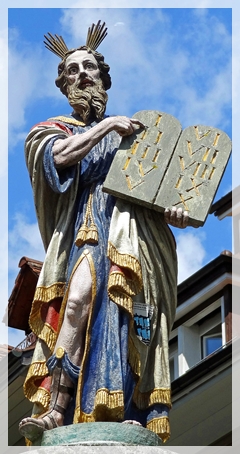 In Scripture, the number forty often appeared in the context of preparation, judgment, or testing. The rain poured down upon Noah for forty days and nights. After spending forty years in Egypt and another forty as a shepherd, Moses twice spent forty days with the Lord on Mt. Sinai. The Israelite scouts spent forty days exploring the land of Canaan and, because the people lost heart and rebelled at their report, they spent an extra forty years wandering the wilderness (one year for each day the men explored). Jonah warned Nineveh their destruction would take place in forty days, Ezekiel lay on his right side for forty days because of Judah’s sins and, before being slain by David, Goliath taunted Saul’s army for forty days.
 Devotions of the Heart