
And further, submit to one another out of reverence for Christ. [Ephesians 5:21 (NLT)]
 While being in lockdown for months may have given some couples a chance to reconnect, that connection wasn’t welcomed by all. Once their mandatory 10-week lockdown was lifted, Italian lawyers reported a 30% surge in couples starting divorce proceedings and both China and Saudi Arabia showed a similar rise when couples emerged from quarantine. For some couples, 24/7 togetherness for weeks on end exacerbated typical martial issues like money, housework, drinking, child care, screen and phone time, and dirty dishes in the sink. With the additional stressors of homeschooling, job loss or working at home, apprehension about the future, and trying to navigate safely in a COVID-19 world, even the best marriages have been tested.
We may have married our spouses for better and worse, in sickness and health, but none of us expected this much togetherness for such an extended time. Before we complain, let’s remember our friends who live alone. With the exception of the pizza delivery man or the cashier behind a plastic shield at Walgreen’s, their contact with the outside world has been from a 6-foot distance. FaceTime or Zoom replaced visits from friends and family and it’s been months since they’ve gotten hugs from anyone. Their isolation puts our petty spousal complaints in perspective!
There always will be disputes in any relationship but, in a good relationship, both parties understand the importance of negotiation and concession. Unfortunately, we live in an increasingly polarized society and the world’s divisiveness seems to have crept into our homes. Lines get drawn in indelible marker (or even cement) and people often think of compromise, trade-offs, finding the middle ground and deference as signs of weakness.
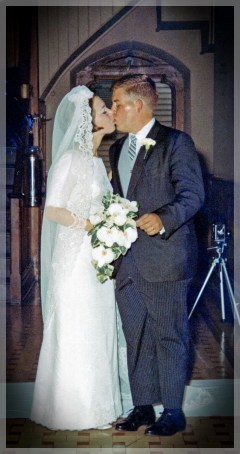
Today, my husband and I celebrate our anniversary. Rather than the traditional romantic dinner, weekend getaway, or family party, we’ll celebrate with a Chicago-style pizza our children sent us and a feel good movie on Netflix. The one tradition we’ll keep, however, is reading 1 Corinthians 13: the same words that were read at our wedding 53 years ago. Paul wasn’t writing about romantic or eros love. As delightful as romantic love is, that’s not what gets people through cancer, job loss, financial worry, Parkinson’s, a disabled spouse, an addicted child, or months of sheltering in place. Paul was writing of agape love—sacrificial unconditional love: the kind of love that carries people through pandemics (and decades of marriage)!
We’re often told to assert ourselves. What if, instead of asserting ourselves, we asserted our love? What if we remembered (and followed) Paul’s words: “love does not demand its own way.” Our love for one another is far more important than almost anything about which we disagree. When faced with disputes, let’s allow love and God to be our guides.
What counts in making a happy marriage is not so much how compatible you are, but how you deal with incompatibility. [Leo Tolstoy]
 While Matthew, Mark, and Luke mention the Apostle John several times in their gospels, the gospel that bears John’s name doesn’t mention his name once. Instead, the author refers to an unnamed witness and a disciple described only as the one “whom Jesus loved.” Since John is conspicuously absent from his gospel, it would seem that he was both the witness and this much loved disciple.
 Every year, Jesus and His family went to Jerusalem to celebrate the pilgrimage festival of Passover. Entire villages would travel together and the city was jam packed with worshipers when they departed for Nazareth. The men probably traveled apart from the women and children. Jesus, being twelve and no longer a little boy but not yet a man, could have been with either group. Perhaps Mary thought Him with the men while Joseph thought He was with the children. They didn’t know Jesus wasn’t there until they stopped that night. Moving with the crowd, his parents had mistakenly presumed His presence.
 “Work expands to fill the time available for its completion,” is what’s known as Parkinson’s Law. Writing those words in 1955, Parkinson wasn’t talking about deadlines; he was taking aim at the British Civil Service and government bureaucracies that become less efficient as they increase in size. Nevertheless, later studies have shown that without strict time constraints, we tend to waste time and work takes longer than necessary to complete.
 In an article about how our post-pandemic new normal will evolve, the author suggested a process for businesses to identify what needs changing in their post COVID-19 world. As a way of illustrating their method, there was an aerial photograph of a college campus quad. Before designing the walkways for this large green area surrounded on four sides by university buildings, the landscape architects simply sodded the field and observed how the students used the grassy expanse. After a while, the beaten down grass indicated the students’ preferred traffic patterns and it was on those favored paths that they finally placed paved walkways. At first glance, the asymmetric sidewalks seemed random but, once the process was explained, the strange arrangement of paths made sense. It was easy to see how they accommodated people’s tendency to take shortcuts and cut across corners.
 Devotions of the Heart