
From Judah will come the cornerstone, the tent peg, the bow for battle, and all the rulers. [Zechariah 10:4 (NLT)]
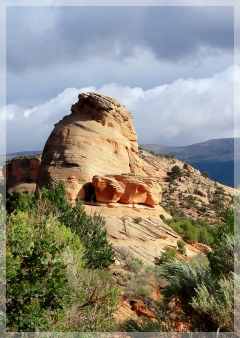 In the Old Testament, “cornerstone” as a metaphor for the Messiah is found in Psalms, Isaiah, and Zechariah. In Zechariah 10, the prophet describes Israel’s need for purification because of their idolatry, fortune-tellers, and false prophets. Holding the nation’s leaders responsible for these transgressions, Zechariah says the people are like lost sheep without a shepherd. Proclaiming the arrival of the ”Lord of Heaven’s Armies” who will look after the flock, the prophet says he’ll come from Judah and describes him as a cornerstone, tent peg, and battle bow.
Nowadays, cornerstones are more ornamental or commemorative than functional. In the first century, however, the cornerstone was the first squared stone in the foundation of any structure. Determining the position of the rest of the foundation, every other stone in the wall was aligned to it and a properly set (or true) cornerstone was essential to the structural integrity of any building. The Messiah as cornerstone would be the first and most important stone in God’s Kingdom and would provide a reliable and firm foundation for His people.
While cornerstone is a familiar Messianic metaphor, tent peg and bow are not. At first, the image of the Messiah as a tent peg seems strange but, if you’ve ever pitched a tent, you know its purpose. Pounded into the ground, tent pegs are fastened to the ropes holding up the tent and must be set securely or the tent will sag, rip, or even collapse. Even today’s freestanding dome tents need tent pegs or stakes to keep them from blowing away in the wind. The tent peg is as important to a tent’s stability as a cornerstone was to a building’s. Just as the peg fastened the tent to the ground and kept it from collapsing, so the Messiah’s rule would secure Israel to Himself and keep His people upright.
The third metaphor is that of a battle bow: an offensive weapon symbolic of military power. As God’s warrior, the Messiah would fight to save His people. Whether it would be a physical or a spiritual battle is less clear. The bow, however, is associated with more than warfare; it is connected with God’s power in judgment and speaks of a Messiah who would deliver judgment.
We then come to the fourth term in this short verse: rulers. The original Hebrew had no punctuation and it’s unclear if this is a metaphor. Some commentators believe it refers to the Messiah and means that He will be the rulers of rulers. Many others disagree because the word translated as ruler was nagas which wasn’t used for a rightful king. It meant tyrants, taskmasters, or oppressors. Rather than a metaphor for the Messiah, they interpret this to mean that the Messiah would defeat every oppressor of His people. In either case, the people of Judah interpreted Zechariah’s words to mean the Messiah would wage physical war on the nations that oppressed them. The Messiah, however, wasn’t about an earthly kingdom and earthly oppressors. As Judah’s cornerstone, tent peg, and battle bow, the Messiah would wage war on the nation’s true enemy and oppressor—the tyrant Satan and sin. The Messiah would strengthen His people and, in His might, they would find salvation!
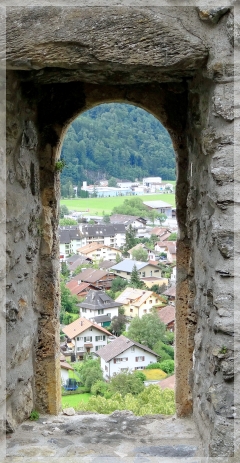 After telling the Parable of the Two Sons, Jesus told one about the Evil Farmers. As parables go, it’s pretty easy to follow. The landowner (God) builds a vineyard (Israel), sets up a protective wall (the Law), and leases it to tenant farmers (religious leaders). When he sends his emissaries (faithful priests and prophets) to collect his rent, the farmers ignored, mistreated and even killed them. The landowner, thinking the farmers would respect his son (Jesus), sends him to the vineyard. Wanting the estate for themselves, the farmers murder him. When Jesus asked his listeners (who were the chief priest and elders) what the landowner would do to the famers when he returns to his land, they responded that he’d kill the tenants and lease the vineyard to new farmers who would honor him with his share of the crop.
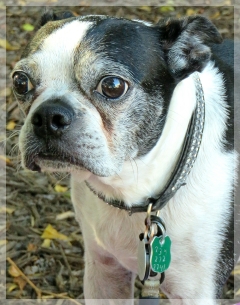 “It’s all about getting a second chance!” said the back of the man’s T-shirt. I then saw the dog paws printed on both sides of the message and realized his shirt was advertising a dog rescue organization. Nevertheless, the shirt’s words made me think of the parable Jesus told the Pharisees about two sons. The vineyard owner told his sons to go work in the vineyard. The first son rudely refused but the second son respectfully promised he’d do the work. As it turned out, the defiant son had a change of heart and went to work in the vineyard while the second seemingly dutiful son never did. Jesus then asked the Pharisees which of the two sons had done his father’s will. Of course, they had to say that the first son, in spite of his initial rebellion, was the obedient one.
 The Synsepalum dulcificum is a West African fruit better known as the “taste berry” or “miracle fruit.” This almost tasteless red berry can make lemons, Dijon mustard, Brussels sprouts, pickles and even vinegar taste sweet. A protein in the berry temporarily binds to the tongue’s taste buds and causes sour or acidic foods to taste sweet. Miracle fruit tablets, powder, freeze-dried berries and plants can be purchased from several websites. Along with suggesting using the berry as a way to get fussy eaters to eat their fruits and vegetables, sellers suggest hosting “flavor-tripping parties” where guests get a berry and a strange buffet of foods like sauerkraut, kimchi, radishes, grapefruit, cheap tequila, goat cheese, vinegar, and Tabasco sauce. Why anyone would want to alter the delicious flavors of kiwi, pineapple, strawberries, Granny Smith apples, grapes, or tomatoes is beyond me and I certainly have no desire to drink pickle juice or Sriracha chili sauce.
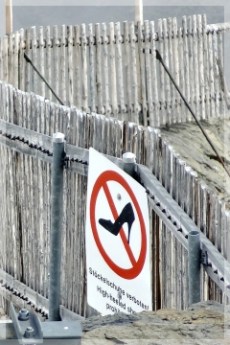 Many years ago, I was facing a difficult decision about a project. In spite of praying, pondering, searching Scripture for direction, and consulting with wise advisors, I was still in a quandary. Nothing brought me closer to a clear answer to my dilemma. Although it seemed like a good idea (at least in theory) and I felt like I should want to be part of it, doubts kept nagging at me. Wanting God to make known His will, I prayed the words of Psalm 143:10: “Teach me to do your will, for you are my God. May your gracious spirit lead me forward on a firm footing.”
 Although its customs and rituals have changed over time, Lent has been observed in some way by believers for centuries. In the early years of the church, the days leading up to Easter were a time of fasting and prayer in preparation for Easter baptisms and as penance for those who’d been excluded from communion. Irenaus of Lyons (c.130-200) wrote of such a season that lasted only a few days (or forty hours) and commemorated what was believed to be the duration of Christ’s time in the tomb. By the mid-third century, Bishop Dionysius spoke of a six-day fast practiced by the devout in Alexandria and, according to the Byzantine historian Socrates, the Roman Christians kept a pre-Easter fast of three weeks.
 Devotions of the Heart