NEITHER ADD NOR SUBTRACT 

Jesus replied, “You hypocrites! Isaiah was right when he prophesied about you, for he wrote, ‘These people honor me with their lips, but their hearts are far from me. Their worship is a farce, for they teach man-made ideas as commands from God.’ For you ignore God’s law and substitute your own tradition.” [Mark 7:6-8 (NLT)]
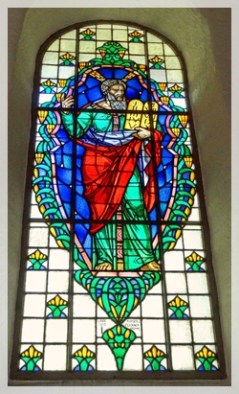
Moses - Meiringen - MichaelskircheThroughout Scripture, we find Jesus at odds with the Pharisees, one of the most important Jewish sects of the day. Not priests, the Pharisees were laymen (mostly merchants and tradesmen) who zealously followed Mosaic Law, often by adding non-Biblical traditions to it. Considered interpreters of the law, they were known for their austere life style and vast knowledge. The Pharisees accepted the oral explanations and additions of earlier generations to be equally inspired and authoritative as the written words of the Torah (the first five books of the Bible).

These oral traditions consisted of highly specific rules and regulations that were based on the belief that, when God gave Moses the written law on Mt. Sinai, He also elaborated on how those laws were to be kept. Unwritten, those explanations became oral tradition. This devotion to oral law developed during Judah’s Babylonian captivity. Jerusalem’s destruction and their exile was God’s punishment for the neglect of His law so it’s understandable that no one wanted to endure God’s wrath again. Restrictions evolved that were designed to “build a hedge” around the Torah and guard against any possible breach of the law, whether by ignorance or accident.

With their detailed laws regarding nearly every aspect of life, the Pharisees were legalists. Jesus didn’t approve of the way they’d replaced God’s simple law with complex man-made laws that placed a heavy burden on the people—a burden that God hadn’t given them. Although work on the Sabbath clearly was prohibited, the Pharisees determined that meant a tailor could not carry a needle stuck in his coat, someone couldn’t carry ink enough to write two letters of the alphabet, and no one could spit on the ground because that might make a hole, which would be digging, which would be work! It was the Pharisees who said the disciples had sinned by reaping and preparing food on the Sabbath when they picked heads of grain off their stalks!

Jesus criticized the Pharisees’ devotion to the letter of the law while ignoring the spirit of the law: love of God and love of neighbor. Some of the Pharisees’ man-made rules, such as a loophole allowing people to renege on promises, actually helped them get around God’s law. If someone swore by the Temple or the altar, the oath wasn’t binding but, if someone swore by the gold of the temple or the offerings on the altar, it was! Because of their inability to be consistent in their interpretation of oral and written laws, Jesus compared the Pharisees to the blind leading the blind.

For many Pharisees, there was a disparity between what they professed (righteousness) and what they put into practice (self-righteousness). Jesus certainly didn’t like the gap between what they proclaimed and what they actually practiced and frequently called them out for their pretense and hypocrisy.

There’s much we can learn from the Pharisees: not to be pompous, hypocritical, judgmental prigs is perhaps the most obvious. That we shouldn’t think we can earn heaven by following a false gospel of salvation through works is another. The hardest lesson is probably the most subtle: never to confuse human dogma for Godly doctrine. When we give our personal preferences or denominational rules and traditions equal billing to God’s law, as did the Pharisees, it’s easy to become pompous, hypocritical, judgmental prigs.

Do not add to or subtract from these commands I am giving you. Just obey the commands of the Lord your God that I am giving you. [Deuteronomy 4:2 (NLT)]

Copyright ©2018 jsjdevotions. All rights reserved.

THE OLIVE BRANCH

Forget about the wrong things people do to you, and do not try to get even. Love your neighbor as you love yourself. [Leviticus 19:18 (NCV)]

Humility has such power. Apologies can disarm arguments. Contrition can defuse rage. Olive branches do more good than battle axes ever will. [Max Lucado]

mourning doveIn a “Baby Blues” comic strip, Zoe, the big sister approaches her brother and tells him, “About that fight we had a while ago…I would like to extend an olive branch.” With a panicked look on his face, the little brother screams, “MOM!!! Zoe’s threatening me with a stick!” Having had an older brother who delighted in tormenting me, I completely sympathized with the little boy. There were times when my brother just had to come near me and I would frantically call out, “Mom, Steve’s hitting me again!” I wanted to avoid another painful punch but, who knows, maybe one of those times he, like Zoe, was just offering an olive branch.

Long before the ancient Greeks and Romans used the olive branch as a symbol for victory and peace, the story of Noah recorded that a dove brought an olive branch back to the ark which meant the end of the flood and the earth’s rebirth. Symbolizing peace and reconciliation, the olive branch requires two things: someone to extend it and someone else to accept it. An apology and its acceptance are two sides of the same coin, as are the asking of forgiveness and the granting of it. Both are necessary for peace in our lives.

I have been like Zoe, the one extending the olive branch; I admitted my offense, apologized, and asked forgiveness but was rebuffed. Unfortunately, there are people who will never accept an apology, no matter how humbly or amiably it is offered. All we can do is keep the olive branch extended, pray that God will open their hearts, and continue to love.

Like Zoe’s little brother, however, it’s not always easy to accept that olive branch. Wanting to protect ourselves from further hurt or disappointment, we may prefer suspicion, aloofness, hostility, or anger. Forgiveness doesn’t mean we have to trust people who are untrustworthy or believe those who are dishonest. An act of love, mercy and grace, forgiveness is releasing the offense and offender to God; it is giving up our right to hurt those who’ve hurt us. Being the wronged party never gives us permission to continue the wrong with unforgiveness.

Along with an olive branch, the handshake is a gesture of peace. In ancient Greece, hands were grasped to demonstrate that neither person held a weapon. In Rome, the grasp became more of an arm grab as a way of seeing whether any weapons were hidden in someone’s sleeves. The shaking part is said to come from medieval England when knights would shake hands in an attempt to shake loose any concealed weapons.

Hopefully, we don’t need to worry about lethal weapons hiding in sleeves when we shake hands this holiday season. Nevertheless, we need to put aside the invisible weapons we carry: things like anger, gossip, blame, intolerance, pettiness, jealousy, resentment, and disrespect. Let’s extend any olive branches that need to be extended and accept any that are offered. If there can’t be peace throughout the world this holiday season (and from the news that looks unlikely), let there at least be peace and reconciliation in our homes and families.

To be forgiven is such sweetness that honey is tasteless in comparison with it. But yet there is one thing sweeter still, and that is to forgive. As it is more blessed to give than to receive, so to forgive rises a stage higher in experience than to be forgiven. [Charles Spurgeon]

When you are praying, if you are angry with someone, forgive him so that your Father in heaven will also forgive your sins. But if you don’t forgive other people, then your Father in heaven will not forgive your sins. [Mark 11:25-26 (NCV)]

Copyright ©2018 jsjdevotions. All rights reserved

THE NEXT STEP

Since we believe that Christ died for all, we also believe that we have all died to our old life. He died for everyone so that those who receive his new life will no longer live for themselves. Instead, they will live for Christ, who died and was raised for them. … This means that anyone who belongs to Christ has become a new person. The old life is gone; a new life has begun! [2 Corinthians 5: 14b-15,17 (NLT)]

Sanctification is the work of God’s free grace, whereby we are renewed in the whole man after the image of God, and are enabled more and more to die unto sin, and live unto righteousness. [Westminster Shorter Catechism]

waterfallIn writing about the Sinner’s Prayer yesterday, I wondered if, by saying it, a new believer gets the false impression that his responsibility ends with a prayer when, in fact, it has just begun! Justification takes only a moment but sanctification takes a lifetime. Addressing the guilt of our sins, justification is when, by the grace of God, we are made righteous through God’s grace and our faith. It’s as if we’re guilty criminals, standing in God’s courtroom, and God pardons us. Telling us our debt to society has been paid, He sets us free. While it’s easy to walk out of the courthouse, it’s not so easy to alter the behavior that led to our life of crime. Like any felon, we need to change our ways, which is where sanctification comes in. Rather than the reformation of a criminal, it is the transformation of a sinner.
Powered by our faith and the Holy Spirit, sanctification transforms our sinful character so we grow more and more like Christ. Focusing on the destructive power of sin in our lives, it gradually shapes our hearts, minds, and desires to those of God. Sanctification is the work part of our salvation and requires diligence in study, prayer, fellowship, witness and service. It’s coming to know Jesus, loving and obeying God, and letting both His word and the Holy Spirit convict us when we sin. It’s allowing God to work in and through us, not as a way to earn His blessings and favor, but because we delight in His will.

While holiness is the goal of sanctification, I don’t think any mortal can live a life completely free from sin in this world. Nevertheless, even though we can’t attain sinless perfection, like the Apostle Paul, we will continue to struggle against sin and temptation as long as we’re on this side of the grass. We persevere and, through the power of the Holy Spirit, continue to grow more and more like Christ every day.

The Christian life requires hard work. Our sanctification is a process wherein we are coworkers with God. We have the promise of God’s assistance in our labor, but His divine help does not annul our responsibility to work. [R.C. Sproul]

Work hard to show the results of your salvation, obeying God with deep reverence and fear. For God is working in you, giving you the desire and the power to do what pleases him. [Philippians 2:12b-13 (NLT)]

Since you have heard about Jesus and have learned the truth that comes from him, throw off your old sinful nature and your former way of life, which is corrupted by lust and deception. Instead, let the Spirit renew your thoughts and attitudes. Put on your new nature, created to be like God—truly righteous and holy. [Ephesians 4:21-24 (NLT)]

Copyright ©2018 jsjdevotions. All rights reserved.

COME IN AT THE GATE

Such people claim they know God, but they deny him by the way they live. They are detestable and disobedient, worthless for doing anything good. [Titus 1:16 (NLT)]

enter by the gateI’ve been reading The Pilgrim’s Progress by John Bunyan. I vaguely remember reading some of this 1678 allegory in senior English class but that time it was in the original Middle English (the language of the King James Bible) and difficult to read. Although I thought myself a Christian, I was unfamiliar with most of the biblical references and concepts. In reality, all I wanted to do was to get through it (along with Beowulf, Canterbury Tales, and Ulysses). With less pressure, more biblical knowledge, and an annotated modern version, I’m actually enjoying the tale of Christian: a man who leaves his home in the City of Destruction in search of the Celestial City.

Even without footnotes, I recognized the gate when Christian arrived there and understood Goodwill’s welcoming words: “In spite of everything people have done before they come here, we make no objections against anyone. No one will ever be driven away.” After warning him about other paths that are wide and crooked, Christian is told he can distinguish the right path because it is straight and narrow.

While on the path, Christian encounters two men who have climbed over the wall. Named Hypocrisy and Formality, they think they’ve found a short-cut to the Way. Hypocrisy, of course, is someone who puts on a mask and pretends to be what he is not. He acts the Christian in public but is an entirely different person in private. He may bring food to the needy on Sunday but beat his wife on Monday. Formality is the man whose religion is based on ritual and rests on outer form. Although he faithfully attends church, fasts, kneels, tithes, takes communion, and wears a cross, He’s only going through the motions. Neither man has a spirit of godliness or a relationship with Christ. With no true faith or repentance, they have built their lives on pride and pomp, appearances and rituals. Coming from the land of Boasting (Vain-Glory in the original), their religion is empty. Thinking that God is as impressed by external appearances as are they, the proud men are going to Mount Zion for praise: not to praise God but rather to be praised!

Satisfied with the appearance of godliness and unwilling to pay the cost of repentance, the two have taken the easy way by climbing over the wall. When Christian tells them that entering that way means the Lord of the Way will consider them thieves, they tell him to mind his own business; no one likes being confronted about their superficial professions of faith. When the men come to the hill called Difficulty, the narrow path leads straight up the hill. Seeing how steep it is, Formality and Hypocrisy choose the easy paths that seem to go around the hill while Christian climbs it. Having chosen the paths of Danger and Destruction, unlike Christian, those two will not reach the Celestial City.

This part of Bunyan’s tale hit home because we just finished a sermon series about the “cultural” Christian or what Craig Groeschel calls the “Christian atheist.” Like Hypocrisy and Formality, the cultural Christian believes in God but doesn’t know Him, lives as if He doesn’t exist, won’t recognize his deceptive and shallow faith, and follows laws and ordinances without following the Way. Bunyan’s is a cautionary tale as are Jesus’s words about the gate and narrow path. There are no shortcuts to salvation and the narrow road is not one of ease; nevertheless, the journey is worth it!

You can enter God’s Kingdom only through the narrow gate. The highway to hell is broad, and its gate is wide for the many who choose that way. But the gateway to life is very narrow and the road is difficult, and only a few ever find it. [Matthew 7:13-14 (NLT)]

I tell you the truth, anyone who sneaks over the wall of a sheepfold, rather than going through the gate, must surely be a thief and a robber! … Yes, I am the gate. Those who come in through me will be saved. They will come and go freely and will find good pastures. [John 10:1,9-10 (NLT)]

Copyright ©2018 jsjdevotions. All rights reserved

MARIA’S SON

blue flag iris - blue-eyed grass - pansyLook carefully then how you walk, not as unwise but as wise, making the best use of the time, because the days are evil. Therefore do not be foolish, but understand what the will of the Lord is. [Ephesians 5:15-17 (ESV)]

So teach us to number our days that we may get a heart of wisdom. [Psalm 90:12 (ESV)]

Maria, an elderly woman, used to come to our Tuesday Bible study but stopped when she could no longer drive. Last Christmas, her son gave her a beautiful gift: the promise to drive her to Bible study every week. This was no small gift; she lived nearly an hour from her son and a half hour away from church. By the time you add the son’s driving time to and from his house to hers, to and from her house to the church, the hour of class, and the time it took to get his mother (and her walker) in and out of the car four times, this gift was nearly a five hour obligation every week. Maria’s health eventually failed and, today, we learned that she went home to Jesus.

I didn’t know Maria or her son but I do know about time. I spent enough hours shuttling my daughter to and from dance classes to know that a mere hour between drop off and pick up is not enough time to accomplish anything in the way of running errands. By the time you get to Costco or Target you have to turn around and come back. Time is a precious commodity and, once spent, can never be recovered. Maria’s son spent his hours as would Jesus—in loving service. Can we say the same thing?

We have plenty of labor saving devices: food processors, instant pots, microwaves, automatic sprinklers, power drills, washers, dryers, dishwashers, pressure cookers, power mowers, computers, and even a virtual assistant in Alexa. In theory, with all these modern conveniences, we should have plenty of time. Yet, when I speak with others, a common complaint is a lack of time. What do we do with all the time we save?

Rather than a shortage of time, perhaps the problem is in our priorities. Since God gave us the Sabbath, I don’t think He has a problem with rest and recreation. Nevertheless, He didn’t put us here just to have a good time. He’s trusted us with the gift of time; could it be that He’s also testing us to see what kind of stewards we are of that gift?

Forbidden to reap their harvest right up to the edge of their fields and or strip their vineyards bare, the Israelites were to deliberately leave produce for the poor. The way we use our time is a little like harvesting it. Rather than leaving wheat and grapes in the field, perhaps we should deliberately leave some time in our lives for the needs of our families and our brothers and sisters in Christ.

What would Jesus do with our spare minutes? How can they be gleaned for God’s purposes? How can we use our time to magnify God and further His kingdom? Where can we spend it to improve the lives of others? The answer may be as easy as taking someone to Bible study.

One gives freely, yet grows all the richer; another withholds what he should give, and only suffers want. [Proverbs 11:24 (ESV)]

Do not be conformed to this world, but be transformed by the renewal of your mind, that by testing you may discern what is the will of God, what is good and acceptable and perfect. [Romans 12:2 (ESV)]

Copyright ©2018 jsjdevotions. All rights reserved.

IGNORANCE OF THE LAW

And you must love the Lord your God with all your heart, all your soul, and all your strength. And you must commit yourselves wholeheartedly to these commands that I am giving you today. Repeat them again and again to your children. Talk about them when you are at home and when you are on the road, when you are going to bed and when you are getting up. [Deuteronomy 6:5-7 (NLT)]

red shouldered hawkKnowing it was important for both the leaders and the people to be reminded of their rights and duties, Moses instructed the people that every seven years the Book of the Law was to be publicly read to the entire nation (including children and foreigners). This reading was to be done following the Feast of Shelters  during the Sabbath year.

Whether the Book of the Law was the entire Pentateuch or just Deuteronomy, we don’t know. We do know, however, that public reading of it is only mentioned four times in the Old Testament! The first public reading was done by Joshua following the Israelite defeat of Jericho and Ai. More than 500 years later, King Jehoshaphat sent out two priests with copies of the law to teach the people. The Book of the Law was misplaced sometime after that. When it was found during temple repairs more than 230 years later, King Josiah read it to the people of Judah. 200 years later, after Jerusalem’s wall had been rebuilt. Nehemiah gathered the people to hear Ezra read God’s law. It was then, nearly 1000 years after first commanded, that the Book of the Law finally was read during the Feast of Shelters.

The Israelites didn’t start out ignorant of God; Moses and Joshua gave them a good start. Although the people were instructed to commit themselves to the law and teach their children, generation after generation strayed further and further from God and His word. The Israelites broke God’s law, sometimes deliberately and sometimes in ignorance. Nevertheless, breaking God’s law came at a high cost; without a firm foundation in God’s word, both the northern and southern kingdoms were defeated and collapsed.

For the most part, the Israelites were Scripture illiterates. Today, however, we have no excuse for not knowing God’s word. The Barna Group’s research shows that 87% of Americans have at least one Bible in their homes (the average number being three). I was encouraged to learn that half of Americans are considered “Bible users” until I realized that simply meant they read, listened to or prayed with the Bible three to four times a year! That sounds more like Bible referrers than users to me. Worse, one third of Americans never even open a Bible!

As Christians, have we committed ourselves wholeheartedly to God’s word or are we becoming Scripture illiterates? The Israelites lost their way without His word; we don’t want to make the same mistake.

I will show you what it’s like when someone comes to me, listens to my teaching, and then follows it. It is like a person building a house who digs deep and lays the foundation on solid rock. When the floodwaters rise and break against that house, it stands firm because it is well built. But anyone who hears and doesn’t obey is like a person who builds a house right on the ground, without a foundation. When the floods sweep down against that house, it will collapse into a heap of ruins. [Luke 6:47-49 (NLT)]

Copyright ©2018 jsjdevotions. All rights reserved.