
Jesus replied, “‘You must love the Lord your God with all your heart, all your soul, and all your mind.’ This is the first and greatest commandment. A second is equally important: ‘Love your neighbor as yourself.’ The entire law and all the demands of the prophets are based on these two commandments.” {Matthew 22: 37-40 (NLT)]
 In Hebrew, mitzvah means command and the mitzvoth are the 613 commandments that came from God in the Old Testament. In Reformed Judaism (and Yiddish), mitzvah has come to mean “good deed.” In actuality, I’m sure any good deed falls somewhere within one of those 613 original commands! Moreover, isn’t every good deed a way to connect with God and express both our love for Him and for our neighbor?
Recently, we did what my Jewish friends would call a “mitzvah.” As my husband and I started out on the boardwalk, we politely greeted a young woman. Hoping to walk by ourselves, we headed in the opposite direction. The woman, however, asked if she could join us. Although not what we’d planned, something about her told me she needed more than a guide through the swamp; she needed someone with whom to talk. My husband walked ahead, occasionally stopping to wait for us at various benches along the way. She and I strolled along, taking pictures and chatting. Although I pointed out birds and flowers, most of the conversation centered on her, her pain and uncertainty. We talked about trusting God, having faith, and church.
As a result of her joining us, our walk at the swamp took more than twice the usual time. Our mitzvah, however, came with a reward. Yes, we saw the usual: anhingas, herons, and a limpkin. Then, as we arrived at the raised viewing platform, we glanced up to see three swallow-tail kites. Had we been anywhere else in the swamp, we’d never have spotted them. Seeing those graceful birds with their long pointed wings and forked tails as they soared effortlessly in the sky was an “Aha!” moment from God. After a few minutes, the birds flew off and we walked on. Later, we stopped to look over the prairie. Our new-found friend saw a green anole and we patiently waited while she tried to get a shot of it. Had we not paused, we wouldn’t have seen a doe and her fawn as they pranced across the field, kindly stopping once for a photo opportunity. This rare sighting was another one of God’s “Aha!” moments. As we continued our walk along a side trail, we warned our companion that we’ve never seen any wildlife there. To our surprise, we came upon a Florida cooter just starting to make her nest. We stopped and watched as she dug in the soft dirt. Then, to our delight, she dropped her eggs and carefully buried them. While I’ve seen turtles laying eggs, this was the first time I’ve ever watched the whole process, start to finish, and from the “business end” of the turtle. This was the “hat trick” of “Aha!” moments for the day. Yet, we wouldn’t have been witness to any of them had we not taken the time to give a little of ourselves to someone who needed some companionship.
Jesus told the Pharisees the two greatest commands: love God and love your neighbor. Those two mitzvoth were the basis for all the rest of those 613 Old Testament commands. Every time we are helpful, generous, kind, compassionate, responsive, caring, supportive, and obliging we are obeying His command and doing a mitzvah! Cynics often say, “No good deed goes unpunished.” I prefer thinking that a good deed is its own reward! Moreover, while every good deed is its own reward, God usually puts a little something extra there for us, even if it is three kites, two deer, and a turtle in labor!
Kind deeds often come back to the givers in fairer shapes than they go. [Louisa M. Alcott]
Give, and you will receive. Your gift will return to you in full—pressed down, shaken together to make room for more, running over, and poured into your lap. The amount you give will determine the amount you get back. [Luke 6:38 (NLT)]
Copyright ©2016 jsjdevotions. All rights reserved.
 Ralph Waldo Emerson said, “Life is a journey, not a destination;” I thought of that quote when reading an article about a local man who attempted an unsupported solo ski trek from the edge of the Antarctic to the South Pole. This experienced adventurer spent several years preparing for the expedition and rigorously testing his equipment. With extras of nearly everything, he was sure he’d planned for every eventuality. What he hadn’t anticipated was encountering one of the worst summers the Antarctic has experienced, an issue with a ski that caused him constant soreness in his right foot, and a cracked teapot! The teapot (the lone one he had) was the only way he could melt snow and, without it, he’d have no water. Reluctantly, he asked a support plane to airdrop a new pot and, in spite of his best intentions, the trek changed from unsupported to supported. Then, a combination of wind and foot pain took their toll. Although he’d planned on making ten to twelve miles a day, no matter how hard he pushed himself, he averaged only eight and his supplies dwindled. After over 300 miles and thirty-six days alone on the ice, he approached an area where a plane could safely land. If he continued at his pace, he would definitely need more supplies. Moreover, there was an excellent chance that, if and when he arrived at the South Pole, extraction planes would no longer be flying. Although he’d have bragging rights for attaining his goal, penguins could be the only ones who’d ever hear his boasting. Weighing his options, he decided it was time to leave. “For me, turning back is never the wrong decision,” he said.
 It was such a wonderful and joy-filled day that I can’t believe we almost didn’t attend. We’d been invited to a 60th anniversary celebration and 60th anniversaries don’t happen that often. Nevertheless, we’d planned on declining because the date and place were inconvenient, getting there was expensive, and working out the logistics was problematic. A little thought and prayer, however, helped us realize that while inconvenient, it was not impossible; while expensive, it was not prohibitive; while difficult, with some adjustment on our part, it was doable. Moreover, our absence would disappoint people we love. One final thing was holding us back—we had nothing to wear! OK, you men have heard that one before but, in this case, it was true. We were in our Colorado mountain town where jeans and boots are the all-purpose outfit. Dressing up simply means clean jeans and boots and, no matter how clean the jeans or boots, that didn’t seem appropriate. We had plenty of clothes in other closets that would have been perfect for the event but they were more than a thousand miles away. The Holy Spirit, however, did His job and reminded me: “It’s not about you!” What we wore was of no importance to this milestone event. Few would even notice and no one would remember; it was our presence, not our appearance, that mattered. Another look into the closet found attire that, while not fashionable, was acceptable.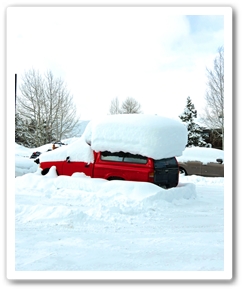
 Like any good guest, when the Holy Spirit comes to us, He doesn’t come empty-handed—He brings a gift. It’s neither generic nor a “one-size fits all” sort of thing. He brings each of us our very own spiritual gift specifically designed just for us. Like any appreciative recipient of such a precious gift, however, it is our job to unwrap and use it.
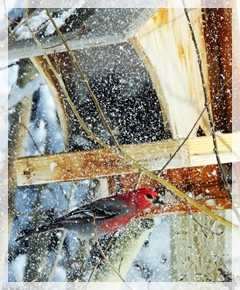 Last week, I started a new gratitude journal and thought back to when I first started keeping such a record of daily blessings. More than fifteen years ago, we were spending the entire winter in our Colorado mountain home. Having had the misfortune of breaking my knee the first day skiing, my outdoor pursuits were over for the season. Watching family and friends hustle out the door each morning, seeing their happy faces upon their return, and listening to them recount the day’s exploits became an invitation to my pity party. During a lonely afternoon, while everyone else was out having fun in the snow, I watched an Oprah show about gratitude. I was clearly in the need of an attitude adjustment so keeping a gratitude journal seemed a good idea. Every night, I listed five things for which I was thankful; some days it wasn’t easy but I kept at it. Later that winter, Oprah and several audience members shared some journal entries. Their entries were long, introspective and weighty while mine, for the most part, were simply a list of ordinary everyday things. People wrote of finding sacred spaces, authentic selves, true paths, and deep spirituality while I’d been grateful for figuring out how to manage the stairs in a multi-level house, chocolate chip cookies, seeing a cardinal on the deck, cable TV, and that the library had the Stephen King novel I wanted to read! My gratitude for pizza delivery, ibuprofen, warm fleece blankets and home-made granola seemed shallow when compared to the philosophic reflections that were shared. Some people had even fashioned beautiful hand-made books while others used handsome leather-bound journals—I was writing in a little appointment book we’d received from our accountant!
 Devotions of the Heart