
God has given each of you a gift from his great variety of spiritual gifts. Use them well to serve one another. [1 Peter 4:10 (NLT)]
 While writing about the spiritual gift of healing these last two days, I recalled a conversation about this spiritual gift with a pastor friend. I asked if anyone in his church was gifted with healing. He said no with a caveat: just because he knew of no one didn’t necessarily mean that no one had it. Having a gift doesn’t guarantee it will be used.
Take our Aunt Margaret, for example. When she died, we found several boxes of brand new shirts and nightgowns stashed in the corner of her closet. The same size and style as the stained and threadbare ones she always wore, they were birthday and Christmas presents we’d sent her through the years. Aunt Margaret’s receipt of her gifts didn’t mean she used them and receiving a gift from the Spirit doesn’t mean we’ll use it either!
Unlike Margaret’s gifts, spiritual gifts aren’t mass produced or come in a box from Macy’s. They are individual gifts God designs expressly for each person that are given to us when we become Christ’s servant. His gifts are capabilities like wisdom, teaching, encouragement, helping, administration, pastoring, giving, hospitality, evangelism, leadership or healing that enable us to build God’s Kingdom. If we are going to be good stewards of these gifts, we must both recognize and use them by responding when the Spirit offers us opportunities to do so. Unfortunately, willfulness, fear, and lack of faith often keep us from doing that.
Several years ago, in our small group at church, I met a troubled young woman who needed encouragement. At the Spirit’s urging, I surprised myself by offering to email her each day with an uplifting Bible verse. Originally, I expected the emails to stop when our group study ended. God, however, had other plans and, before I knew it, I was adding a few words to the day’s verse and sending out messages to sixty people. When a friend (one gifted with encouragement) urged me to post my devotions on a website, I pushed back in fear. Like Moses, I thought of all the reasons I was unqualified rather than trusting God to qualify me! Eventually, in obedience, I stepped out in faith, started using His gift and fulfilling the purpose He had for me. Now, more than six years, 2,000 devotions, and 500 followers later, I know the ability to do this is a God-given gift; I couldn’t do it on my own.
In Sunday school, the children sing, “This little light of mine, I’m gonna let it shine!” before asking, “Hide it under a bushel?” and answering with a rousing shout, “No!” What about our lights—those special gifts designed just for us and given to us by the Holy Spirit? Are we letting them shine? I’ve been a follower of Christ for a long time but it didn’t take the Spirit decades before He gifted me. It just took me decades to shine my light and use His gift as He intended!
Only God knows if anyone in that pastor’s church is gifted with healing. One day, however, we all will be asked to account for the way we used our spiritual gifts, whatever they may be. Let’s not make the mistake of hiding them under a bushel or leaving them ignored and unused in the corner of our hearts.
Your spiritual gifts were not given for your own benefit but for the benefit of others, just as other people were given gifts for your benefit. [Rick Warren]
 When writing yesterday’s message (“Jehovah Rapha”) about my ski accident, I thought about the ten lepers healed by Jesus. Only one returned to thank Him. Did the others assume they would see Jesus some other day and could express their gratitude then? Jesus, however, was on His way to Jerusalem. The lepers had a week’s worth of purification ceremonies, cleansing, isolation, and offerings ahead of them and that “other day” would not come. By not returning immediately, they missed a precious opportunity to thank Jesus.
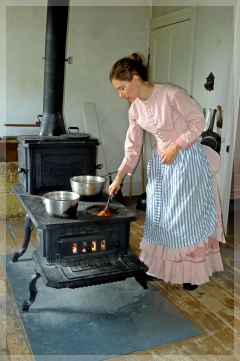 Labor Day was my least favorite holiday when I was a girl (and not just because school started the next day)! For the Smith family, Labor Day meant work. We spent the entire day helping my father as he climbed up and down a ladder to exchange the screens (that had been mounted the previous Memorial Day) with the external storm windows. It was several years before I understood that Labor Day was not a special day dedicated to this yearly ritual of washing windows, lugging screens and windows to and from the garage, and otherwise spending my last day of summer vacation working. Energy efficiency and fuel bills were of no interest to me and, selfishly, it never occurred to me that my father probably didn’t enjoy the holiday ritual any more than did his children. I certainly never thought to thank him for working so hard to provide us with the house (and storm windows) that kept us safe and warm all winter long!
 The heavens proclaim the glory of God. The skies display his craftsmanship. Day after day they continue to speak; night after night they make him known. They speak without a sound or word; their voice is never heard. Yet their message has gone throughout the earth, and their words to all the world. [Psalm 19:1-4 (NLT)]
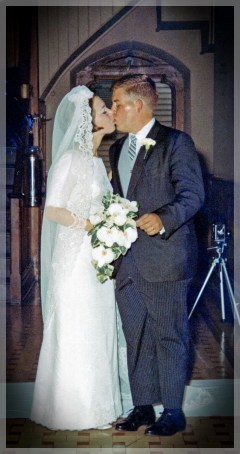 While being in lockdown for months may have given some couples a chance to reconnect, that connection wasn’t welcomed by all. Once their mandatory 10-week lockdown was lifted, Italian lawyers reported a 30% surge in couples starting divorce proceedings and both China and Saudi Arabia showed a similar rise when couples emerged from quarantine. For some couples, 24/7 togetherness for weeks on end exacerbated typical martial issues like money, housework, drinking, child care, screen and phone time, and dirty dishes in the sink. With the additional stressors of homeschooling, job loss or working at home, apprehension about the future, and trying to navigate safely in a COVID-19 world, even the best marriages have been tested.
 “Work expands to fill the time available for its completion,” is what’s known as Parkinson’s Law. Writing those words in 1955, Parkinson wasn’t talking about deadlines; he was taking aim at the British Civil Service and government bureaucracies that become less efficient as they increase in size. Nevertheless, later studies have shown that without strict time constraints, we tend to waste time and work takes longer than necessary to complete.
