THE CATRINAS

For this is how God loved the world: He gave his one and only Son, so that everyone who believes in him will not perish but have eternal life.… There is no judgment against anyone who believes in him. But anyone who does not believe in him has already been judged for not believing in God’s one and only Son.… And anyone who believes in God’s Son has eternal life. [John 3:16,18,36 (NLT)]

La Catrina vestida de mariposasAll Saint’s Day for the Western Christian Church is November 1. While Roman Catholic and Orthodox church observances tend to focus on those who’ve been canonized saints, the Protestant church has a different approach to this holy day. Whether living or dead, it regards all Christian believers as “saints” and part of the Communion of Saints we speak of when reciting the Apostles’ Creed. For Protestants, All Saint’s Day is a time to commemorate Christian family members, church members, and friends who have died. At our liturgical church, there will be a solemn reading of the names of all church members who passed during the year. After each name is read, the bell will toll.

All Saints’ Day is observed in different ways in other cultures. In Mexico, the Dia de los Muertos, (Day of the Dead) is one manifestation of this feast day. I was unfamiliar with this Mexican tradition until our botanical garden featured eight larger-than-life skeleton sculptures of La Catrina. I’d always thought of the skulls and skeletons associated with this day as ghoulish until taking a good look at these Catrinas. One of the most recognizable figures of Day of the Dead, the elegant La Catrina doesn’t approach death through sadness but as a colorful celebration of life.

These skeletal but beautifully dressed 8-foot Catrinas towered over the gardens. Symbolizing the return of the souls of the deceased, one Catrina was adorned in monarch butterflies. One carried marigolds (the scent of which is said to attract the souls of the dead to altar offerings) while another carried a basket of food. Although I didn’t recognize the Catrina of Mexican actress/singer Maria Felix, Mexican artist Frida Kahlo with her “unibrow” was easy to recognize.

With its food, drink, and celebration, the Day of the Dead is like a family reunion—except one’s dead ancestors are the guests of honor. A curious blend of indigenous rituals, European religion, and Spanish cultures, many of its traditions and beliefs are pagan rather than Christian. While sharing stories and remembering our loved ones is a good way to deal with their loss, the Day of the Dead is not based on Biblical truth and many of its observances go beyond honoring the deceased. Those that involve superstition, mythology, empty rituals, the occult, or communing with the dead go into Satan’s territory and pose serious theological problems for a Christian.

Nevertheless, in spite of its pagan origins and rituals, I couldn’t help but contrast the joyful celebrations of the Day of the Dead with the solemn reading of names at our church on All Saint’s Day. Of course, we miss our dead friends and family and mourn their loss, but we also should remember all that we loved about them and celebrate their memory with smiles, joy, and even laughter!

All the Catrinas, including Lady Mictlán (the Aztec queen of the underworld), faced death with a smile—almost a smirk. In fact, the Catrina’s smiles reminded me of the Apostle Paul’s words in 1 Corinthians 15:15: “O death, where is your victory? O death, where is your sting?” As Christians, we can face both our death and the deaths of other believers with a smile. Our Christian hope isn’t that we’ll be welcomed back into the kingdom of living with flowers and food after death. Our Christian hope is that we’ll live forever in the kingdom of God! We’ll be welcomed there not because of works, worth, or rituals; we’ll be welcomed solely because of the work Jesus did on the cross! Because Jesus defeated death, we can face it with a smile even broader than that of La Catrina!

A believer may feel the stroke of death, but he shall never feel the sting of death. [D.L. Moody]

So you see, just as death came into the world through a man, now the resurrection from the dead has begun through another man. Just as everyone dies because we all belong to Adam, everyone who belongs to Christ will be given new life.… Then, when our dying bodies have been transformed into bodies that will never die, this Scripture will be fulfilled: “Death is swallowed up in victory. O death, where is your victory? O death, where is your sting?” For sin is the sting that results in death, and the law gives sin its power. But thank God! He gives us victory over sin and death through our Lord Jesus Christ. [1 Corinthians 15:21-22, 54-57 (NLT)]

Copyright ©2023 jsjdevotions. All rights reserved.

MAKING EXCUSES

If we claim we have no sin, we are only fooling ourselves and not living in the truth. But if we confess our sins to him, he is faithful and just to forgive us our sins and to cleanse us from all wickedness. If we claim we have not sinned, we are calling God a liar and showing that his word has no place in our hearts. [1 John 1:8-10 (NLT)]

canna - bandana of the evergladesWhen the woman joined our group at the table in the school gym, she said, “I got a late start so I was speeding to get here. If a cop stopped me, I was going to tell him I was doing the Lord’s work and, since God will forgive me, he should too.” She insisted that speeding for a godly purpose was a justifiable offense and, since God offers forgiveness, so should the police. Granted, we were doing God’s work by packing meals for the needy but, as the Blues brothers learned when they saved the orphanage, a mission from God is not a “Get Out of Jail Free” card.


Short of rushing someone to the hospital in a life-or-death situation, I’m not sure there is a valid excuse for speeding. While the bags we filled with rice, beans, and seasoning could be considered life-saving, some fifty of us packed food for over three hours so her tardiness had negligible impact on our work. If the woman’s speeding had caused an accident or injury, would she still consider her “mission from God” a valid excuse?

Having pointed my finger at this woman, two were pointed at me and I plead “guilty” as charged. None of us like consequences and so, like her, we all make excuses. In fact, a 2020 poll found that the average American makes six excuses a day! If not to traffic cops, we make them to our teachers, bosses, classmates, co-workers, neighbors, parents, children, spouse, and even to ourselves! We claim we ran out of time, forgot, were too tired, or having a bad day. Instead of blaming the dog for eating our homework, we blame the heavy traffic, the computer that crashed, or the bad weather.

Worse, even though I’ve never had to excuse my driving to the police, I’ve offered a variety of excuses to God for greater offenses! I don’t think I’m alone on this. Rather than a contrite confession, we probably offer a litany of excuses justifying our various transgressions. Like the child who cries, “He started it!” we hold others accountable, claim inexperience or naivete, defend our motives, or blame extenuating circumstances. If a rose by any other name is a rose, I suspect a sin is a sin regardless of how skillfully we try to justify or defend it!

God doesn’t need to be told what we’ve done—He already knows that. He doesn’t want excuses because there is no excuse for sin. He wants us to repent of our sins and turn to Him! The Greek word translated as repent is metanoeó  which is more than regretting one’s sin. Its literal meaning is to think differently afterwards. Eerdmans Bible Dictionary defines repentance as “a complete change of orientation involving a judgment upon the past and a deliberate redirection for the future.”

That change of direction can’t happen if we rationalize our sins by blaming others or validate them with excuses. Until we honestly recognize and admit our sins, we’re not likely to repent of them. We can’t turn away from what we’re unwilling to acknowledge doing! Unacknowledged is unrepented!

Although being on a “mission from God” is not an excuse for sin or law-breaking, part of the woman’s theology is correct—God will forgive her! She was, however, totally wrong about why. God doesn’t forgive us because of our good works or great excuses. It is only by God’s grace and our faith in Jesus that we are forgiven. It is when we truthfully look at our sins, contemplate how pitiful and unworthy we are, and offer our failures in their naked ugliness without excuse that we can understand how loving, compassionate, generous, and forgiving our God really is. It is only then that we truly appreciate the gift of God’s forgiveness Jesus gave us on the cross.

True repentance is no light matter. It is a thorough change of heart about sin, a change showing itself in godly sorrow and humiliation – in heartfelt confession before the throne of grace – in a complete breaking off from sinful habits, and an abiding hatred of all sin. Such repentance is the inseparable companion of saving faith in Christ. [J.C. Ryle]

I have come to call not those who think they are righteous, but those who know they are sinners and need to repent. [Luke 5:32 (NLT)]

Prove by the way you live that you have repented of your sins and turned to God. [Matthew 3:8 (NLT)]

Copyright ©2023 jsjdevotions. All rights reserved.

THE BEST THING ABOUT HEAVEN

Whoever believes in him is not condemned, but whoever does not believe is condemned already, because he has not believed in the name of the only Son of God. And this is the judgment: the light has come into the world, and people loved the darkness rather than the light because their works were evil. [John 3:18-19 (ESV)]

As Christ’s followers, we look forward to our heavenly home. On the other hand, we also cherish life here and now and, unless severely incapacitated or wracked in pain, we aren’t in a rush to depart. Nevertheless, our faith in what lies ahead keeps us from wanting to prolong the inevitable or fearing the unknown. As beautiful as life is on earth, we know that what awaits us is far better than anything we could envision. As the Apostle Paul told the Philippians, “Christ will be honored in my body, whether by life or by death. For to me to live is Christ, and to die is gain.” [1:20-21] Whether living or dead, it’s all good for a believer!

While Christians should have no qualms about death, one Christian friend is approaching her departure date with misgivings. It’s not because of fear; as a follower of Christ, she knows she holds a ticket on the train to Heaven. Her reluctance is because many of her loved ones are unbelievers whose train won’t be bound for glory. Imagining she will eternally mourn their absence in the hereafter, she can’t picture any joy in heaven without them.

Entrance through the pearly gates isn’t earned by good works because even our most righteous deeds fall short of God’s glory. Moreover, no one gets into heaven just because they were baptized as an infant, attended Sunday school, or can recite the Lord’s Prayer, the books of the Bible, and the Apostles’ Creed. Works, water, knowledge, and words mean nothing without the change of heart that comes with faith in Jesus and the work of the Holy Spirit. It is faith in Christ that saves us and, unlike traits such as brown eyes or curly hair, faith isn’t in people’s DNA; it’s in their hearts. While our example and message may influence our loved ones, ultimately, each person has to make a personal decision whether or not to believe in Jesus. As believers, all we can do is pray, share, and continue to witness with our words and lives—the rest is up to them.

Since our Good Shepherd does not want to lose any sheep, we can be sure that He will offer our loved ones every opportunity to come into the fold. Moreover, it’s impossible for any of us to know what someone else truly believes. We are neither judge nor jury; only God knows what is in people’s hearts and only He will determine their final destination. We may be pleasantly surprised on the other side of those pearly gates!

Nevertheless, it’s a painful reality that not everyone we love will choose Jesus. The good news is that some eventually do! Several years ago, a friend expressed distress that her unbelieving and skeptical husband was not destined for God’s kingdom. Without nagging or whining, she encouraged him to join her at church, read Scripture, and to freely seek answers to his many questions. Like St. Augustine’s mother Monica, my friend also prayed for him relentlessly. Not long ago, her husband professed his belief and was baptized!

We know that God is perfect and everything about him is perfection—His judgment, His plan of salvation, and His dwelling place. Yet, how could heaven be perfect if the people we love aren’t with us? While Scripture doesn’t give us the answer, it does tell us that God is compassionate, merciful, and “filled with unfailing love and faithfulness.” As such, He would never condemn his faithful children to an eternity of sorrow in His heavenly home. Wiping every tear from our eyes, He promises “there will be no more death or sorrow or crying or pain.” [Revelation 21:4]

Let’s remember that being reunited with loved ones isn’t the best thing about Heaven. The best thing about Heaven is being in the presence of God and face to face with Jesus!

It is not darkness you are going to, for God is Light. It is not lonely, for Christ is with you. It is not unknown country, for Christ is there. [Charles Kingsley]

Let not your hearts be troubled. Believe in God; believe also in me. In my Father’s house are many rooms. If it were not so, would I have told you that I go to prepare a place for you? And if I go and prepare a place for you, I will come again and will take you to myself, that where I am you may be also. [John 14:1-3 (ESV)]

Copyright ©2023 jsjdevotions. All rights reserved.

COMING … (Part 1)

Then Jesus said, “Come to me, all of you who are weary and carry heavy burdens, and I will give you rest. Take my yoke upon you. Let me teach you, because I am humble and gentle at heart, and you will find rest for your souls. For my yoke is easy to bear, and the burden I give you is light.” [Matthew 11:28-30 (NLT)]

Just as I am, without one plea,
but that thy blood was shed for me,
and that thou bidd’st me come to thee,
O Lamb of God, I come, I come.

Just as I am, and waiting not
to rid my soul of one dark blot,
to thee, whose blood can cleanse each spot,
O Lamb of God, I come, I come.

elephantAs we came together in worship, each of us bringing the Lord our own private sins, sorrows, doubts, and fears, the hymn’s words, “Just as I am… I come, I come,” seemed a fitting way to start the service. Because its heartfelt words are so relatable, Just as I Am is one of my favorite hymns. Curious about its origin, I learned that its words were written by a Victorian hymn writer named Charlotte Elliott. The daughter of an evangelist, she suffered a serious illness at the age of 32 that left her an invalid for the rest of her life. Angry about what she perceived as uselessness because of her disability, Elliott became severely depressed and spiritually lost. After a visiting minister counseled her to come to Jesus, she asked how she could come to Him when all she had was her anger, sadness, questions, and broken body. The clergyman’s response was simple: “Come to Him just as you are.” Although she gave her life to Christ at that time, she continued to be plagued by depression.

After a sleepless night filled with doubts and feelings of uselessness, the distressed woman “gathered up in her soul the grand certainties, not of her emotions, but of her salvation: her Lord, His power, His promise.” [Lutheran Hymnal Handbook] Remembering the words said to her twelve years earlier, “Come to Him just as you are,” Charlotte Elliott wrote the hymn we know as Just as I Am. By the grace of God, this woman who came to Jesus just as she was (with broken body and troubled heart) ended up writing about 150 hymns, many of which as still in use today!

Not a one of us comes to the Lord without sin, doubts, pain, scars, weaknesses, and a whole lot of troubling history. John and James had big egos and short-tempers, the Pharisee Saul/Paul hated Gentiles and persecuted Christians, and Mary Magdalene had been possessed by seven demons! For twelve years, the woman with the bleeding disorder was considered unclean and the leper who knelt before Jesus literally was untouchable. Nicodemus was so afraid that he came with his questions in the dark of night. The woman at the well lived with a man not her husband and had been used and discarded by several men before that! The blind men who came to Jesus were nothing but beggars and Zacchaeus and Matthew came to Him as corrupt collaborators. We don’t know the sins of the man hanging on the cross beside Jesus and we can only imagine the baggage carried by the prostitute who washed Jesus’ feet with her tears and dried them with her hair. Yet, they all came to Jesus just as they were and He welcomed them all!

It’s never been a question of whether or not we’re good enough to come to Jesus—none of us are worthy to stand in His presence. Nevertheless, “Come as you are!” is how He invites us to come to Him. In spite of our flaws, sins, doubts, anger, depression, limitations, illness, regrets, or checkered pasts, Jesus loves us as we are and welcomes us with open arms. But, while He welcomes us as sinners, He doesn’t welcome our sins. Our Lord expects us to leave them behind with all the other worldly baggage that weighs us down. It is when we humbly and repentantly come to Jesus just as we are that, by the power of the Holy Spirit, He will make of us what we should be!

Just as I am, though tossed about
with many a conflict, many a doubt,
fightings and fears within, without,
O Lamb of God, I come, I come.

Just as I am, thou wilt receive,
wilt welcome, pardon, cleanse, relieve;
because thy promise I believe,
O Lamb of God, I come, I come.
[Charlotte Elliott (1835)]

Jesus replied, “I am the bread of life. Whoever comes to me will never be hungry again. Whoever believes in me will never be thirsty. … I am the light of the world. If you follow me, you won’t have to walk in darkness, because you will have the light that leads to life.” John 6:35, 8:12 (NLT)]

Copyright ©2023 jsjdevotions. All rights reserved.

FROM DEATH TO LIFE

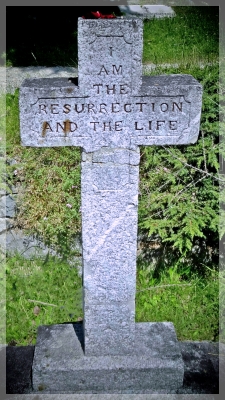
“I am the resurrection and the life,” replied Jesus. “Anyone who believes in me will live, even if they die. And anyone who lives and believes in me will never, ever die.” [John 11: 25-26 (NTE)]

Matterhorn Memorial - Zermatt

Courtesy of technology, we recently attended an Illinois church service while sitting at our computers in Florida. The choir, accompanied by pipe organ and trumpet, began with Jesu, Joy of Man’s Desiring and ended with Joyful, Joyful We Adore Thee. The trumpet’s bright piercing sound and the organ’s lilting accompaniment in the first song and the uplifting words in the final one makes them popular choices for joyful occasions like weddings, Christmas, and Easter. Although we were rejoicing, we weren’t celebrating nuptials, Christ’s birth, or His resurrection. Instead, we were rejoicing in a life well lived and celebrating the life of a friend who recently went home to God.

During the service, several people spoke of this Christian man’s faith, character, modesty, generosity, humility, compassion, honesty, reliability, thoughtfulness, wisdom, and curiosity. A leader both in his community and church, he built consensus rather than caused discord, bore the fruit of the Spirit, and truly lived his life as a follower of Christ. Although he played the trumpet in college, he never blew his own horn or called attention to himself. Nevertheless, he was a shining light in a world filled with darkness. Our lives were blessed by his presence and he will be deeply missed by all who knew him.

As much as his family and friends mourn his absence, the service was one of unparalleled joy because, while here on earth, he followed Jesus with his heart, soul, body, and mind. We could be joyful because we know death is not the end of our lives—just of our lives in these perishable bodies. As Christians, we have hope of something greater that goes far beyond life and death.

In contrast, I can’t feel joy at any funeral or memorial service for a non-believer. While songs may be sung, they’re more likely to be My Way or Over the Rainbow than Abide with Me or It is Well with My Soul. After sharing memories and listing accomplishments, the person giving the eulogy will say reassuring things about the deceased being in a better place, with the angels, or watching over us—none of which are based in reality. Unbelievers are not going home or into the arms of God, they won’t be “looking down” at their loved ones, and there won’t be a happy reunion in heaven with friends and family. The only way an unbeliever lives on is in photographs and people’s memories; sadly, even those will fade and be lost over time. There is little comfort in the passing of a non-believer.

While there are different opinions in Christ’s church about what happens immediately after death, there is unanimity in His church about what eventually happens—we will come face to face with God and our entire lives will be examined. Jesus’ life, death, and resurrection mean that His followers aren’t afraid of God’s judgment on the day. Regardless of our failures and sins, we are recipients of God’s grace and forgiven for our wrongs. Because of God’s mercy and grace, all of His adopted children have a confirmed reservation waiting for them in heaven.

Because the only way to heaven is faith in Jesus and there is no return from the depths of hell, there is no comfort or joy in the passing of a non-believer. On the other hand, in spite of our sorrow, we can rejoice when Christ’s followers depart this world because we know their destination, that our separation is only temporary, and that we will meet again in God’s good time. That’s why, at their passing, we can raise our voices and joyfully sing, “Joyful, joyful, we adore You, God of glory, Lord of love; Hearts unfold like flowers before You, Opening to the sun above.”

Morality may keep you out of jail, but it takes the blood of Jesus Christ to keep you out of hell. [Charles Spurgeon]

I’m telling you the solemn truth: anyone who hears my word, and believes in the one who sent me, has the life of God’s coming age. Such a person won’t come into judgment; they will have passed out of death into life. [John 5:24 (NTE)]

Copyright ©2023 jsjdevotions. All rights reserved.

EUODIA AND SYNTYCHE

I have a special appeal which goes jointly to Euodia and Syntyche: please, please, come to a common mind in the Lord. [Philippians 4:2 (NTE)]

sandhill cranes
These words from Philippians are the only mention of Euodia and Syntyche in the New Testament. Personally, if someone is going to read about me 2,000 years from now, I would prefer something about how easy it was to get along with me rather than about any arguments I had. Because Paul urges the women to settle their disagreement, it seems that their dispute was personal rather than doctrinal. Had the issue been one of doctrine, Paul would have stepped in and corrected the error as he did in many of his letters to the early churches.

Bible scholars have a sense of humor and it’s been suggested that better names for these women would be “Odious” and “Soon Touchy.” Perhaps Euodia really was disagreeable and unpleasant and Syntyche was thin-skinned and quick-tempered. Then again, maybe they were just like the rest of us at our less than best—stubborn, indignant, tactless, resentful, short-tempered, uncompromising, or easily offended. We don’t know what their problem was nor do we know who was “right” and who was “wrong.” In this case, by holding a grudge, they both were in error!

Because people in conflict usually expect others to take sides, conflict affects more than those directly involved. The women’s behavior was threatening the existence of the church at Philippi and their dispute was hindering God’s work. To save the church, Paul didn’t tell them they had to become best friends or even agree with each other, just to be of the same mind as the Lord. For the sake of the church, he wanted them to find a way to live in harmony.

The letter to the Philippians was written to “all of God’s holy people in Philippi who belong to Christ Jesus, including the church leaders and deacons.” [1:1] In the early church, Paul’s apostolic letters were meant to be read aloud to the entire congregation. Less than 15% of men were literate and that number was less for women. The congregation sat in a circle or semi-circle around the reader so that everyone saw the speaker. This arrangement meant they also saw one another and their reaction to the words spoken. Can you imagine Euodia and Syntyche (and those who may have taken sides in their conflict) as they heard the apostle’s words? There probably was a fair amount of squirming in the seats that day!

Like churches, families can suffer because of quarrels. My friend Wendy’s two sisters have a long-standing feud and refuse to speak with one another. Whenever she returned to her hometown, each sister expected Wendy to spend time with her but got irate and offended if she spent time with the other sibling. Even though Wendy refused to be caught up in their animosity, she was in a no-win situation. Eventually, it became easier to step away from the drama altogether and not return home at all. The sisters’ vendetta impacted more than just Wendy; ten cousins were affected as were the women’s parents when they were alive.

Heavenly Father, knowing that we can’t agree with everybody all of the time, show us how to get along with them. Give us loving, forgiving, and understanding hearts. Toughen our hides so that we don’t take offense so easily. Show us how to have harmony in all of our relationships. Help us to acknowledge other people’s points of view and guide us to respectfully agree to disagree with one another when necessary.

Until the day that you become perfect, don’t expect others to be. [From “Hugs – Daily Inspirations for Grandmas” (Howard Books)]

So, my dear brothers and sisters, get this straight. Every person should be quick to hear, slow to speak, slow to anger. Human anger, you see, doesn’t produce God’s justice! So put away everything that is sordid, all that overflowing malice, and humbly receive the word which has been planted within you and which has the power to rescue your lives. [James 1:19-21 (NTE)]

Copyright ©2022 jsjdevotions. All rights reserved.