
Jesus also used this illustration with some who were sure that God approved of them while they looked down on everyone else. [Luke 18:9 (GW)]
Look at it this way: At the right time, while we were still helpless, Christ died for ungodly people. Finding someone who would die for a godly person is rare. Maybe someone would have the courage to die for a good person. Christ died for us while we were still sinners. This demonstrates God’s love for us. [Romans 5:6-8 (GW)]
A pharisee is hard on others and easy on himself, but a spiritual man is easy on others and hard on himself. [A.W. Tozer]

Our Lady Cathedral, Antwerp
The bus was loaded with skiers returning from the slopes and I took the last seat before realizing who was beside me. The man was mumbling, dirty, smelly and obviously high. Known around town as “Druggie Donnie,” he manages to survive on a small monthly stipend from his family and whatever he can scrounge up by panhandling or odd jobs. I shrank away from him in disgust. As the bus gradually emptied out, I couldn’t help but hear the words of a disheveled twentyish young woman sitting across from me as she spoke loudly into her phone. She was talking (actually boasting) to her friend about having partied the night before and waking up in an unfamiliar condo with a man she’d just met. I was shocked and sickened by her words. What a contrast these two were with the cheerful families who’d piled on the bus after a fun day of skiing. “These are my kind of people—the happy, sober, sane and moral ones; the good folks,” was my thought. “Oops!” said the Holy Spirit, “Your inner Pharisee is showing!” The town bus is filled with a cross-section of society and the Holy Spirit reminded me that, even though I may have little in common with some of the riders, they all are my kind of people.
Christ died for the ungodly—that includes Donnie and the young woman as well as me and all of those apparently nice upstanding families. Jesus didn’t die because people are good; he died because we’re bad! He wasn’t crucified for the righteous and the devout; He was crucified for the repentant thief on the cross and the Samaritan woman at the well. If we were perfect, we wouldn’t have needed to be reconciled with God. The gospel message is that all sinners (not just the nice respectable ones) who believe in Him will be saved. The loving Father welcomes His wayward children home. The Good Shepherd doesn’t stay with the ninety-nine who have obediently remained in the fold; He goes out in search of the lost sheep who went astray.
I have more in common with Donnie and that young woman than I’d care to admit: we’re all sinners. The only difference between them and me is that I have been saved by Jesus Christ. I can’t be self-righteous because I had nothing to do with that salvation; it was His gift to me. I can only pray that some day, some way, they also will accept God’s saving grace.
Mercy seeks the guilty, grace has to do with the impious, the irreligious and the wicked. The physician has not come to heal the healthy, but to heal the sick. The great philanthropist has not come to bless the rich and the great, but the captive and the prisoner. He puts down the mighty from their seats, for he is a stern leveller, but he has come to lift the beggar from the dunghill, and to set him among princes, even the princes of his people. [Charles Spurgeon]
 It’s springtime in the mountains and I’m thrilled to see that it’s snowing. Although I was hoping for at least one more powder day on the mountain, that’s not why I’m pleased. I’m happy because, once again, everything looks pristine and clean. You see, March’s warmer temperatures and sunshine have been busy melting the nearly 300 inches of snow we’ve had this season. As that white stuff gradually disappears, ugliness is uncovered. Hidden under those mounds of snow is four months’ worth of unsightly litter, pollution, exhaust and smoke residue, scoria and gravel. That filthy accumulation is now making its appearance along the roadways. As the snow recedes along the footpaths, it’s not just lost mittens, discarded tissues and cigarette butts that emerge but also the dog dirt and moose and elk pellets from the animals who have ventured onto the trails. As beautiful as springtime in the mountains can be, this ugliness is part of what we call “mud season.” Today’s snow covers it all up again and I can briefly forget the filth hiding beneath it. It’s sort of like sweeping dirt under the carpet or painting over handprints on the wall; although the grime is still there, it doesn’t bother us because it can’t be seen.
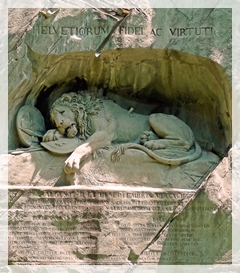 I don’t know about you, but I’m about ready to unplug the televisions until after the elections in November. It doesn’t matter which party or which candidate, the conduct and rhetoric has become nearly unbearable. Today’s Bible reading took me to Matthew 5 and the Beatitudes—those declarations of blessedness given by Jesus at the beginning of His Sermon on the Mount. I couldn’t help but contrast His words with the behavior of our politicians, their supporters and the news media. I then remembered A.W. Tozer’s observation that, if we were to take the Beatitudes and turn them inside out, we’d have the “very qualities which distinguish human life and conduct.”
 Recently, we provided dinner for a local skateboard church ministry that serves teens and young adults. If church is a hospital for wretched souls, this one is a MASH unit for them! Most of the youth have troubled pasts and few come from faith-based homes or with any knowledge of the Bible. Many, however, have transformed their lives as they have come to know Jesus through this ministry.
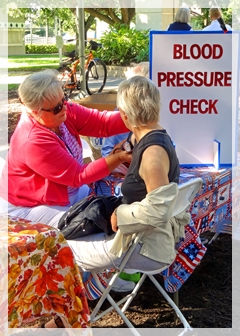 Like any good guest, when the Holy Spirit comes to us, He doesn’t come empty-handed—He brings a gift. It’s neither generic nor a “one-size fits all” sort of thing. He brings each of us our very own spiritual gift specifically designed just for us. Like any appreciative recipient of such a precious gift, however, it is our job to unwrap and use it.
 Devotions of the Heart