TECHNICALITIES (Passover – Part 2)

Sin is no longer your master, for you no longer live under the requirements of the law. Instead, you live under the freedom of God’s grace. [Romans 6:14 (NLT)]

great egret - breeding loresSince Jews are prohibited from possessing any food products containing leavening (chametz) during Passover, a Muslim Arab-Israeli man in Abu Ghosh now owns most of the bread, pastries and beer in Israel. As they have for many years, Israel’s two chief rabbis sold all of the leaven food from state-owned companies, the prison system, and the national emergency stores to him. He symbolically purchased the chametz for the duration of Passover by making a small down payment. Having promised to pay an enormous sum at the end of Passover, at week’s end he will tell the rabbis that he can’t pay up, the deal will be canceled, his down payment returned, and Israel again will own its yeast-laden products. Here in the U.S., some Jewish families “sell” their chametz to non-Jewish friends and then put the food in an out-of-the way cupboard. Technically, while still on their property, it’s not really theirs because they’ve “leased” the cupboard to the Gentile buyer. After Passover, the lease expires and the food is sold back to its original owner. While this may circumvent the law, I’m not sure it’s what God had in mind when He commanded, “There must be no yeast bread or any yeast at all found within the borders of your land during this time.” [Exodus 13:7]

Finding ingenious ways to sidestep rules and regulations is not limited to Judaism; we all do it. Technically, we’re not texting while driving—we’re texting while stopping at a red light! In principle, the dog is on a leash even when he’s dragging it on the ground or carrying it in his mouth. In 2007, a Minnesota bar got around the smoking ban by using a technicality in the law that allowed actors to smoke in their roles. The bar announced their staging of a continuous improvisational play. Every customer of the bar would be an actor taking a role in the “play” and, therefore, smoking was permitted! Teenagers have a special knack for getting around parental and school rules. It’s part of their make-up to think outside the box to outwit authority. Mankind will find every technicality, loophole, ambiguity, and grey area to circumvent laws and regulations.

Imagine God’s frustration while watching his children sidestep and disobey His law. A covenant of law requires complete obedience and, frankly, try as we might, we just can’t make the cut. We see rules and regulations as an infringement and prohibitions seem to increase our desire to do just that thing. Fortunately, rather than a covenant of law, Christians are under a covenant of grace and freed from the Old Testament rules and regulations. In grace, our salvation doesn’t come from following rules or doing the right thing and God accepts the less than perfect. It is our sincere belief rather than our faultless behavior that saves us. We have no need for sidestepping, semantics, and technicalities because obedience to rules is not what gives us eternal life and sin won’t cause us to lose it. Grace, however, is not license to sin; it is a license to live as God intended and follow the spirit of His law through the power of the Holy Spirit.

So now there is no condemnation for those who belong to Christ Jesus. And because you belong to him, the power of the life-giving Spirit has freed you from the power of sin that leads to death. The law of Moses was unable to save us because of the weakness of our sinful nature. So God did what the law could not do. He sent his own Son in a body like the bodies we sinners have. And in that body God declared an end to sin’s control over us by giving his Son as a sacrifice for our sins. [Romans 8:1-3 (NLT)]

Copyright ©2017 jsjdevotions. All rights reserved.

SET FREE

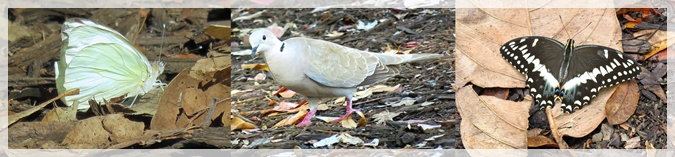
great southern white butterfly - collared dove - giant swallowtail
Get rid of all bitterness, passion, and anger. No more shouting or insults, no more hateful feelings of any sort. Instead, be kind and tender-hearted to one another, and forgive one another, as God has forgiven you through Christ. [Ephesians 4:31-32 (GNT)]

It’s the hardest thing to give away And the last thing on your mind today. It always goes to those that don’t deserve. It’s the opposite of how you feel When the pain they caused is just too real. It takes everything you have just to say the word…Forgiveness, Forgiveness …

Show me how to love the unlovable. Show me how to reach the unreachable. Help me now to do the impossible. Forgiveness. I want to finally set it free, So show me how to see what Your mercy sees. Help me now to give what You gave to me – Forgiveness, Forgiveness. [“Forgiveness” by Matthew West]

Those words by Matthew West were the final words of Sunday’s opening prayer. “I want to finally set it free,” echoed in my mind as I looked up to see several butterflies fluttering throughout the park in what appeared to be a dance of freedom and joy. The previous day the local hospice had their annual butterfly release and several of their releases had remained in the park for Sunday’s worship. That event was the organization’s way both to raise funds and to offer an opportunity for people to channel their grief and loss. Following the remembrance ceremony in which loved ones’ names were read, the butterflies were set free. As they flitted off through the trees, these flowers with wings served to remind those attending of the beauty and fragility of life.

Once home from church, I listened to West’s song and, while looking up the lyrics, learned the story behind it. One of twelve songs on his Into the Light album, it was inspired by a letter he received from a woman whose daughter had died at the hands of a drunk driver. The letter told of her journey from hatred and bitterness to forgiveness. Realizing that her anger toward the young man who caused the accident kept her as imprisoned as was he, she chose forgiveness and even reached out to her daughter’s killer. As she shared with him that her God commanded forgiveness, he found his own faith in Christ. While still in custody and wearing shackles, he appeared with this mother as they gave drunk driving awareness presentations. Free from her own prison of rage and animosity, this mother even appeared before the judge to ask him to reduce the young man’s sentence. Truly, she had “finally set it free.”

Sunday morning, as the remaining butterflies danced in the air, our pastor continued his message series on forgiveness. Where once I saw butterflies only as a message of rebirth and resurrection, I began to see them as reminders of how we must release the darkness, resentment, and bitterness that can grow malignantly in our hearts. As the sermon concluded, I noticed that another one of God’s creatures, a dove, had joined the butterflies in their frolic. Perhaps this symbol of peace was just enjoying some leftover crumbs dropped from the previous day’s event. Nevertheless, its presence reminded me that releasing our hurts and anger will bring us peace. Holding on to our injuries keeps us trapped in the darkest of dungeons with no chance of parole or amnesty. Forgiveness is the key that opens the cell door and brings us into God’s light, love and peace.

Most of us will never reach out in forgiveness the way that mother did and I’m not sure God expects us to. Nevertheless, He does expect us to forgive and forgiveness isn’t easy. Chances are the people we need to forgive don’t even deserve it. Deserving, however, has nothing to do with it since we certainly don’t deserve God’s forgiveness for all of our failings. Forgiveness is something we desperately need both to receive and to give. As the butterflies remind us of the beauty and fragility of life, they can also remind us that life is too beautiful and fragile to waste a single moment in anger or resentment. As we release our hurts and offer forgiveness, it’s not the perpetrator who is set free—it is us! And with that beautiful freedom will come God’s peace.

Be tolerant with one another and forgive one another whenever any of you has a complaint against someone else. You must forgive one another just as the Lord has forgiven you. And to all these qualities add love, which binds all things together in perfect unity. The peace that Christ gives is to guide you in the decisions you make; for it is to this peace that God has called you together in the one body. [Colossians 3:13-15 (GNT)]

Copyright ©2017 jsjdevotions. All rights reserved.


DOING FOR OTHERS

Here is a simple rule of thumb for behavior: Ask yourself what you want people to do for you; then grab the initiative and do it for them! [Luke 6:31 (MSG)]

Great Blue HeronYears ago I took a short class in genealogy research. One of the first things told to us was that we were obligated to share any information we discovered with the rest of the genealogy community. Genealogy research depends on the results of other people’s searches of sources like birth and death records, cemeteries, census results and newspapers. We simply owe it to those who led us to our findings to share our knowledge with those who follow in our footsteps. I thought of that class as I wrote yesterday’s devotion about offering thanks.

A few years ago I wouldn’t have been any use at all to those people we helped at the swamp. I knew next to nothing about any of the birds in southwest Florida or where to find them. I’m still a rookie birder and most of my avian knowledge is limited to the shore and wading birds. Nevertheless, thanks to the people who generously shared their knowledge with me—who so willingly pointed out birds, identified species, answered my questions, and explained their behavior—I can now help others who are even less knowledgeable than am I. As for that off-the beaten-track conservation area, the only reason we knew about it is that someone kindly shared his knowledge of it with us.

Both the genealogy information and bird lore I’ve received were given to me gratis. There was no quid pro quo—I gave nothing (but my thanks) in exchange for what was given me. It was shared out of kindness with no expectation of repayment—a little like God’s grace. We can never pay the deeper debt we owe to God for all of His goodness. Any attempt to repay Him is a contradiction of grace because grace wouldn’t be grace if it could be repaid. Just because it can’t be repaid, however, doesn’t mean it can’t be spread around. The Golden Rule tells us to do to others as we would have done to us and then I think of Jesus washing the disciple’s feet. He humbled himself to serve them and told the disciples that they must do for others what He had done for them. We must do for others that which has been freely done for us. Whether it is the giving of knowledge, service, skill, assistance, forgiveness or love, the good things that have been done for us are not ours to keep—they are ours to share. When doors are opened for us (both literally and figuratively), we are obligated to open doors for others.

Here’s another way to put it: You’re here to be light, bringing out the God-colors in the world. God is not a secret to be kept. … In a word, what I’m saying is, Grow up. You’re kingdom subjects. Now live like it. Live out your God-created identity. Live generously and graciously toward others, the way God lives toward you. [Matthew 5:14,48 (MSG)]

Then he said, “Do you understand what I have done to you? You address me as ‘Teacher’ and ‘Master,’ and rightly so. That is what I am. So if I, the Master and Teacher, washed your feet, you must now wash each other’s feet. I’ve laid down a pattern for you. What I’ve done, you do.”  [John 13:12-14 (MSG)]

Copyright ©2017 jsjdevotions. All rights reserved.

THE WINNER

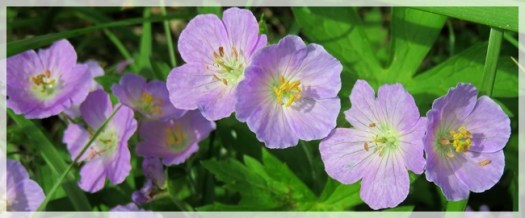
wild geranium
I find joy in the way shown by your written instructions more than I find joy in all kinds of riches. [Psalm 119:14 (GW)]

It’s March Madness time for basketball fans and my team is already out of the competition. Last year, however, my choice won—but not in basketball. After placing sixteen popular Bible stories in brackets, my preferred Bible resource site had its followers tweet votes for their favorite story to see which one moved forward. The choices were: Esther and the king, Jesus walking on water, the Good Samaritan, the Prodigal Son, Joseph and his coat, Jonah and the fish, Noah and the ark, the exodus from Egypt, David and Goliath, Ezekiel and the dry bones, Jericho’s walls, Balaam’s donkey, Daniel and the lion’s den, Jesus healing the blind, Rahab and the spies, and the burning bush. Which would you expect to be the final winner?

Ezekiel and the dry bones didn’t make it past the first round (which I understand since that one sort of creeps me out). Unfortunately, the lovely story of Esther, up against the more familiar parable of the Prodigal Son, was defeated in the first round. In the final round, on one side was the historical account of the young David defeating the giant Goliath. The story is exciting, has danger and violence, and illustrates the supernatural power of God. It’s a tale of a brave young man who demonstrates the power of God with just a sling and a few stones. It tells us that, when we step out in faith, the God we serve can defeat any of the giants in our lives. Everyone loves a story where faith in God beats brute strength and the little guy defeats the big one.

David’s underdog opponent was the parable of the Prodigal Son. It’s a moving story with a not totally happy ending. After the younger son insults his father and foolishly demands his inheritance, he squanders it all. In desperate circumstances, he returns home with his head hanging low and is welcomed by his father. The dark side to the story is that the older son, the one who faithfully remained at his father’s side, is indignant and can’t understand his father’s compassion and forgiveness.

At first glance, David’s defeat of the formidable Philistine would appear to be the favorite. Nevertheless, the undefeatable youth was trounced by the Prodigal Son. When we first meet David, even though he’s young, he seems larger than life. He’s handsome, a skilled musician, and described as having good judgment and being a brave warrior. Among all of Jesse’s sons, he is the one chosen by God to become king. Most of us don’t resemble David nor have we been anointed as a king. We’re not heroic future monarchs, but we are God’s troubled children. As much as we appreciate a story of good triumphing over evil, we can personally relate to Jesus’ parable because we all are God’s prodigal sons.

The parable is a story of hope (the father is waiting at the gate for his son), mercy (the boy is not punished), love (he is hugged and greeted with a kiss), forgiveness (he is welcomed as a son, not a slave) and joy (there’s to be a huge celebration). Like the son, we all disappointed our parents and, if we were blessed with children, they disappointed us at times. Moreover, just as the son misused his father’s money, we have misused the gift of free will and squandered the blessings given us by our heavenly Father. This story reassures us that no matter how immoral, unscrupulous, self-indulgent or corrupt we’ve been, God welcomes his children home when they come with humble and repentant hearts. Once dead because of sin, we can come alive again. Knowing what sinners we are, this demonstration of the Father’s love and forgiveness is reassuring. The parable reminds us that blessings aren’t earned and obedience is not what gives us eternal life. God’s grace is not something we deserve but something He freely gives. Thank you, Heavenly Father, for loving and forgiving your undeserving prodigal children.

He has not treated us as we deserve for our sins or paid us back for our wrongs. As high as the heavens are above the earth—that is how vast his mercy is toward those who fear him. As far as the east is from the west—that is how far he has removed our rebellious acts from himself. As a father has compassion for his children, so the Lord has compassion for those who fear him. [Psalm 103: 10-13 (GW)]

Copyright ©2017 jsjdevotions. All rights reserved.

LIVING WATER

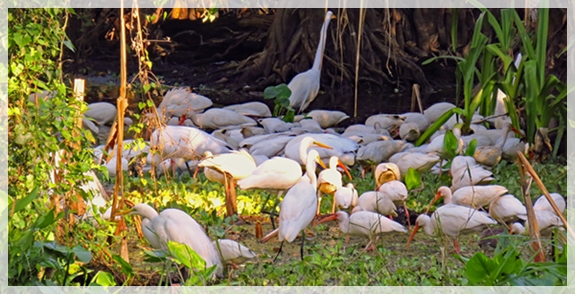
ibis - corkscrew swamp sanctuary
Jesus replied, “Anyone who drinks this water will soon become thirsty again. But those who drink the water I give will never be thirsty again. It becomes a fresh, bubbling spring within them, giving them eternal life.” [John 4:13-14 (NLT)]

For a state that receives over 55-inches of rain a year, the words “Florida drought” seem an oxymoron. Nevertheless, southwest Florida is in moderate drought and the water in the swamp is receding at record pace. The dry down of the swamp concentrates fish into the shallow water that remains and they become easy prey for the wading birds. There is a feeding frenzy as hundreds of birds (and several alligators) gather to enjoy a virtual buffet table lined with fish, frogs, and crayfish. The water in the swamp sustains these beautiful birds and, when it evaporates, they will fly elsewhere. I watched in awe as the birds vied for spots in the diminishing lakes and thought about the importance of water.

About 60% of the human body is made up of water and every living cell needs it to function. It lubricates joints, regulates temperature, flushes waste, and carries nutrients through the body. We can last three weeks without food but we can last only three to five days without water (and as little as three to four hours in extreme heat). Once deprived of water, the cells and organs of the body start to deteriorate. Water in our bodies is the difference between life and death.

Jesus offers us living water and His water truly is the difference between life and death. The water in the swamp is not living water – with no springs, it’s really just a large cistern that collects rain and will eventually evaporate. When the water is gone, only some vultures eating the scraps will remain. The living water offered by Jesus is never-ending; it is poured out in all seasons and will never disappear. Unlike the birds, we don’t have to fight for our spot in the pond or, like the Samaritan woman, come to the well. All we have to do is ask for the living water of eternal life. One drink of His Holy Spirit and we’ll never thirst again.

I find it ironic that some of the last words spoken by the man who offered living water were, “I am thirsty.” [John 19:28] Dehydrated by the torture He’d endured, was it just His dry mouth that led to those words? Did He thirst for the end of His pain and suffering? Or did He make a final demonstration of His humanity by speaking words that showed how much he thirsted for fellowship with God? Let us gather at His table, drink deep of His love, wash in His forgiveness, and never thirst again.

O God, you are my God; I earnestly search for you. My soul thirsts for you; my whole body longs for you in this parched and weary land where there is no water. [Psalm 63:1 (NLT)]

As the deer longs for streams of water, so I long for you, O God. I thirst for God, the living God. When can I go and stand before him? [Psalm 42:1-2 (NLT)]

Copyright ©2017 jsjdevotions. All rights reserved.

SERVANTS

But he gave up his place with God and made himself nothing. He was born as a man and became like a servant. [Philippians 2:7 (NCV)]

There are different kinds of gifts, but they are all from the same Spirit. There are different ways to serve but the same Lord to serve. And there are different ways that God works through people but the same God. God works in all of us in everything we do. Something from the Spirit can be seen in each person, for the common good. [1 Corinthians 12:4-7 (NCV)]

Steamboat ski areaI emailed a friend to ask about her winter and got one of those bad news/good news answers! Her husband suffered a compression fracture in his back, had a heart attack, and underwent surgery. A blizzard then deposited ten-inches of snow in their driveway! The good news was that my friend was blessed by a young man who volunteered to shovel their snow all winter as his “outreach to the elderly.” While I was struck by the man’s kindness, what really disconcerted me was that my friends and I have apparently moved into what is considered the realm of the elderly!

As much as I hate to admit it, I have chores I can no longer do easily and that list grows a little longer every day. Nevertheless, regardless of our ages, we all are called to serve. Fortunately, servanthood doesn’t require exceptional skill, special talents, or even youth.

Today, I saw a large ad for a service that provides professional readers. For a fee, a person will come and read to your loved one. I’m not begrudging people an opportunity to earn a living but I thought it sad that anyone would have to hire someone to read to children, the visually impaired, retirement home residents, or hospital patients. Is there no one who would do it out of kindness? That’s something even the “elderly” can do! We seniors may no longer be able to shovel snow but we can read to people, provide casseroles to shut-ins, and volunteer in charity resale shops. We may not be able to do the heavy lifting or install sheetrock for Habitat but we can assist in their offices or help raise funds. We may not be able to set up chairs and tables at church but we can offer respite for caregivers, become a reading partner with a child, stock shelves in a food pantry, or drive people to chemo-therapy.

While servanthood has no age constraints, it does have a few other requirements. It’s a ministry rather than an obligation and requires the heart of a servant—a heart that helps out of love rather than duty. Servanthood requires observant eyes—eyes that focus on the needs of others and look for tasks that need to be done. As servants, we must think like stewards rather than owners and understand that our time, talent and wealth are not ours to keep but God’s to use. Finally, if we’re real servants, we’re not afraid to do the work of a servant or to be treated as one. Jesus washed the filthy feet of His disciples and, as his servants, we must be willing to get our hands dirty as well!

We may get too old to shovel the walk but we’re never too old to be servants and do God’s work!

 Be kind whenever possible. It is always possible. [Dalai Lama]

My brothers and sisters, God called you to be free, but do not use your freedom as an excuse to do what pleases your sinful self. Serve each other with love.  The whole law is made complete in this one command: “Love your neighbor as you love yourself.” [Galatians 5:13-14 (NCV)]

Copyright ©2017 jsjdevotions. All rights reserved.