
Don’t be misled—you cannot mock the justice of God. You will always harvest what you plant. Those who live only to satisfy their own sinful nature will harvest decay and death from that sinful nature. But those who live to please the Spirit will harvest everlasting life from the Spirit. So let’s not get tired of doing what is good. At just the right time we will reap a harvest of blessing if we don’t give up. [Galatians 6:7-9 (NLT)]
 Cutting in and out of traffic, the sports car sped around us and raced through a red light. A few minutes later, we saw it pulled off to the side of the road with a policeman at the driver’s side window. While the driver deserved the ticket, what happened was not karma. Nevertheless, when seeing someone suffer the consequences of their bad behavior, people often say, “It was karma—what goes around comes around!” Granted, what goes around often comes back around but the word “karma” is not a word that should be in our Christian vocabulary.
Although Christianity says we will harvest what we’ve planted, karma is not a Christian concept. Karma tells us that every good or bad action will result in a comparable good or bad consequence. Because the full reward or penalty doesn’t happen in this lifetime, it’s necessary to return to life again to reap the consequences of previous actions. The behavior during this and previous lives determines one’s destiny (and form) in future lives. Not only do people get what they deserve in karma, but they also get whatever their past life deserves! This life’s cancer, poverty, or paralysis is the result of a previous life’s transgressions or offenses (and we don’t even remember what they were)!
Karma requires reincarnation and there is no such thing as reincarnation in the gospel message. We die once and we’re judged once; our eternal reward or punishment is determined in a single lifetime. We’ll be reborn, but that rebirth is in this life, not in some future life. Yes, there will be an afterlife—but it will be as us (not something or someone else) and it only will be in one of two places: heaven or hell.
As Christians, we sow in this world and reap both in this world and the next. Because there are consequences to our actions, we often reap what we sow in this lifetime, but not completely. We live in a fallen world where the wicked can prosper, the righteous can suffer, and not every reckless driver gets a ticket. Nevertheless, a final day of judgment is promised in Revelation. It is God, however, not karma, who ensures that righteousness is rewarded and sin punished. While there will be rewards for good works and judgment for failures, there will be no condemnation to hell for the Christian. Rather than a pronouncement of doom, our judgment will be more like an assessment of value. What did we do with the gifts with which we’d been blessed? While I don’t understand how this judgment will work or what rewards we might receive or forfeit, I do know that it won’t be in some future life as an insect, dog, pauper or prince.
Thankfully, because of God’s mercy, Christians don’t receive what they ought to get; as sinners, what we deserve is death! Thankfully, because of God’s grace, we also get what we don’t deserve: salvation, forgiveness of sins, abundant life, the Holy Spirit, and an eternity in heaven!
We have one and only one opportunity to get it right and live according to God’s plan. Let’s not waste it!
 John Wesley had an excellent alternative to making a New Year’s resolution that’s unlikely to be kept. Believing that Christians should reaffirm their covenant with God, in 1755, he introduced a covenant service to the Methodist Societies. By 1775, this service was usually held on New Year’s Eve (and called a Watch Night Service) or New Year’s Day. This was a service of renewal in which believers would gather for self-examination and reflection and then renew their covenant with God by dedicating themselves wholly to Him. The practice of a covenant renewal service held on the Sunday nearest January 1st continues in some Methodist churches today and is a practice that has crossed denominational lines.
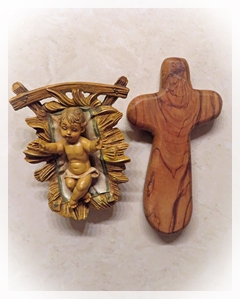 Pew Research reports that while 90% of Americans celebrate Christmas, more than half of them celebrate it only as a cultural holiday! While they’ll decorate their house with lights and wreaths, trim a tree, send cards, and exchange gifts, Christmas is just an excuse for good food, parties, family gatherings, and presents. While they’re not indifferent to Santa, gifts, merriment, or decorations, like the people of 1st century Palestine, they are indifferent to the Christ child. The shepherds saw the star and sought the babe in the manger and a caravan from the East brought Him gifts, but we don’t read of any townspeople visiting Joseph and Mary. What of the priests and scribes who told Herod where the Messiah would be born? They knew the prophecies but didn’t join the Magi in their quest to find the One who would fulfill those prophecies. Lowly shepherds and men from a faraway land recognized Jesus as the Messiah but most of God’s chosen people ignored the greatest event in all of history.
 James warns of the dangers of an untamed tongue and the damage that can be done with ill-considered words. Although he was speaking of speech, the same goes for the written word. Whether we’re holding a pen, our fingers are speeding across a keyboard, or our thumbs are tapping out a text, our words are powerful. Whether we use them to build or destroy is our choice.
 Acting as gatekeepers for the temple in Jerusalem, the Levites opened and closed its doors and guarded it during the night. Among their many duties, they prohibited entry to anyone considered “unclean,” protected the temple from theft or desecration, watched the offering and tithe money, and maintained proper decorum within the temple. They also were the ones who imposed the death penalty on any who dared enter the temple illegally.
 Spencer Johnson’s Who Moved My Cheese? is an uncomplicated parable about two mice and two “little people” (Hem and Haw) who are looking for the “cheese” that will bring them happiness. When the cheese disappears, the mice quickly scurry off in search of more. Hem and Haw, however, have built their life around that cheese. Arrogantly thinking their brains are superior to those of their four-legged friends, they are unwilling to change and search for different cheese. Eventually, hunger drives Haw to leave his comfort zone and go in search of new cheese. When he finds it, he also finds those simple creatures, the mice, who’d been there for quite a while and enjoying the delicious new cheese.
 Devotions of the Heart