
Call to me and I will answer you, and will tell you great and hidden things that you have not known. [Jeremiah 33:3 (ESV)]
Rejoice in hope, be patient in tribulation, be constant in prayer. [Romans 12:12 (ESV)]
You pray in your distress and in your need: would that you might pray also in the fullness of your joy and in your days of abundance. [Kahlil Gibran]
 I never thought I’d enjoy my smartphone so much, especially instant messaging. Now that I’ve gotten the hang of it, I love the way it keeps me connected with friends and family who are thousands of miles away. Between the grands’ recent report cards, Halloween costumes, trick-or-treating and the World Series, our phones have been dinging and whistling with texts and pictures for the last several days. Unfortunately, that dinging and whistling can go on much later than we old folks like! With our children living in time zones west of us, what seems like early evening to them is bedtime for us. During the Series, we’ve taken to silencing our phones before going to bed. Like our children, we want the Cubs to win; unlike them, we can wait until morning to find out if it happened!
Nevertheless, in spite of occasionally getting messages at inconvenient times, I appreciate the way we can share news and photos instantly at any time. Are we as quick to communicate with God throughout the day? When we find it worthwhile enough to text someone, isn’t it worthwhile enough to add God to the message? When we’re running errands, we can text home to check if there’s anything more we need to do. Are we as willing to ask God that same question? When our hairdresser or doctors send appointment reminders, we’re quick to text back with our confirmation. When God calls us, do we respond as quickly with a “yes” to Him? We regularly check to make sure we haven’t missed a call, text or email. Do we as eagerly check with God for His messages to us? When we lose sight of one another in a crowd, we text “Where R U?” In those moments when we feel frightened or alone, do we as readily ask God that same question?
 True confession time—although I often write about making prayer an ongoing part of our daily routines, I tend to compartmentalize my own day. I allocate specific times to prayer and the rest of the day to living when, in actuality, my entire life should be a prayer. Granted, I’ve been known to offer quick thanks for God’s “Aha!” moments and “Please!” and “Help!” are often submitted to Him, but those brief messages are just the emojis of prayer. If I can send a picture or text to my kids, I can pause long enough to tell God how blessed I am by the moment or how much I love and need Him.
Although I occasionally silence or ignore my phone’s ring, God doesn’t mute our prayers or disregard our messages. With Him, there’s never an inconvenient time and we’re always in His service area. Best yet, while we should never text while driving, we don’t need Bluetooth technology to talk with God—prayer is always “hands free.” In fact, considering the way people drive nowadays, prayers should always be said when behind the wheel!
For prayer is nothing else than being on terms of friendship with God. [Saint Teresa of Avila]
Rejoice always, pray without ceasing, give thanks in all circumstances; for this is the will of God in Christ Jesus for you. [1 Thessalonians 5:16-18 (ESV)]
Continue steadfastly in prayer, being watchful in it with thanksgiving. [Colossians 4:2 (ESV)]
Copyright ©2016 jsjdevotions. All rights reserved.
 Printed on the tee-shirt were Paul’s words from Philippians 4:13, “I can do all things.” While the shirt, part of a new line of Christian workout wear, would be a great conversation starter at the gym, the message is somewhat misleading. I could wear that shirt and say those words but, try as I might, I’d still be unable to bench press 450 pounds! That, however, is not why the message is misleading. It’s because the rest and most important part of Paul’s words—“through Christ who strengthens me”—are missing. Paul’s words are not words of self-sufficiency but of God’s all-sufficiency. The apostle was not boasting of himself and his strength but rather of God’s strength and power that enable us to do His work.
 A severely ill 12-year old girl’s wish was to be a singing star and, thanks to the Make-a-Wish Foundation, last Sunday her dream came true. Over a year’s worth of planning went into creating a full concert experience for her. The flashing lights of a police car announced her arrival and, when the professionally made-up, coifed, and gowned star exited her limo, we joined hundreds of others and screamed like adoring fans. While her security team (complete with dark glasses and earpieces) cleared the way, she and her entourage walked down the red carpet to the theater. The crowd cheered, took photos, waved banners and begged for autographs. Once in the theater, backed up by the choir from her school, she sang to an auditorium filled with 300 admiring fans.
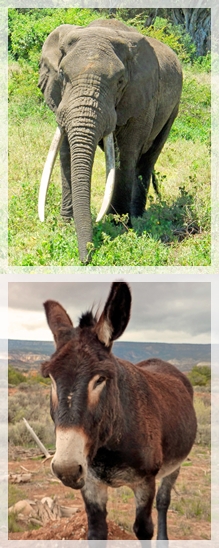
 “We covet your prayers,” said the new pastor. This was the second time in two weeks I’d heard someone say they coveted my prayers and the phrase bothered me. For more than twenty-five years, I recited “Thou shalt not covet” as part of the Communion liturgy, so coveting anything speaks of sin to me. Granted, neither speaker was expressing a desire for my spouse, home or donkey; nevertheless, the phrase touched a nerve. If coveting is a sin, why did these men (both pastors) say they coveted my prayers?
 If there ever was a time for wisdom, this election season is it. I’ve watched debates, read articles, researched claims, listened to the pundits, and still haven’t decided. The choice seems to be between bad and worse and whoever is worse seems to change daily.
 I know a lot of knowledgeable people, educated and erudite, some of whom may even be MENSA members. I also know several wise people, many of whom are neither learned nor especially well-read. While they might never come close to passing MENSA’s membership requirements, I would much prefer their wise advice to that of someone who is merely book smart or scholarly.
