RENEW – NEW YEAR’S DAY

But this is the new covenant I will make with the people of Israel after those days,” says the Lord. “I will put my instructions deep within them, and I will write them on their hearts. I will be their God, and they will be my people. … And I will forgive their wickedness, and I will never again remember their sins. [Jeremiah 31:33,34b (NLT)]

Come, let us use the grace divine, and all with one accord,
in a perpetual covenant join ourselves to Christ the Lord;
Give up ourselves, thru Jesus’ power, his name to glorify;
and promise, in this sacred hour, for God to live and die. [Charles Wesley]

queen butterflyJohn Wesley had an excellent alternative to making a New Year’s resolution that’s unlikely to be kept. Believing that Christians should reaffirm their covenant with God, in 1755, he introduced a covenant service to the Methodist Societies. By 1775, this service was usually held on New Year’s Eve (and called a Watch Night Service) or New Year’s Day. This was a service of renewal in which believers would gather for self-examination and reflection and then renew their covenant with God by dedicating themselves wholly to Him. The practice of a covenant renewal service held on the Sunday nearest January 1st continues in some Methodist churches today and is a practice that has crossed denominational lines.

A covenant is a promise between two (or more) parties to perform certain actions. The covenant of the New Testament between God and man is that He will restore fellowship with and forgive the sins of those whose hearts are turned to Him; it is a covenant of salvation by grace through faith. Our part of this promise is our faith in Jesus and a giving up of self so that He can fill us with His Spirit; it is the taking of His yoke and a commitment to follow Him. Unlike a resolution to eat healthier or exercise more, it is God’s power, not our good intentions, that keeps this covenant in place.

I don’t know if you’re making any resolutions today, but let us all join together in renewing the covenant of grace—to be God’s people, trusting in His word, empowered by Him to be His hands and feet, seeking to bring His light into this dark world. Our prayer can be as simple as, “O Lord, I dedicate my life to you and will serve you in every way I can!”

Lord, I am no longer my own, but Yours. Put me to what You will. Rank me with whom You will. Let me be employed by You or laid aside for You, exalted for You or brought low by You. Let me have all things. Let me have nothing. I freely & heartily yield all things to Your pleasure and disposal. And now, O glorious and blessed God, Father, Son, and Holy Spirit, You are mine and I am Yours. So be it. Amen. [John Wesley]

Now may the God of peace—who brought up from the dead our Lord Jesus, the great Shepherd of the sheep, and ratified an eternal covenant with his blood—may he equip you with all you need for doing his will. May he produce in you, through the power of Jesus Christ, every good thing that is pleasing to him. All glory to him forever and ever! Amen. [Hebrews 13:20-21 (NLT)]

Copyright ©2020 jsjdevotions. All rights reserved.

A RIGHTEOUS MAN

Joseph, to whom she was engaged, was a righteous man and did not want to disgrace her publicly, so he decided to break the engagement quietly. [Matthew 1:19 (NLT)]

Joseph Yesterday’s devotion about Mary made me wonder about Joseph. Other than having the right lineage, why did God chose this carpenter to raise His one and only Son? Mary and Joseph were betrothed and engagement in 1st century Palestine was a serious commitment. A legally binding relationship, betrothal usually lasted ten to twelve months. Although the bride continued to live at home and the couple did not have marital relations, their engagement ended only through death or a divorce-like proceeding.
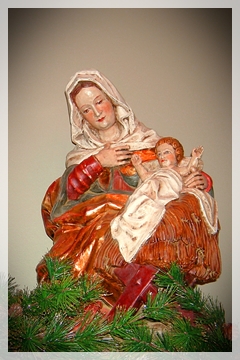
We have no idea when or how Mary told Joseph she was pregnant. Having gone to stay with Elizabeth just a few days after the annunciation, we assume she told him of her pregnancy after returning to Nazareth. The conversation couldn’t have been pleasant. We’re never told that Joseph was angry but it’s hard to think he wasn’t upset and perplexed by this turn of events. His fiancée went away for three months and returned pregnant! No matter how Mary explained it, there was no way she could prove its truth. Her story made no sense so Joseph assumed Mary had been unfaithful to him.

Betrothal was a sacred relationship and the law required a man to divorce an unfaithful fiancée. Joseph was a righteous man, a man who abided by the law; he was obligated to end the engagement by divorcing Mary. Although the Torah demanded stoning an adulterous woman, people couldn’t be executed without Roman permission. Instead, Jewish tradition called for any divorce on adulterous grounds to take place publicly. Mary would have stood in the public square to answer questions about her unfaithfulness while the townspeople watched and judged. Making Mary’s pregnancy public knowledge would have been a fitting punishment for her suspected betrayal, preserved Joseph’s reputation as a righteous man, and freed him of any responsibility for Mary’s child.

It would have been easy for Joseph to wreak revenge on his unfaithful bride, but he didn’t. While he wanted to do the right thing, which was divorce the woman he believed adulterous, he wanted to do it so that she wouldn’t suffer. Joseph decided on a “writ of divorcement” which could be done quietly in the presence of a few witnesses. The equivalent of “irreconcilable differences” or no-fault divorce, it would have allowed Mary the freedom to marry someone else. Once her pregnancy became public knowledge, however, Joseph’s reputation would suffer since he would be suspected of being the father. Nevertheless, because he loved Mary more than he wanted revenge or people’s respect, Joseph put her needs first.

Not a rash man, Joseph took no action immediately. While considering his plan of action, an angel appeared to him and reaffirmed Mary’s story that the child she was carrying was conceived by the Holy Spirit. Joseph now had a third option: marry the girl! But, by marrying her, Joseph assumed responsibility for the pregnancy, shared in Mary’s shame, gave the village fodder for gossip, became the legal father of Jesus, and accepted responsibility for a child who wasn’t his.

Although we don’t know much about Joseph, we know all we need to know: he was a man of integrity who valued God more than other people’s opinions of him. In spite of the consequences, he immediately obeyed God and took Mary as his wife. What kind of man was Joseph? A godly man is my answer. He displayed the character of God we find in Exodus 34 when the Lord passed in front of Moses: “merciful and gracious, slow to anger, and abounding in steadfast love and faithfulness.” That’s the sort of man God chose to act as father to his boy!

“Joseph, son of David,” the angel said, “do not be afraid to take Mary as your wife. For the child within her was conceived by the Holy Spirit. And she will have a son, and you are to name him Jesus, for he will save his people from their sins.” All of this occurred to fulfill the Lord’s message through his prophet:  “Look! The virgin will conceive a child! She will give birth to a son, and they will call him Immanuel, which means ‘God is with us.’” When Joseph woke up, he did as the angel of the Lord commanded and took Mary as his wife. [Matthew 1:20-24 (NLT)]

Copyright ©2019 jsjdevotions. All rights reserved.

A HANDMAID’S HEART

And Mary said, “Behold, I am the handmaid of the Lord; let it be to me according to your word.” And the angel departed from her. [Luke 1:38 (RSV)]

Mary - ChristmasIgnoring the fact that most of us in the room couldn’t qualify as virgins, are well-past child-bearing age, and our genealogies don’t link us to the tribe of Judah and the line of David, the pastor leading our women’s Bible study asked if we were the kind of women God would chose to give birth to His son.

Aside from being young, virginal, and of the right lineage, what kind of woman was Mary? At first glance, she seems little different than any other young girl in the obscure village of Nazareth. There is no mention of her having wealth, exceptional beauty, or social status. Looking like any other peasant girl, she seems unsuitable for a job as mother of God. What about Mary set her apart from every other girl in Palestine who met the lineage and virtue requirements?

Rather than looking at outward appearance, God looks into hearts; while we don’t know about Mary’s physical beauty, her character must have been exceptionally beautiful. Faithful, obedient and humble, she was filled with love for God. She risked her entire future when she submitted to Him. In many translations, Mary calls herself the “Lord’s servant.” The original Greek, however, was doule, which means bondmaid, female slave or handmaid. A doule wasn’t hired help who could quit when she wanted. She was someone who surrendered completely to her Master’s will.

I thought about the pastor’s question. Had I fit the physical and lineage requirements, would God have chosen me to bear His son? He wouldn’t have given me a second look when I was Mary’s age—I was far too willful, rebellious, selfish and unsure of myself to ever call myself a servant to anyone, even God! Even if the woman I am today fit the physical and lineage requirements, God wouldn’t consider me. It’s not that He wouldn’t trust me to feed, comfort, teach, love, guide, encourage, and protect His Son; I’d qualify in the mothering department. It’s that submission thing; I don’t think I’d freely surrender my will to His and God will not force Himself upon anyone. Mary had enough faith to yield her will to God but, even with 72 years of experiencing God’s faithfulness under my belt, I’m not sure I have the heart of a handmaiden. Humble and complete submission to the Master’s will does not come easily. “Thy will be done,” are some of the hardest words to pray and truly mean.

Both Mary and Jesus submitted to God’s divine will; should we do anything less? Father, forgive us for choosing our will over Yours. Give us a handmaid’s heart.

And he withdrew from them about a stone’s throw, and knelt down and prayed, “Father, if thou art willing, remove this cup from me; nevertheless not my will, but thine, be done.” [Luke 22:41-42 (RSV)]

Pray then like this: Our Father who art in heaven, Hallowed be thy name. Thy kingdom come, Thy will be done, On earth as it is in heaven. [Matthew 6:9-10 (RSV)]

Copyright ©2019 jsjdevotions. All rights reserved.

THE ARK

giraffeThen God said to Noah, “Leave the boat, all of you—you and your wife, and your sons and their wives.  Release all the animals—the birds, the livestock, and the small animals that scurry along the ground—so they can be fruitful and multiply throughout the earth.” Genesis 8:15-17 (NLT)]

The National Geographic Photo Ark is on display at our local zoo. This travelling exhibition features large-scale animal portraits taken by Joel Sartore, a man on a quest to photograph all of the world’s animals. Sartore has photographed a little more than 9,800 of the 1.2 million species of animals that have been identified by zoologists so far.

Attributing human traits or emotions to non-humans is anthropomorphism and I admit being guilty of it as I viewed Sartore’s amazing photographs. An embarrassed-looking mandrill with its hand covering his mouth seemed to be politely concealing a burp. With his cocked head and puzzled expression, a white arctic fox looked perplexed. The Sumatran rhino’s wistful look made me wonder if he knew there are less than 100 like him on the planet. Clearly unaware that he also is an endangered species, the giant panda looked content and rather pleased with himself. The young chimp appeared to be proudly flexing his biceps, as do toddlers when they want to show how big and strong they are. The Sumatran tiger lay regally, his head erect with paws crossed in front of him as if the photographer had posed him for his royal portrait. A black-footed ferret seemed forlorn, as if he knew that only a few hundred of his species still live in the wild. Perhaps my favorite photo was that of a bashful Brazilian porcupine on his hind legs. Looking a bit anxious, he was scrunched over a bit, legs squeezed together, with his front paws tucked down between his legs. He looked just like a toddler who desperately needs to go potty!

The purpose of the National Geographic Photo Ark is to use “the power of photography to inspire people to help save species at risk before it’s too late.” Although ours is a small zoo with only 70 species and just 52 of Sartore’s photographs on display, the amazing diversity in God’s creation was evident in both the enclosures and photographs. Sadly, many animals had words like “endangered” or “at risk” beside their names. God entrusted mankind with the task of looking after His amazing creation and we haven’t done a very good job of that.

The extinction of various species has always existed (i.e. dinosaurs) but it is increasing at an alarming rate. If the current trend continues, it is estimated that one in every three animal species on earth now will have disappeared by the end of this century. Following the flood, God vowed to never again destroy all living things. He won’t have to; we seem to be doing that on our own!

As we left the zoo, I thought about my anthropomorphic view both of Sartore’s photos and the zoo’s residents. Perhaps God gave us the tendency to attribute human emotions to animals so that we’d connect with them. It’s when we connect that we begin to care. Martin Buber said that, “An animal’s eyes have the power to speak a great language.” While I’m not sure exactly what Buber meant, the eyes I looked at told me to care.

Scripture is filled with admonitions to care for animals; domestic animals were not to be overworked or treated cruelly and Jesus told us that God knows when even a single sparrow falls to the ground. What does God think when an entire species ceases to exist? All of creation belongs to Him and we are little more than tenant farmers responsible for its care. When God gave us dominion over the earth, He expected us to behave conscientiously and we will be held accountable for the way we’ve tended His world. Are we good stewards or have we become exploiters? Will our zoos become the arks of the future and the only place God’s beautiful creatures will exist? Noah once saved the animals; can we do anything less?

It is folly to think that we can destroy one species and ecosystem after another and not affect humanity. … When we save species, we’re actually saving ourselves. [Joel Sartore]

The Lord God placed the man in the Garden of Eden to tend and watch over it. [Genesis 2:15 (NLT)]

Look, the highest heavens and the earth and everything in it all belong to the Lord your God. [Deuteronomy 10:14 (NLT)]

Copyright ©2019 jsjdevotions. All rights reserved.

TRUE CHARACTER

I want to do what is right, but I can’t. I want to do what is good, but I don’t. I don’t want to do what is wrong, but I do it anyway. [Romans 7:18b-19 (NLT)]

smooth roseYears ago, we were acquainted with “Henry, dear” and “Mary, darling.” We called them that because we never heard them refer to one another any other way. They always were so sweet and charming in public that halos seemed to hover over their heads. My husband and I often wondered what they called one another behind closed doors and, as we got to know them better, we realized our wariness was well-founded. As noble as they appeared in public, there always seemed to be an ulterior motive behind their kindness and, while “Henry, dear” was patting your back, his other hand probably was reaching into your back pocket. While we never knew what they called one another in private, we knew that what the public saw was not what they actually got.
I thought of them the other day when watching A Beautiful Day in the Neighborhood, a movie about Fred Rogers. Having read books both by and about him, there truly was nothing artificial or superficial about the man; what you saw actually was what you got. Rogers once said, “The greatest gift you ever give is your honest self,” and that’s exactly what he did!

Recently, my day began with bad news and sped downhill from there. In my frustration, my words and actions were not those of a “church lady.” I may write Christian devotions but what you see is not always what you get and the Fruit of the Spirit was nowhere to be found on my tree! Whether in public or private, Mr. Rogers’ faith was evident in all that he did or said. Mine, however, frequently gets obscured by my reaction to circumstances beyond my control. Like the Apostle Paul, “I want to do what is right, but I don’t do it. Instead, I do what I hate.” [Romans 7:15]

Both Fred Rogers (and the movie) were clear that, just like the rest of us, he was no saint. The difference is that, while many of us seem to think we can become good people effortlessly, Fred Rogers actually worked at being the very best person that he could be. One of the ways he did that was through self-discipline. He faithfully read the Bible, reflected and prayed every day, and his prayers continued all day long. He was disciplined in the way he cared for his body with healthy habits. He was disciplined about meeting his commitments, remembering his friends, and expressing gratitude. It’s not that he didn’t have emotions; it’s that he was disciplined enough to choose safe outlets for the negative ones. It’s not that he didn’t know any four-letter words; he just was disciplined enough to use words like “mercy, me!” instead of them! Rogers understood that while circumstances may be beyond our control, our reaction to them is not. He was disciplined in his faith, obedient to God, and saw everyone as his neighbor and a valued child of God. He didn’t give lip service to the power of the Holy Spirit; He lived, breathed, trusted and depended on the Spirit.

The difference between the “Henry, dears” and “Mary, darlings” of the world and Fred Rogers is that while they wear masks so they’ll look like good Christians, Mr. Rogers developed the strength of character to be a good Christian! Through self-discipline and the power of the Holy Spirit, he actually became good (or at least a whole lot better than many of us). The church would call that process sanctification. We can’t do it by ourselves and God doesn’t do it for us; rather, it is combining our efforts with God’s power to grow more and more like Christ. Spiritual progress doesn’t happen overnight and sanctification is not a passive process; it requires effort, discipline and obedience. Only then will people be able to say of us, “What you see is what you get!”

And so, dear brothers and sisters, I plead with you to give your bodies to God because of all he has done for you. Let them be a living and holy sacrifice—the kind he will find acceptable. This is truly the way to worship him. Don’t copy the behavior and customs of this world, but let God transform you into a new person by changing the way you think. Then you will learn to know God’s will for you, which is good and pleasing and perfect. [Romans 12:1-2 (NLT)]

Copyright ©2019 jsjdevotions. All rights reserved.

WOULD YOU?

“Don’t be afraid, Mary,” the angel told her, “for you have found favor with God! You will conceive and give birth to a son, and you will name him Jesus.” … Mary asked the angel, “But how can this happen? I am a virgin.” Luke 1:30-31,34 (NLT)]

It’s no wonder that the angel Gabriel told Mary not to be afraid. Angels were not an everyday occurrence and, when they arrived, lives were changed. As God’s messengers, angels sometimes brought good news, offered protection, or comforted people, but they also brought warnings and executed God’s judgment. Although angels rescued Lot, they also warned of Sodom’s destruction! Balaam received a stern warning from a sword-bearing angel, David wrote of destroying angels, and 2 Samuel tells of an angel nearly destroying Jerusalem. Mary’s initial confusion and concern at seeing an angel is understandable. When reassuring the girl, Gabriel tells her she is “highly favored” by God; he’s not brought bad news, but good. Nevertheless, she knows her life is going to change; she just doesn’t know how!

Gabriel then tells Mary in what way she’s found favor—by giving birth to a child named Jesus who will fulfill the promises of Scripture. I don’t think Mary fully understood the ramification of Gabriel’s words simply because she was stuck on the “How?” of his words. When the angel told Zechariah of Elizabeth’s pregnancy, the priest questioned out of disbelief saying that he and Elizabeth were too old. Mary, however, didn’t question whether God could do such a thing; she just asked how He would do it. That it would be a miracle through the Holy Spirit was all she needed to know! Calling herself the Lord’s servant, she immediately acquiesced to His will.

Mary’s answer is one of amazing faith. Unlike Moses, she didn’t list her weaknesses or the problems facing her and unlike Jonah, she didn’t run in the opposite direction. Although the angel encouraged Mary by telling her of Elizabeth’s pregnancy, Mary never asked for proof as did Gideon. Mary’s faithful response is that of highest obedience to God.

We know the rest of the story; Mary did not. She didn’t know how Joseph or her parents would react, where God’s plan would lead, or what would be demanded of her in the future. Trusting that the Lord would work out the details, she simply walked forward in faith. When God gives us a task, are we as obedient as Mary? We should be!

There’s some task which the God of all the universe, the great Creator, your redeemer in Jesus Christ has for you to do, and which will remain undone and incomplete until by faith and obedience you step into the will of God. [Alan Redpath]

Mary responded, “I am the Lord’s servant. May everything you have said about me come true.” And then the angel left her. [Luke 1:38 (NLT)]

Copyright ©2019 jsjdevotions. All rights reserved.