
And so, dear brothers and sisters, I plead with you to give your bodies to God because of all he has done for you. Let them be a living and holy sacrifice—the kind he will find acceptable. This is truly the way to worship him. [Romans 12:1-2 (NLT)]
 If you ever visited the Mayan ruins near Cancun, Mexico, chances are you saw the remains of a stone ball court with sloping walls. Nowhere near as impressive as the Mayan pyramids, I didn’t even take a picture when I saw one. Two stone rings hang about 20 feet up the walls. A ball game called pok-ta-pok was played there. As in volleyball, players passed a solid rubber ball around by hitting it with various parts of their bodies. Unlike volleyball, however, they could not touch the ball with their hands. The goal was to get the ball through one of the rings.
This game was a reenactment of the Mayan creation story and had ritual significance. When prisoners of war were forced to play the game, it became a prelude to their sacrifice by decapitation, heart removal, or disembowelment. Since blood was considered nourishment for the gods, the sacrifice of a living creature was a powerful one and the sacrifice of a human was the most powerful.
When we hear the word sacrifice, we tend to picture something as brutal and gruesome as the Mayans, satanic cults, King Manasseh sacrificing his son to Molech, or even Abraham placing his son on an altar and bringing a knife to his throat. We think of sacrifice as suffering terrible loss: the destruction or surrender of something precious to us. Having a negative connotation, we tend to see sacrifice as unpleasant, involuntary, or punishing.
There was, however, another scenario to that Mayan ball game. In some cases, it was the winners who were sacrificed. Teams willingly played in the hopes of winning and being sacrificed to the gods. This sacrifice was a privilege that gave great honor to the player and his family. Although the game’s losers lived, they were disgraced and may have become slaves. While it still seems barbaric to us, rather than a giving up of something, that sacrifice was seen as a gain.
God clearly prohibited human sacrifice when he gave the law to the Israelites, yet Paul tells the Romans to be living sacrifices! This is neither a forced sacrifice nor one of punishment; we are not defeated warriors being sacrificed in shame. This is an enthusiastic sacrifice, like that of the Mayan warriors who chose to compete in that sacrificial game. Like them, we are victors but, unlike them, ours is not a one-time sacrifice resulting in death but rather a constant placement of our lives at God’s disposal. It is a joyful and willing sacrifice of worship—a consecration of our lives to Him.
Sunday, we sang these words from Frances Havergal’s hymn: “Take my life and let it be consecrated, Lord, to Thee.” As we sang, we offered Him our time, hands, feet, voices, lips, money, intellect, will, heart, and love. That is what it means to be a living sacrifice to God. Four years after writing her hymn, Havergal responded to her own words, “Take my silver and my gold,” by giving away all of her jewelry (nearly fifty items) to a missionary society. About this sacrifice, she wrote a friend of her “extreme delight” and said, “I don’t think I ever packed a box with such pleasure.” Her words, actions, and joyful attitude are an example of what it means to be a living and holy sacrifice,
Take my love, my Lord, I pour at thy feet its treasure store.
Take myself and I will be ever, only, all for Thee.
[Frances R. Havergal (1874)]
 The eight of us were brainstorming a difficult and heartbreaking situation facing a family we know. We had plenty of ideas about getting them the assistance and guidance they needed but we could only direct them to the resources. They were the ones who needed to take action. Unfortunately, people often want the easy way out of their problems and desire money rather than counsel. Money, however, is usually only a stop gap measure and it frequently enables a bad situation to continue or get worse. The problem we were discussing required change, compromise, work and sacrifice far more than money. These people had to take action and, truth be told, I’m not so sure they wanted to step forward and act.
 The following is a holiday pass-along story that has made the rounds on the Internet. Years ago, little Jimmy was shocked when his big sister told him there was no Santa. He tearfully went to his grandmother and asked her. Assuring Jimmy that Santa existed and she’d prove it to him, Grandma took him to the local department store. Instead of seeing the store Santa, as Jimmy expected they would, his grandmother gave him $10 and told him to use it to purchase a present for someone who needed one. Alone in the store, the boy pondered who should get a gift and finally decided on Robby, a boy in his classroom. Robby never went out at recess; although he said it was because he wanted to study, everyone knew it was because he didn’t have a warm coat. Jimmy found a brown wool coat, took it to the clerk and asked the price. After telling her he hoped he could afford it since it was a gift for a boy at school who didn’t have a coat, the clerk questioned how much he had. Proudly showing her his ten dollar bill, she told him that was the exactly what the coat cost and bagged it up for him.
 “Dream small. Don’t bother like you’ve gotta do it all. Just let Jesus use you where you are, one day at a time,” sang Josh Wilson. Reminding me that a tiny rock made Goliath fall and five loaves and two fish fed them all, he sang that it is simple moments that change the world. I thought of his song when I received an email from a local charity including the sentence, “We may not be able to change the world, but we can change the world for some people.”
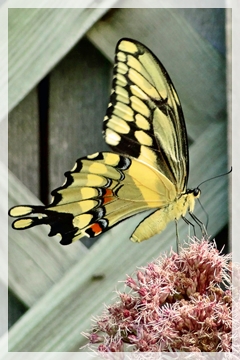 Yesterday, I wrote of God’s provision, yet I can’t help but wonder. If God promises His divine provision, why are there still people in need?
 In 1978, Merck Research Laboratories was approached by a scientist who thought a drug he was developing to treat parasitic infections in animals might be useful in treating a parasitic infection in humans. Called onchocerciasis or river blindness, it is transmitted through the bite of black flies and had no known cure. The pharmaceutical company faced a dilemma. Since onchocerciasis is found only in third world areas, the people needing the medication could never afford to buy it. How could the company expend money to develop a drug they’d never be able to sell? Nevertheless, they did and, in 1987, Merck announced that, for as long as was necessary, they would give away the drug (Mectizan®) for the treatment of onchocerciasis to any country that needed it. Eleven years later, they expanded their commitment and started donating Mectizan® for the treatment of Lymphatic filariasis, a mosquito-transmitted disease which can develop into elephantiasis. Since 1987, more than a billion treatments have been donated to thirty-three countries and the World Health Organization forecasts that both diseases could be eradicated by 2020.
 Devotions of the Heart