ONE DOES WHAT ONE CAN

Pay careful attention to your own work, for then you will get the satisfaction of a job well done, and you won’t need to compare yourself to anyone else. For we are each responsible for our own conduct. [Galatians 6:4-5 (NLT)]

SparrowThere is an old parable about a small sparrow, lying flat on his back in the middle of the road with his little feet raised in the air. An elephant comes by and asks him what he is doing. “I’m holding up the sky,” is the small bird’s response. ”Hah,” scoffs the elephant, “What good can you possibly do with those skinny weak legs?” The tiny bird replies, “Well, one does what one can. One does what one can!”

Consider the effect a young shepherd named David had, not just on a giant and an army of Philistines, but on a whole nation. Reflect on the impact of a boy’s small offering of loaves and fish, of a peasant girl who led the French army to victory at Orléans, or of a tired woman who refused to give up her seat on a bus. Think about the influence of a mediocre Indian lawyer who introduced the concept of nonviolent protest, of a convert to Christianity who spread the gospel by writing letters while imprisoned, of a black minister who had a dream, or the effect of an Albanian nun who saw a need in the streets of Calcutta. These were people who simply did what they could. What is God asking of me today? What is he asking of you? Is there just one life that could be made better by something we do today? After all, one does what one can!

God does not demand that we do great things, only little things with great love. [Mother Teresa]

For we are God’s masterpiece. He has created us anew in Christ Jesus, so we can do the good things he planned for us long ago. [Ephesians 2:10 (NLT)]

Copyright ©2017 jsjdevotions. All rights reserved.

CEASE FIRE

Then Solomon said, “Don’t kill the child! Give it to the first woman—she is its real mother.” [1 Kings 3:27 (GNT)]

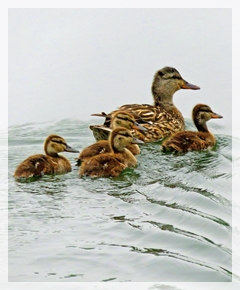
mallard - baby duckingsImmediately after finishing yesterday’s devotion about conflict and prayer, I received a call from a friend whose 11-year old granddaughter, Anna, has osteosarcoma (bone cancer). Having undergone chemotherapy for the past two months, she is scheduled for surgery this week. In the best case scenario, her knee and part of her femur will be removed and replaced by a metal prostheses; the worst case scenario involves complete amputation of the leg. In either case, more chemo and at least six to twelve months of physical therapy will follow.

As distressed as this grandfather is by his grand’s cancer, he is even more upset by her parents’ behavior. Divorced several years ago, they decided upon an “every other week” type of joint custody. Although this often sounds like a win-win solution, court battles about custody issues have continued since the divorce. Rather than a good compromise, their custody agreement is more like an, “If I can’t have her all of the time, neither can you!” sort of thing. Their story reminds me of the two women claiming to be the mother of the same infant who came to King Solomon to settle their dispute. As the women argued, King Solomon called for his sword and ordered that the child be cut in half so that each one could have a part of him. “No!” screamed one mother who said to give him to the other woman so that he could live. “Go ahead,” said the other woman since that way neither mother would have the baby. Solomon immediately knew the identity of the real mother—the woman who was willing to give up her own flesh and blood so that he could live. Real parents are willing to sacrifice their happiness for the sake of their children, even if that means losing them. Now, with a seriously ill youngster, instead of putting aside their differences and forming a united wall of protection around their daughter, Anna’s parents brought their dispute not just into the court but also into the hospital. Because tempers flared and things got so contentious, only that week’s custodial parent can be with the girl in hospital.

Yesterday, I wrote about turning to Scripture and prayer as a way of handling disputes. In this case, although counselling and the courts haven’t worked, Scripture and prayer haven’t been tried. It is in God’s word and prayer that these parents would find true wisdom, strength and the directions to sacrifice, forgive, and love in the way that the mother in Solomon’s court did. I know both of Anna’s parents love her but they are unwilling to put aside their anger, resentment, and selfish desires for the sake of their child. Instead of being sliced in half by a sword, an eleven year old girl is being torn apart by two adults who are more interested in winning every dispute than they are in finding a way to live in peace and bring healing to their daughter. So invested in winning, they can’t see the real loser in their hateful war. Unfortunately, while their situation is extreme, Anna is not the only child of divorce being used as a pawn in her parents’ game of revenge.

Father in Heaven, forgive us when we look to our needs and desires instead of to you. Watch over and strengthen, not just Anna, but all children caught in the middle of their parents’ battles. May we all learn to call to you in prayer, turn to your word for wisdom, be willing to sacrifice our desires for the good of others, and continually act with forgiveness and love.

Above everything, love one another earnestly, because love covers over many sins. [1 Peter 4:8 (GNT)]

Ask God to bless those who persecute you—yes, ask him to bless, not to curse. … If someone has done you wrong, do not repay him with a wrong. Try to do what everyone considers to be good. Do everything possible on your part to live in peace with everybody. … Do not let evil defeat you; instead, conquer evil with good. [Romans 12:14,17-18,21 (GNT)]

Copyright ©2017 jsjdevotions. All rights reserved.

THE SWEET AROMA

Let Christ’s word with all its wisdom and richness live in you. Use psalms, hymns, and spiritual songs to teach and instruct yourselves about God’s kindness. Sing to God in your hearts. Everything you say or do should be done in the name of the Lord Jesus, giving thanks to God the Father through him. [Colossians 3:16-17 (GW)]

honeysuckleI’m in the midst of reading a series of seven children’s fantasy novels, The Chronicles of Narnia, by C.S. Lewis. Some of them, like The Lion, the Witch and the Wardrobe, I read as a girl but others are new to me. The world of Narnia is a world to which one wants to return again and again and I’m enjoying my visit ever so much. C.S. Lewis, however, was much more than a writer of fantasy, non-fiction and poetry; he was a well-known lecturer, a brilliant scholar and a renowned Christian apologist.

Because of his tremendous faith and knowledge of Scripture, there is much more to his fiction than first meets the eye. Intentionally (and probably unintentionally), Biblical truths and Christian themes are woven throughout all of his writing. Lewis was so aware of God, so steeped in Biblical knowledge, and so in tune with the Holy Spirit, that I don’t think he could have written any other way, even if he’d wanted to do so. His faith emanated from him the same way a honeysuckle blossom emits a sweet aroma. His writing reflects what all of us are asked to do—share Jesus. Lewis’ knowledge of Scripture, his insight into the Holy Spirit’s ways and the enemy’s wiles, his love of Christ, his faith in a God who is good even when life isn’t, and his awareness of God’s presence in all circumstances are evident in his stories and yet there is nothing sermon-like about them. The adventures of the Pevensie children in Narnia brought them closer to a great lion by the name of Aslan and those same adventures can bring the reader closer to someone who (as Lewis suggested) arrived at the same time as Father Christmas, was the son of the Great Emperor, gave himself up to be killed by wicked people, came to life again, and is often spoken of as a lamb.

While we’re not likely to teach at Oxford or Cambridge, write over 70 books, sell 100 million copies of anything we might write or be asked to explain Christianity on a radio show, we are asked to share our faith. If Biblical truths become a part of us, they will become second nature and will be evident in all that we say or do. We don’t have to become theologians or write a best-seller; we just have to emit the sweet aroma of Christ in our lives.

I believe in Christianity as I believe that the Sun has risen, not only because I see it but because by it I see everything else. [C.S. Lewis]

But I thank God, who always leads us in victory because of Christ. Wherever we go, God uses us to make clear what it means to know Christ. It’s like a fragrance that fills the air. To God we are the aroma of Christ among those who are saved and among those who are dying. [2 Corinthians 2:14-15 (GW)]

Copyright ©2017 jsjdevotions. All rights reserved.

OUR LAST LECTURE

Whoever says he abides in him ought to walk in the same way in which he walked. [1 John 2:6 (ESV)]

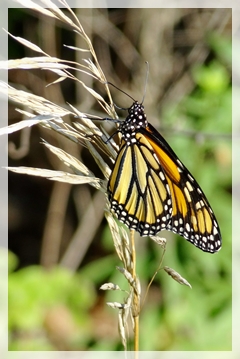
monarch-butterfly

Last Friday, I was blown away when I walked into a restaurant to discover that my family had gathered from both far and near to surprise me with a 70th birthday party. I couldn’t believe how beautifully they had secretly choreographed the entire celebratory weekend. With tears of joy leaking from my eyes and a heart bursting with love, I prayed that they would be as fulfilled in their lives as I have been in mine. Having just finished yesterday’s devotion about last lectures, I couldn’t help but think of the passing along of life lessons. Although I’m in good health, I know that much sooner than later my time in this world will be over. Is there a last lecture I should prepare?

Remembering that my children rarely listened to any of my lectures when they were young, I realized they certainly wouldn’t listen now they’re grown adults. I recalled Randy Pausch’s last lecture and what he considered the most useful weapon in a teacher’s arsenal: the “head fake.” Simply put, the head fake is indirect learning. While thinking they are learning about one thing, the students really are learning about quite another. Perhaps these devotions are my version of a head fake. They aren’t just about finding God in both His Word and everyday occurrences; they’re about how to lead our lives. And, like Professor Pausch’s lecture, while freely shared, they are actually for my children.

Most of us, however, aren’t professors or writers and yet we all have a last lecture, a legacy of sorts, to leave to those who follow in our footsteps. The best last lecture, of course, is the ultimate head fake—a life well lived. We can teach more with our examples that we ever could with our words. Unlike most lectures, however, that lecture lasts far longer than an hour or so. It is ongoing; every time we interact with our loved ones or they observe us with others, we’re giving that lecture. Do we treat people who can do nothing for us with the same respect and dignity we do to those who can do something for us? Is the Fruit of the Spirit obvious in our conduct? Do our actions match our words? In the end, the example of our lives will be far more powerful than even the most eloquent of lectures. If Christ can be seen in us, we will have given the most powerful lecture of all.

Heavenly Father, fill us with your Holy Spirit and guide us so that we are living examples of Jesus. Enable us to walk as He walked, talk as He talked, give as generously as He gave, care as deeply as He cared, forgive as freely as He forgave, and love as largely as He loved.

Live so that when the final summons comes you will leave something more behind you than an epitaph on a tombstone or an obituary in a newspaper. [Billy Sunday]

Let love be genuine. Abhor what is evil; hold fast to what is good. Love one another with brotherly affection. Outdo one another in showing honor. Do not be slothful in zeal, be fervent in spirit, serve the Lord. Rejoice in hope, be patient in tribulation, be constant in prayer. Contribute to the needs of the saints and seek to show hospitality. Bless those who persecute you; bless and do not curse them. Rejoice with those who rejoice, weep with those who weep. Live in harmony with one another. Do not be haughty, but associate with the lowly. Never be wise in your own sight. Repay no one evil for evil, but give thought to do what is honorable in the sight of all. If possible, so far as it depends on you, live peaceably with all. … Do not be overcome by evil, but overcome evil with good. [Romans 12:9-18,21 (ESV)]

Copyright ©2017 jsjdevotions. All rights reserved.

NURSERY LOGS

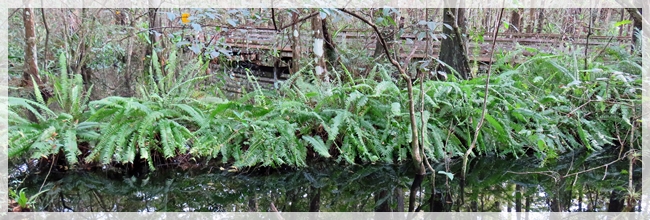
nursery log - corkscrew swamp
Blessed is the man who fears the Lord, who greatly delights in his commandments! His offspring will be mighty in the land; the generation of the upright will be blessed. Wealth and riches are in his house, and his righteousness endures forever. [Psalm 112:1-3 (ESV)]

When walking in the swamp, I often see what are known as “nursery logs.” After a tree dies, its roots eventually decay and it falls to the ground, leaving an opening in the forest’s canopy for sunlight to reach down to the forest floor. The dead tree’s raised trunk becomes a nursery for new plant life as seeds fall on it and take root. Its bark holds moisture, providing young plants with water, and the decaying wood provides them with decades of rich organic nutrients. Starting with moss and ferns, vegetation grows and flourishes in the patch of light left by the tree’s demise. These nursery logs become gardens of new life and can contain five times more living matter than they did when alive! Eventually, a new tree will take root in the remains of the old one and the cycle of life continues for another generation. Supposedly, it will take about the same number of years for a tree to decompose as it took to live. Considering that trees can live several hundred years, one dead tree can leave quite a legacy.

I thought of those nursery logs today while reading an obituary in our local paper. Like the trees, this man may be dead but, most definitely, he is neither gone or forgotten. Here are just a few of the loving words written about him:

He touched the lives of everyone he came in contact with…after talking to him for two minutes he would immediately become your friend…would do anything to help someone in need…always had a positive attitude and was ready to listen if you needed to talk…a great man who was loved by all his family and friends and will be missed dearly…he would say love unconditionally, don’t hold grudges, and never walk away mad… tomorrow isn’t promised so make the best of today so you have no regrets…know you are right with God…remember [him] as the man who always made the most of life and always had a smile on his face.

I never met this man and consider it my loss that I didn’t. I have no idea the size of his financial holdings but, based on his career as a fishing guide, I suspect he was not a wealthy man. He was, however, an incredibly rich one! Whether or not he left his family with any money, his bequest of love, faith and joy, as seen in a life well lived, makes them more than rich.

While it is our belief in Jesus that gives us eternal life in our heavenly home, like the nursery logs in the forest, even dead, we can still persist. Once we’ve fallen to the forest floor, we continue to nourish life if the lives we touched while living were touched with faith, love, generosity, compassion and joy. Unlike the cypress trees, we may only be blessed with seventy to eighty years but, if wisely lived, think how that legacy can grow as each life we touched touches another. As did this man, we can leave a patch of sunlight when we fall, our example can provide a base for young seedlings, and the memory of us can bring nourishment to hungry souls.

Our death is not an end if we can live on in our children and the younger generation. For they are us, our bodies are only wilted leaves on the tree of life. [Albert Einstein]

Therefore I intend always to remind you of these qualities, though you know them and are established in the truth that you have. I think it right, as long as I am in this body, to stir you up by way of reminder, since I know that the putting off of my body will be soon, as our Lord Jesus Christ made clear to me. And I will make every effort so that after my departure you may be able at any time to recall these things. [1 Peter:12-15 (ESV)]

Copyright ©2017 jsjdevotions. All rights reserved.

A HOLY OBJECT

And the King will say, “I tell you the truth, when you did it to one of the least of these my brothers and sisters, you were doing it to me!” [Matthew 25:40 (NLT)]

Next to the Blessed Sacrament itself, your neighbour is the holiest object presented to your senses. If he is your Christian neighbor, he is holy in almost the same way, for in him also Christ vere latitat [“is truly hidden”]—the glorifier and the glorified, Glory Himself, is truly hidden. [From “The Weight of Glory” by C.S. Lewis]

deerI found an odd synchronicity in my morning’s reading. The verse for the day was Matthew 7:12, the Golden Rule: “Do to others whatever you would like them to do to you.” Following that was a story by Christian author and speaker Lysa Terkeurst. She wrote about speaking to a group when a woman walked up on stage, stood next to her, and then leaned into her. Standing before an audience of 6,500 women, unsure of what to do, the author simply put her arm around the woman and continued speaking. The woman later said she needed God and thought if she got close enough to the Christian speaker, she just might feel Him. The third portion of my reading included the above selection from C.S. Lewis’ writings.

Lewis’ words caused me to pause and reflect. We revere the bread and wine when partaking in Holy Communion but do we revere our fellow Christians that much, not just when sharing the elements but whenever we share time with them? The Communion of Saints is not just that sacrament of bread and wine so fundamental to our Christian worship; it is our fellowship with all believers—past, present and future.

When we abide in Christ, His Holy Spirit abides in us and God takes up permanent residence in our bodies. While I know the Holy Spirit lives within me, I hadn’t considered His presence in the person next to me at church or Bible study. When I do to others, do I realize that I am doing so to Christ? When I speak with them, do I speak as I would to Christ? That woman who came and stood next to Lysa Terkeurst recognized Christ within her. Do I recognize Christ in others and draw close to them so to be nearer to Jesus? Do I value fellowship with Christians as much as I do Holy Communion? Do I honor and revere my church family much as I do those holy elements of bread and wine? Do I cherish time with my neighbor as I would with Christ? Do I truly understand that we are united with one another, not just by church membership or our common beliefs and goals, but by the same Spirit that lives within each of us? When I look at the faces of fellow believers, do I see the face of Jesus? More important, when they look at me, who do they see? Would anyone lean into me to come closer to the Lord?

I am praying not only for these disciples but also for all who will ever believe in me through their message. I pray that they will all be one, just as you and I are one—as you are in me, Father, and I am in you. And may they be in us so that the world will believe you sent me. I have given them the glory you gave me, so they may be one as we are one. I am in them and you are in me. May they experience such perfect unity that the world will know that you sent me and that you love them as much as you love me. [John 17:20-23 (NLT)]

Copyright ©2017 jsjdevotions. All rights reserved.