WALK WITH THE WISE

Do not set foot on the path of the wicked or walk in the way of evildoers. Avoid it, do not travel on it; turn from it and go on your way. For they cannot rest until they do evil; they are robbed of sleep till they make someone stumble. [Proverbs 4:14-16 (NIV)]

barred owlPeer pressure—as youngsters we succumbed to it because we wanted friends. When trying to explain why we couldn’t stay out past curfew, go to an unchaperoned party or date while still in junior high, our parents would say something like, “If your friends jumped off a cliff (or ran through traffic), would you do it too?” If you were like me, you relentlessly assured them that all of your friends were doing whatever it was and that all of their parents allowed them to do it. They probably responded with a serious warning about the dangers of peer pressure and dubious friends.

Unfortunately, it’s usually easier to recognize bad friends in hindsight than when they’re right in front of us. A perfect example of an unwise friendship is that between David’s firstborn son and heir to the throne, Amnon, and his cousin Jonadab. Described in various Bible translations as very clever, crafty, shrewd, wise (as in “wiseguy”), or cunning, Jonadab was precisely the kind of friend our parents warned us against—the inciter, the one who always seems to be around trouble but doesn’t get caught. In this case, Amnon had a serious case of lust for his half-sister Tamar. Although sex between them was strictly forbidden, Jonadab provided Amnon with a scheme that would allow him to have his way with the young virgin. Amnon followed the plan and violently raped his sister. When King David did nothing to right this wrong, Tamar’s brother Absalom took revenge and killed the rapist. Like a bad penny, it was Jonadab that turned up at David’s side to tell him the news. It was Amnon’s unwise friendship with Jonadab that started the ball rolling for the downfall of David’s kingdom.

While our friends probably won’t help us plot a rape, they can subtly affect our behavior in a negative way. Remembering some of the conversations I’ve overheard at the gym and around the bridge table, it’s clear that mean girl comments are not limited to junior high and mean girls can turn into mean women. It’s easy to be drawn into their conversations and cattiness and get led astray. Wanting to be one of the group is not limited to teens. Even adults want to feel part of a community of friends. We must be discerning, however, when it comes to choosing those friends. Our spiritual lives require friends whose faith will bring us closer to God, not those who will pull us away. We may be adults, but we can still succumb to the influence of other people and peer pressure. We need to “fool-proof” our lives and pick our associates wisely.

Walk with the wise and become wise, for a companion of fools suffers harm. [Proverbs 13:20 (NIV)]

Do not be misled: “Bad company corrupts good character.” [1 Corinthians 15:33 (NIV)]

Copyright ©2017 jsjdevotions. All rights reserved.

THE PURPOSE OF LIFE

Imitate God, therefore, in everything you do, because you are his dear children. Live a life filled with love, following the example of Christ. [Ephesians 5:1-2a (NLT)]

Whatever you do, do it all for the glory of God. [1 Corinthians 10:31b (NLT)]

snowy egret - corkscrewAs he took us to the car rental agency, the van’s driver welcomed us to Cleveland, explained where to get gas before returning our cars, and reminded us not to text and drive. After asking if there were any other questions, a voice from the back asked, “What is the purpose of life?” The driver quickly replied, “Finding comfortable shoes!” While we might rank finding comfy shoes high on our life list, that’s not the purpose of life.
In a Ziggy comic (written by Tom Wilson), the bald headed underdog arrives on a mountaintop in a quest to find life’s purpose. The wise sage replies, “If you have to ask the meaning of life…You can’t afford it!” Apparently, the meaning of life isn’t as expensive as the cartoonist thought. In 2000, someone claiming to have discovered “the reason for our existence” offered that knowledge to the highest bidder on eBay. Evidently, this wisdom had little value; the starting price was a penny and the winning bidder got the information for a mere $3.26.

Of course, the easy answer is that the purpose of life is to have a life of purpose but, like most pat answers, that’s inadequate and disappointing. According to the Bible, the reason we are here is to glorify God, enjoy fellowship with him, love our neighbors and be good stewards of God’s creation. In short, we’re here to honor God in all we do and we do that by being more like Christ.

Within that general purpose of glorifying God and being more like Christ, we each have a distinctive purpose and a unique role to play in God’s plan. While it’s easy to know what our purpose isn’t—sin, self-indulgence, power, riches, fame, popularity, pleasure, success, or status—it’s harder to know what our unique purpose is. I know this much—if we’re dissatisfied, we haven’t found it. It won’t take a flight to Cleveland, a trek to a mountaintop guru or a winning bid on eBay to find our purpose. We just need to ask God and listen to our satisfaction, inner convictions, gifts, and passions. God wants us to find the purpose of life more than we do. After all, He’s got big plans for us!

For we are God’s masterpiece. He has created us anew in Christ Jesus, so we can do the good things he planned for us long ago. [Ephesians 2:10 (NLT)]

Don’t copy the behavior and customs of this world, but let God transform you into a new person by changing the way you think. Then you will learn to know God’s will for you, which is good and pleasing and perfect. [Romans 12:2 (NLT)]

Copyright ©2017 jsjdevotions. All rights reserved.

MYOB

If you are insulted for the name of Christ, you are blessed, because the Spirit of glory and of God rests upon you. But let none of you suffer as a murderer or a thief or an evildoer or as a meddler. [1 Peter 4:14-15 (ESV)]

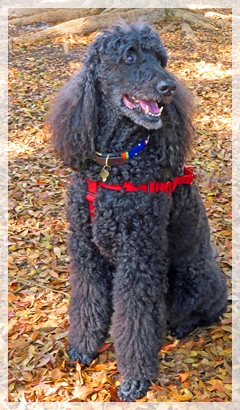
standard poodleThe store was called “Ms. Bossy Boots” and the sign in the window said, “I’m not bossy, I’m just helpful.” Having just had an encounter with a precocious youngster who’d been wearing some very bossy boots, I laughed. After advising me that I needed to put televisions in all my bedrooms, she informed me we couldn’t sell our house because she didn’t want new neighbors! She announced her disapproval of the appetizers, questioned the dinner menu, told me jam should be served with the bread, and criticized the vegetables. Following dinner, I was advised that any remaining cookies should be packed up for her. In a younger child, her behavior might have been slightly excusable. At her age, however, it was demanding and ill-mannered. Over-indulged by her mother and grandparents, she has not learned that it is the meek who will inherit the earth.

Most of us don’t behave like impertinent children but that doesn’t mean we aren’t meddlesome or bossy; we’re just more subtle than that cheeky little girl. When we put on our bossy boots, we excuse ourselves by saying we’re being helpful, interested, or supportive. If anyone had the right to interfere, it was Jesus but He refused to intervene when asked to settle a dispute about an inheritance. Because rabbis often resolved disagreements, it wasn’t such an odd request. Nevertheless, our Lord, knowing what constituted His business and what didn’t, refused to get involved. He did, however, take that opportunity to teach about greed.

We were told, “Mind your own business,” when we tattled in school and, “Keep your eyes on your own paper!” when taking tests. Keeping our mouths shut and our eyes on our own business remains good advice today. Far too often, our “helpfulness” is really just an excuse to be bossy or stick our noses into somebody else’s affairs. Soon we’re just a word away from engaging in gossip and self-righteousness while telling others how much we are doing, solving or repairing and how well we are doing it. The Apostle Peter lumps meddlers in with thieves, murderers and other criminals and Proverbs likens meddling to grabbing a dog by the ears. Whether we call it helping, tweaking, or enlightening, it’s wise to remember that just a few inches away from a dog’s ears are some pretty sharp teeth. Eventually, meddling will turn around and bite us!

Whoever meddles in a quarrel not his own is like one who takes a passing dog by the ears. [Proverbs 26:17 (ESV)]

And to aspire to live quietly, and to mind your own affairs, and to work with your hands, as we instructed you, [1 Thessalonians 4:11 (ESV)]

Copyright ©2017 jsjdevotions. All rights reserved.

GOD’S BANKERS

wild geraniumThere are always going to be poor and needy people among you. So I command you: Always be generous, open purse and hands, give to your neighbors in trouble, your poor and hurting neighbors. [Deuteronomy 15:11 (MSG)]
The Hebrew word for what we call “charity” is tzedakah; its nature, however, is far different than acts of benevolence or generosity. Rather than being a magnanimous act by someone more fortunate, tzedakah is considered an act of justice and righteousness. It is remedying a wrong, doing what is right and just, and fulfilling a duty; in short, it is giving the poor what they deserve.

In writing about charity, Rabbi Yanki Tauber tells of a wealthy man who often supported his rabbi’s charitable activities. One day a letter requesting a large sum for a good cause arrived. At the time, money was a little tight and making a donation was inconvenient so the rich man ignored the request. Shortly after that, his businesses began to fail and the wealthy entrepreneur lost his entire fortune.

The distraught fellow went to the synagogue and berated the holy man for not warning him that he’d suffer if he ignored the rabbi’s plea. “I would have given you the money had I known what punishment I would suffer!” he said. The rabbi calmly responded that the loss of money wasn’t a punishment. “Nothing that was yours has been taken from you,” he explained, adding that God had allotted a certain amount of resources to the rabbi in his work. Since the time he spent in prayer, studying, teaching, counseling and helping others left him no time to manage finances or property, the rabbi’s resources had been placed in the trust of several people who acted as “bankers” for that wealth. In turn, those bankers recognized the value of the rabbi’s work and supported it. When the once rich man failed to carry out his banking duty, the money was simply transferred to another, more responsible, “banker.”

God loves all of His children but that does not mean that He allots equal portions of blessings or sorrows to each of them. Some are healthier, wealthier, smarter, more talented or more attractive than others. Some people seem to escape misfortune while others seem to encounter storms at every turn. Because of an accident of birth, we may live comfortable lives in a wealthy nation or suffer in poverty in a corrupt or war-torn land. Some people have power and are easily heard while others are powerless and often ignored. That we are not given equal portions, however, does not mean that we are not equally deserving. If we have been blessed with wealth, education, influence or opportunities, we should think of ourselves as God’s bankers. We’re just holding on to other people’s resources and it is our job to distribute those resources to their rightful owners. Like our Jewish brothers and sisters, Christians should be dispensers of tzedakah. Unlike them, however, we don’t do it to buy our way into heaven (which it won’t). We do it because God tells us it is the right thing to do!

God does not need your good works, but our neighbor does. [Martin Luther]

This is how we’ve come to understand and experience love: Christ sacrificed his life for us. This is why we ought to live sacrificially for our fellow believers, and not just be out for ourselves. If you see some brother or sister in need and have the means to do something about it but turn a cold shoulder and do nothing, what happens to God’s love? It disappears. And you made it disappear. [1 John 3:16-17 (MSG)]

Then the King will say, “I’m telling the solemn truth: Whenever you did one of these things to someone overlooked or ignored, that was me—you did it to me.” [Matthew 25:40 (MSG)]

Copyright ©2017 jsjdevotions. All rights reserved.

WHAT LEGACY?

But God said to him, “You fool! You will die this very night. Then who will get everything you worked for?” Yes, a person is a fool to store up earthly wealth but not have a rich relationship with God. [Luke 12: 20-21 (NLT)]

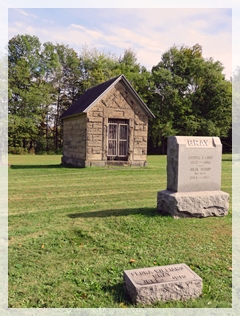
Trumbull Cemetery - OhioWhen touring a nearby resort town, a beautiful old mansion was pointed out. It was once owned by a man who made so much money on his invention of the sanitary milk bottle cap that he retired at the age of 26. For 93 years, the Chicago White Sox played at a ball field named for the team’s founder. In 2003, the field was renamed US Cellular Park and then, in 2016, it became the Guaranteed Rate Field. When I went to Northwestern University, the football venue was named for a former Evanston mayor. In 1997, the stadium was renamed to honor the family of a generous donor to the school’s athletic facilities. A friend’s daughter is attending a school named for a German immigrant who opened a Chicago butcher shop in 1883. Who were these men?

If you’ve not been on a Lake Geneva boat tour, you’ve never heard O.N. Tevander. Although one can still find pictures of his bottle capping machine, he doesn’t even rate a mention in Wikipedia. Do today’s baseball fans know that Charles Comiskey was a key person in the formation of the American League and founder of the Chicago White Sox? Do the Northwestern Wildcats know anything of William Dyche, class of 1882, and that his name was to remain on any NU stadium for perpetuity? In another twenty years, will they have any idea that Patrick Ryan founded Aon Corporation and once served on the university’s Board of Trustees? By then, it’s possible that another large check will have been written and the stadium will have yet another name. When you hear the name Oscar Mayer, do you think of an immigrant butcher from Bavaria or of a large corporation (now owned by Kraft), hot dogs and the wiener song?

Even if we amass great wealth, make generous donations, or achieve some modicum of fame, chances are that most of us will be forgotten in a few generations. Our last name might remain on a corporate letterhead or, if wealthy enough, we could have a building or stadium named after us (at least for a while). Our headstone may rest in a cemetery, we might be listed in a genealogy chart, or an old letter or picture of us may reside in a box of memorabilia stored in someone’s attic. Nevertheless, we will be long gone and, for the most part, forgotten. For William Dyche, perpetuity lasted only 71 years! How long will it last for us? Even if a great grandchild has our china, a piece of our jewelry or carries our name, our essence will have vanished. We will be little more than a short family story or a faceless name.

Jesus told a parable about the rich man whose land was so productive that he ran out of room to store his crops. Rather than share his excess, he just built bigger barns so he could relax and enjoy his wealth for years to come. Unfortunately for him, he died that very night. A simple parable, it points out the temporal nature of life.

Financial planners often ask their clients, “What will be your legacy?” The rich man in the parable left a legacy of filled barns for someone else to enjoy. Sadly, he forgot the most important thing—his soul. Sometimes we’re so busy thinking about our legacy here on earth that, like the man in the parable, we also forget about our souls. Whether or not we are remembered in this world isn’t really important. The real question is whether or not God will welcome us into His kingdom in the next.

Don’t store up treasures here on earth, where moths eat them and rust destroys them, and where thieves break in and steal. Store your treasures in heaven, where moths and rust cannot destroy, and thieves do not break in and steal. Wherever your treasure is, there the desires of your heart will also be. [Matthew 6:19-21 (NLT)]

Copyright ©2017 jsjdevotions. All rights reserved.

IF SOMEONE ASKS

And if someone asks about your hope as a believer, always be ready to explain it. [1 Peter 3:15b (NLT)]

Yesterday, I echoed Paul’s words that, when witnessing, we need to speak our words with love. Of course, before that can happen we need to speak and, therein lies our problem. To speak, we need words and most of us are sure we don’t have them. Granted, the way we conduct ourselves is a continuous sermon but, if we never speak, no one will know what makes us the way we are. Actions may speak louder than words but that doesn’t mean words aren’t necessary.

We don’t have to go knocking on doors, stand on street corners with a sign, accost strangers, or go on a mission trip; we just have to be open to the opportunities that arise nearly every day to share our love of God. Peter instructed us to be ready to explain the reason for our hope; I think we’re asked that question more than we realize. There’s a good chance people have commented on your joy, peace, or calmness. In all likelihood someone may have said something like, “How do you do it?” or, “You don’t seem to worry,” or even, “I wish I had your life!” In reality, that person is asking about the source of your hope. Rarely have my answers to such comments revealed the true source of that hope, strength, peace and joy. I’ve chosen the innocuous reply rather than the true one simply because I didn’t think I had the right words to explain! When Jesus told us to go out into the world and be His witnesses, He promised we wouldn’t have to do it alone. Since the Holy Spirit will empower us to be His messengers, let’s allow Him to do His work! We can’t speak with love until we speak!

God forbid that I should travel with anybody a quarter of an hour without speaking of Christ to them. [George Whitefield]

But this will be your opportunity to tell them about me. So don’t worry in advance about how to answer the charges against you, for I will give you the right words and such wisdom that none of your opponents will be able to reply or refute you! [Luke 21:13-15 (NLT)]

Copyright ©2017 jsjdevotions. All rights reserved.