
If you obey the commands of the Lord your God and walk in his ways, the Lord will establish you as his holy people as he swore he would do. … But if you refuse to listen to the Lord your God and do not obey all the commands and decrees I am giving you today, all these curses will come and overwhelm you.[Deuteronomy 28:9,15 (NLT)]
 With John’s purchase of his sporty new car, I thought I was done writing about Lynn Johnston’s comic strip For Better or For Worse and temptation. I’d forgotten all about Ted, John’s friend, who suggested a “spicy dish” and some “after hours recreation.” Shocked, John had said, “Your wife wouldn’t put up with you messing around!” Ted smugly replied, “Oh she suspects…The trick is—never let them know for sure!!” Six weeks after appearing in that comic, Ted reappeared in another one. When Ted grumpily refused a ride in John’s new car, John wondered if he’d gotten out of the wrong side of the bed. No longer smug, Ted dejectedly responded, “Doesn’t matter what side of the bed I get out on anymore…My wife left me.” I didn’t see that coming and, apparently, neither did Ted!
When we yield to sin’s temptation, there are consequences, apparently something Ted learned a little too late. Then again, mankind has had trouble with that one since the beginning of time. God clearly told Adam and Eve what would happen if they ate that apple yet they did it anyway. Time and time again, the Israelites were warned in detail of the consequences of unfaithfulness to God and yet the Old Testament is a chronicle of their disobedience and the punishing consequences they endured. We want what we want but don’t expect we’ll have to pay for it. When God tells us we’ll reap what we sow, He’s not being cruel—He’s just being honest! When we suffer consequences, He’s being true to His word! Face it—when we sin, life gets difficult.
Ted cheated on his spouse and lost his marriage but what if Ted sees the light and becomes a born-again Christian? If he repents his sins, God will forgive him. Forgiveness, however, doesn’t mean God will bail him out of the consequences of his actions. The adulterer, even when born again, won’t necessarily get his wife and family back any more than the born-again criminal gets released from prison wthout serving his sentence. While coming to Christ erases the eternal consequences of our sins, we still have to deal with their earthly consequences. Fortunately, we don’t have to do it alone—God is with us. Nevertheless, we still have to expect and accept the consequences of our actions!
Sooner or later everyone sits down to a banquet of consequences. [Robert Louis Stevenson]
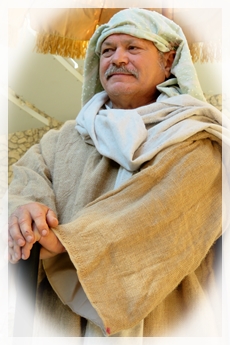 That night there were shepherds staying in the fields nearby, guarding their flocks of sheep. Suddenly, an angel of the Lord appeared among them, and the radiance of the Lord’s glory surrounded them. They were terrified, but the angel reassured them. “Don’t be afraid!” he said. “I bring you good news that will bring great joy to all people. The Savior—yes, the Messiah, the Lord—has been born today in Bethlehem, the city of David! And you will recognize him by this sign: You will find a baby wrapped snugly in strips of cloth, lying in a manger.” [Luke 2:7-12 (NLT)]
 It’s that time of year again. Signs in stores say it, holiday lights in yards and on rooftops proclaim it, and we might greet one another in church with it. We send out cards with its message, sing of it and, yet, we’re bereft of it. We think we’ll have it when our chores are done, the cards mailed, the house cleaned, the tree decorated, the lights up, the cookies baked, the gifts purchased, the packages wrapped, and the bills paid. We sure we’ll get it if we reach our destination without delay or losing luggage or once our children arrive safely home. As long as everyone stays healthy, no food gets burnt, nothing is broken, politics isn’t discussed, no one gets drunk, and the back-ordered gift arrives in time, we’re sure to have it then. Yet, even when everything goes as planned (and believe me it won’t), it seems to escape us.
 As earth’s first gardener, God knew a thing or two about agriculture. Recognizing that continually working a field depletes the soil of valuable nutrients, He commanded the Israelites to let their land remain fallow every seven years. During this yearlong land Sabbath, no produce was to be planted, pruned or harvested and any food that grew by itself, such as grapes or figs, could not be harvested, sold or stored. God promised to grant an abundant crop in the sixth year so there would be plenty of food to carry the people through the Sabbath year and well into the next years until a new crop was harvested. Considered ownerless, the produce that grew by itself could be eaten by anyone or fed to the animals. The Sabbath year was a test of faith; it required the Israelites to acknowledge God as the true master of the land, to trust Him for His provision, and to share with those less fortunate.
 O Lord, hear me praying; listen to my plea, O God my King, for I will never pray to anyone but you. Each morning I will look to you in heaven and lay my requests before you, praying earnestly. [Psalm 5:1-3 (TLB)]
 Devotions of the Heart