
For I have often told you, and now say again with tears, that many live as enemies of the cross of Christ. Their end is destruction; their god is their stomach; their glory is in their shame. They are focused on earthly things. [Philippians 3:18-19 (HCSB)]
 I have a love-hate relationship with my camera and its autofocus. An enormous golden silk spider hangs over the boardwalk we take through the mangroves to the beach. Officially the Nephila clavipes, the female of this species is the largest non-tarantula-like spider in North America. This impressive arachnid has spun her giant orb-like web high above the walkway. She often scares tourists when they glance up to see her suspended above their heads. While I managed to get a shot that of spider, I’d hoped to get a few more of others that have spun their webs down closer to the boardwalk. Autofocus, however, was my enemy. Because their webs were nestled in the trees, the camera looked right through the spiders and focused on the large branches and leaves behind them. My camera focused only on the spider when nothing was behind the creature, but it had plenty on which to focus when pointed at the spiders in the mangroves. The ease of having a small point-and-shoot camera that is so easy to use keeps me loving (but occasionally hating) it.
Similar to a camera with autofocus, we occasionally focus on the wrong things in life. The consequences, however, are far worse than a few blurry photos. Like my camera, we look at the big things in the background—the unimportant things—rather than what is right in front of us. We automatically focus on all that we lack rather than the little that we have, on all that’s wrong rather than what is right, and on the doors that are shut rather than the door that is open. We worry about our tomorrows rather than focusing on today and see all of the reasons we can’t rather than the reason we can. We focus on the mistakes of yesterday rather the possibility of tomorrow and how bad we are rather than how great our God is. In short, we focus on the world instead of focusing on God. He’s right there in front of us but, sometimes, all that other stuff in the background keeps us from seeing Him! We need to set our autofocus on God and His promises rather than the world and our problems.
Focus on giants – you stumble. Focus on God – Giants tumble. [Max Lucado]
When trouble comes, focus on God’s ability to care for you. [Charles Stanley]
 The Israelites were told to trust God for their daily manna and not to save any for the following day. Those that kept any manna found it spoiled and full of maggots the next morning. God wanted them to trust Him to meet their daily needs. Throughout the Bible we are assured that God will provide for us. Why then do we have such difficulty believing in His provision?
 In the many television tributes to the recently deceased actor Gene Wilder, a scene from the movie Willy Wonka & the Chocolate Factory frequently has been aired. In it, Willy tells Charlie not to forget what happened to the man who suddenly got everything he wanted. When the boy asks what that was, Wonka replies, “He lived happily ever after!”
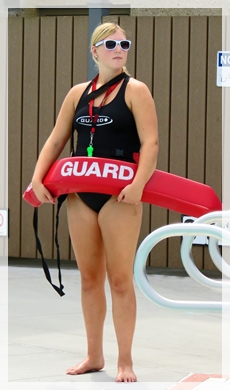 As I stood by the community pool, taking photos of the grands, I noticed that I wasn’t the only person keeping watch. Two lifeguards kept their eyes on the pool full of people. These young women probably go all summer without having to rescue someone and their main purpose is to keep rowdy children (and adults) in line. Still, it is a tremendous responsibility for a couple of teenagers. As attentive as they were to the swimmers, I wasn’t about to trust either one of them with the safety of my loved ones and my eyes remained on the little guys.
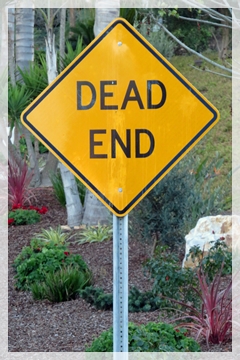 As I look out the window, I can see the cars and trucks speeding off to their various destinations. Meanwhile, I am at the gym, feverishly pumping away on the elliptical and going nowhere fast. What really annoys me is that, no matter where I put it, my Fitbit doesn’t fully credit me for my steps or distance. If I’m going to break a sweat and cover a couple of miles on that pitiless machine, I want credit for all my work! Next to me is my husband pedaling the stationary bike. Like me, he’s expending a great deal of energy to go absolutely nowhere and his Fitbit, like mine, won’t properly acknowledge his effort!
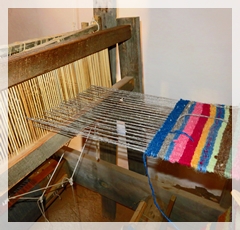 I often find myself lost in the Bible, fascinated by this amazing book of history, poetry, passion, and wisdom. Comparing translations and reading commentaries helps me understand the context and meaning of verses. Knowing something about the specific church to whom Paul was writing, for example, allows me to better understand his directions, many of which seem peculiar in today’s world where churches don’t argue about circumcision and food isn’t offered to idols. For example, Paul wasn’t playing fashion police when giving instructions about hair length and head coverings to the church in Corinth. Although Greek women worshipped without head coverings, Jewish women had always covered their heads in worship—an uncovered head for them was a sign of loose morals. Moreover, in Corinth (the city with Aphrodite’s temple and its 1000 prostitutes) both long hair on men and short hair on women were signs of prostitution. Paul was trying to unify both Jewish and Gentile believers and prevent anyone’s appearance from interfering with their ability to be a witness for Christ. Bible study also makes old familiar verses take on deeper meaning. David’s sorrowful words of repentance in Psalm 51 are even more poignant when we know they refer to his adultery with Bathsheba and the murder of Uriah. Bible study, however, is far more than an intellectual exercise; it enables us to know God as He revealed himself in Scripture and then to weave His word into our daily lives.
 Devotions of the Heart